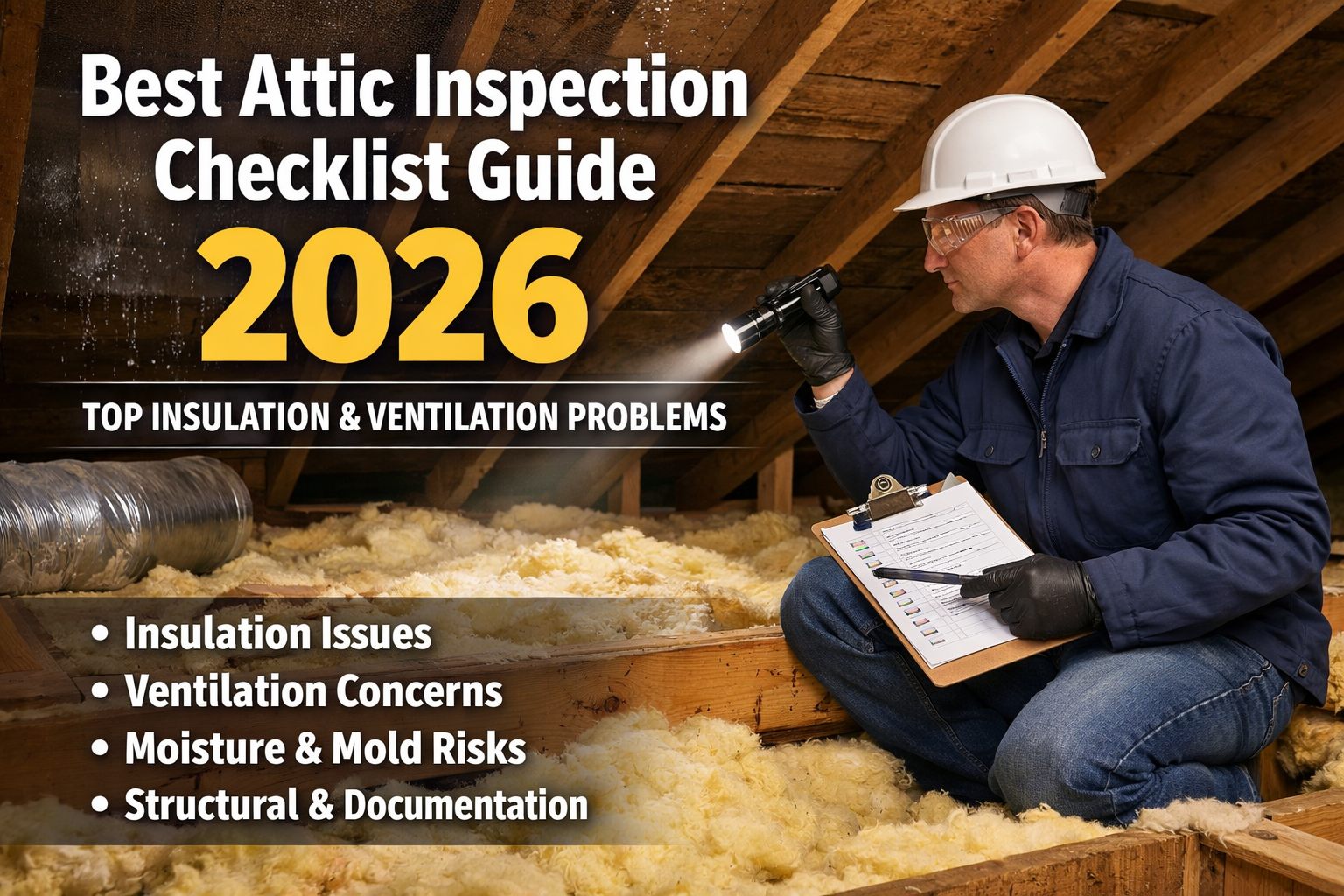

Attic conditions directly affect a home's energy efficiency, structural integrity, and indoor comfort. With inadequate insulation costing homeowners hundreds in wasted energy annually and moisture problems leading to mold, wood rot, and costly repairs, thorough attic inspection is essential. This comprehensive attic inspection checklist covers ventilation, insulation, moisture signs, framing, roofing components, and mechanical systems—ensuring you identify critical issues that impact the entire home.
Compliance Note: This checklist follows ASHI and InterNACHI Standards of Practice for attic inspections. Inspectors should access attics using permanent stairs or pull-down ladders when available. Walking on ceiling joists requires caution—never step between joists onto drywall. Document any conditions preventing safe access or complete inspection.
Why Attic Inspection Matters
Attic defects are found in approximately 25% of home inspections. Ventilation and insulation problems lead to ice dams, moisture damage, elevated energy costs, and premature roof failure. Attic conditions directly impact heating and cooling efficiency throughout the home.
Download Printable Attic Inspection Checklist
Get the complete checklist in PDF format with R-value charts, ventilation calculators, and defect documentation guides.
Before You Begin: Safety First
Attic inspection involves confined spaces, extreme temperatures, and fall hazards. Follow these safety protocols:
Temperature Limits
Avoid attic entry when temperatures exceed 120°F or during extreme cold. Heat exhaustion is a real risk in summer months. Document temperature limitations.
Fall Prevention
Walk only on joists or designated walkways. Never step on drywall between joists. Use flashlight to clearly identify safe walking paths.
Respiratory Protection
Wear N95 respirator for insulation fibers, dust, and potential mold exposure. Fiberglass and cellulose can irritate lungs and skin.
Electrical Safety
Watch for exposed wiring and junction boxes. Never touch electrical components. Note any wiring buried in insulation as fire hazard.
Complete Attic Inspection Checklist
Access & Initial Assessment
5-10 minBegin with access evaluation and overall condition assessment. Document access type and any limitations before entering the attic space.
Access Point Inspection
Ventilation Assessment
10-15 minProper ventilation prevents moisture buildup, ice dams, and premature shingle deterioration. Attics require balanced intake and exhaust ventilation for effective airflow.
Intake Ventilation (Soffit/Eave)
Exhaust Ventilation (Ridge/Roof)
Ventilation Balance
Insulation Evaluation
10-15 minInsulation is the primary thermal barrier protecting the home. Inadequate or damaged insulation leads to energy waste, comfort problems, and moisture issues.
Insulation Type & Depth
Insulation Condition
Critical Areas
Common Insulation Defects
- Inadequate depth: Most attics have less than recommended R-value—major energy loss
- Missing at eaves: Common thermal bypass allowing heat escape
- Blocking soffit vents: Insulation piled against eaves prevents ventilation
- Vermiculite: May contain asbestos—recommend testing before disturbance
Moisture & Condensation
10-15 minMoisture in attics causes wood rot, mold growth, insulation damage, and structural deterioration. Identifying moisture sources prevents costly damage.
Moisture Indicators
Mold Assessment
Moisture Sources
Critical Moisture Defects
- Bathroom fan to attic: Major moisture source—must vent to exterior
- Dryer vent to attic: Extreme moisture and lint—fire and mold hazard
- Widespread mold: Indicates chronic moisture—ventilation evaluation needed
- Roof leak staining: Active leak requires immediate roof repair
Roof Structure & Framing
10-15 minStructural inspection identifies framing defects, damage from modifications, and signs of stress that could affect roof integrity and home safety.
Framing Components
Modifications & Damage
Roof Sheathing & Leaks
10-15 minInspecting roof sheathing from inside the attic reveals leaks, deterioration, and damage often not visible from exterior roof inspection.
Sheathing Condition
Leak Indicators
Electrical & Mechanical
10-15 minAttic electrical and mechanical systems require inspection for safety hazards, improper installations, and code violations.
Electrical Systems
HVAC Equipment
Exhaust Terminations
Critical Safety Defects
- Open junction boxes: Fire hazard—all boxes must have covers
- Non-IC lights with insulation: Fire hazard—requires clearance or IC-rated housing
- Exhaust fans to attic: Moisture damage source—must terminate outside
- Missing condensate secondary drain: Water damage risk when primary clogs
Pest & Animal Activity
5-10 minAttics attract various pests including rodents, birds, bats, squirrels, and insects. Evidence of activity indicates entry points requiring repair.
Pest Indicators
Entry Points
Documentation & Reporting
5 minFinal Documentation
Common Attic Inspection Mistakes to Avoid
Not Checking Soffit Vents
Insulation often blocks soffit vents from inside. Always verify intake ventilation is not obstructed at eaves.
Skipping Exhaust Terminations
Bathroom fans venting into attic is extremely common. Trace every exhaust duct to verify exterior termination.
Missing Mold on Sheathing
Black staining on roof sheathing indicates chronic moisture. Look carefully at north-facing slopes and near ridge.
Ignoring Recessed Lights
Non-IC rated fixtures buried in insulation are fire hazards. Check every recessed light for proper clearance or rating.
Forgetting Access Hatch
Un-insulated attic hatches are major thermal bypasses. Document insulation and weatherstripping condition.
Not Measuring Insulation
Always measure actual depth and calculate R-value. Visual estimates are unreliable for accurate reporting.
Insulation R-Value Reference
| Insulation Type | R-Value Per Inch | Depth for R-38 |
|---|---|---|
| Fiberglass Batts | R-3.2 to R-3.8 | 10-12 inches |
| Blown Fiberglass | R-2.2 to R-2.7 | 14-17 inches |
| Cellulose (Blown) | R-3.2 to R-3.8 | 10-12 inches |
| Spray Foam (Open Cell) | R-3.5 to R-3.7 | 10-11 inches |
| Spray Foam (Closed Cell) | R-6.0 to R-7.0 | 5-6 inches |
| Mineral Wool | R-3.0 to R-3.3 | 11-13 inches |