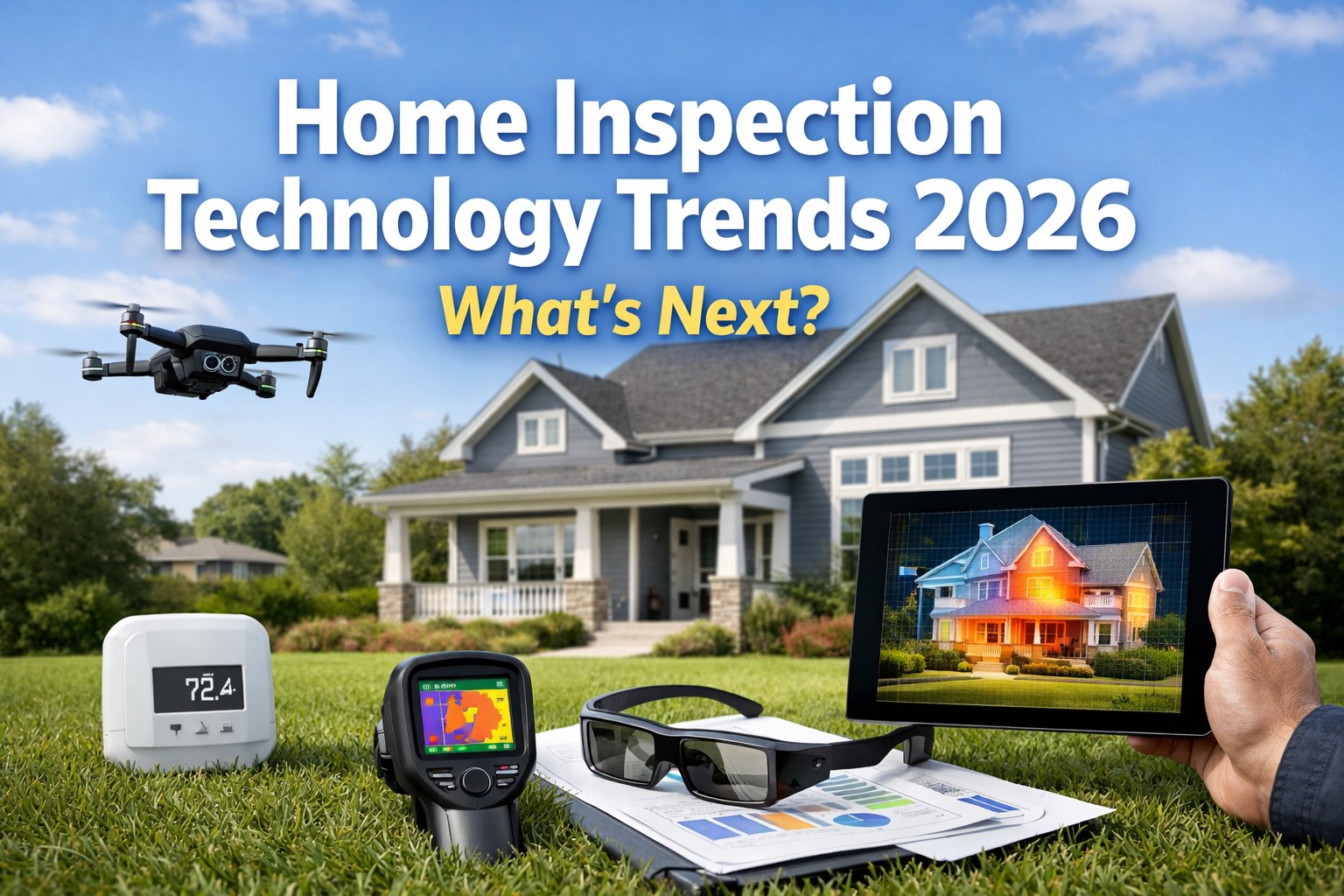
The home inspection industry is undergoing its biggest technology transformation in decades. In 2026, AI-powered reporting software, drone roof inspections, thermal imaging, voice-to-report dictation, IoT sensors, and cloud-first platforms are moving from early-adopter curiosity to mainstream competitive necessity. The numbers tell the story: the AI home inspection software market hit $689 million in 2024 and is projected to reach $1.22 billion by 2034 at a 9.6% CAGR. Cloud-based platforms now account for over 65% of inspection software market share. 28% of inspectors use thermal imaging cameras, 30% use AI-powered reporting tools, and drone-based inspection is growing at 21% annually. Meanwhile, 42% of veteran inspectors remain skeptical of AI — which means early adopters have a shrinking window to establish a technology advantage before the rest of the industry catches up. This guide covers the six technology trends reshaping home inspections in 2026, with real market data, practical implementation advice, and a clear picture of where the industry is heading.
The 6 Technology Trends Reshaping Home Inspections
AI-Powered Report Writing
Highest ImpactAI is eliminating the "second shift" — the 2–4 hours of report typing inspectors do after every inspection. Voice-to-text with AI summarization, photo-based defect recognition, auto-generated narratives, and smart comment libraries are turning raw field observations into polished professional reports in seconds, not hours. Early adopters report saving 10–15 hours per week and delivering same-day reports that agents increasingly expect. The AI home inspection software market is growing at 9.6% CAGR — the fastest segment in PropTech inspection tools.
Drone Roof & Exterior Inspections
Fastest GrowingDrones equipped with high-resolution cameras and thermal sensors are replacing ladder-based roof inspections. They're safer (no fall risk), faster (under an hour vs. several hours), and more thorough — capturing damage, flashing issues, and ventilation problems from angles impossible to reach manually. AI-powered analysis can detect hairline cracks, moisture intrusion, and structural weaknesses automatically. For inspectors, drones reduce liability, improve documentation quality, and enable inspection of steep, multi-story, or dangerous roofs that would otherwise require specialty equipment or be declined entirely.
Thermal Imaging Goes Mainstream
28% AdoptionProfessional-grade thermal cameras are now available from $129 (smartphone attachment) to $4,000 (professional handheld), making the technology accessible to every inspector at every budget level. IR scanning detects moisture, missing insulation, electrical hotspots, HVAC leaks, and pest activity — problems invisible during a standard visual inspection. As an add-on service generating $100–$300 per scan, thermal imaging pays for itself within the first quarter. The thermography building inspection segment alone is growing at 6.9% CAGR.
Cloud-First & Mobile-Native Platforms
65% Market ShareThe shift from desktop-installed software to cloud-first, mobile-native platforms is complete. In 2026, agents expect same-day reports, clients expect professional PDFs with photos, and inspectors need to document from their phone on-site — not type at a desk afterward. Cloud platforms sync across devices, enable real-time collaboration, and ensure reports are never lost. Desktop-only inspection software is becoming a competitive disadvantage as the market demands speed, accessibility, and professional output from any device.
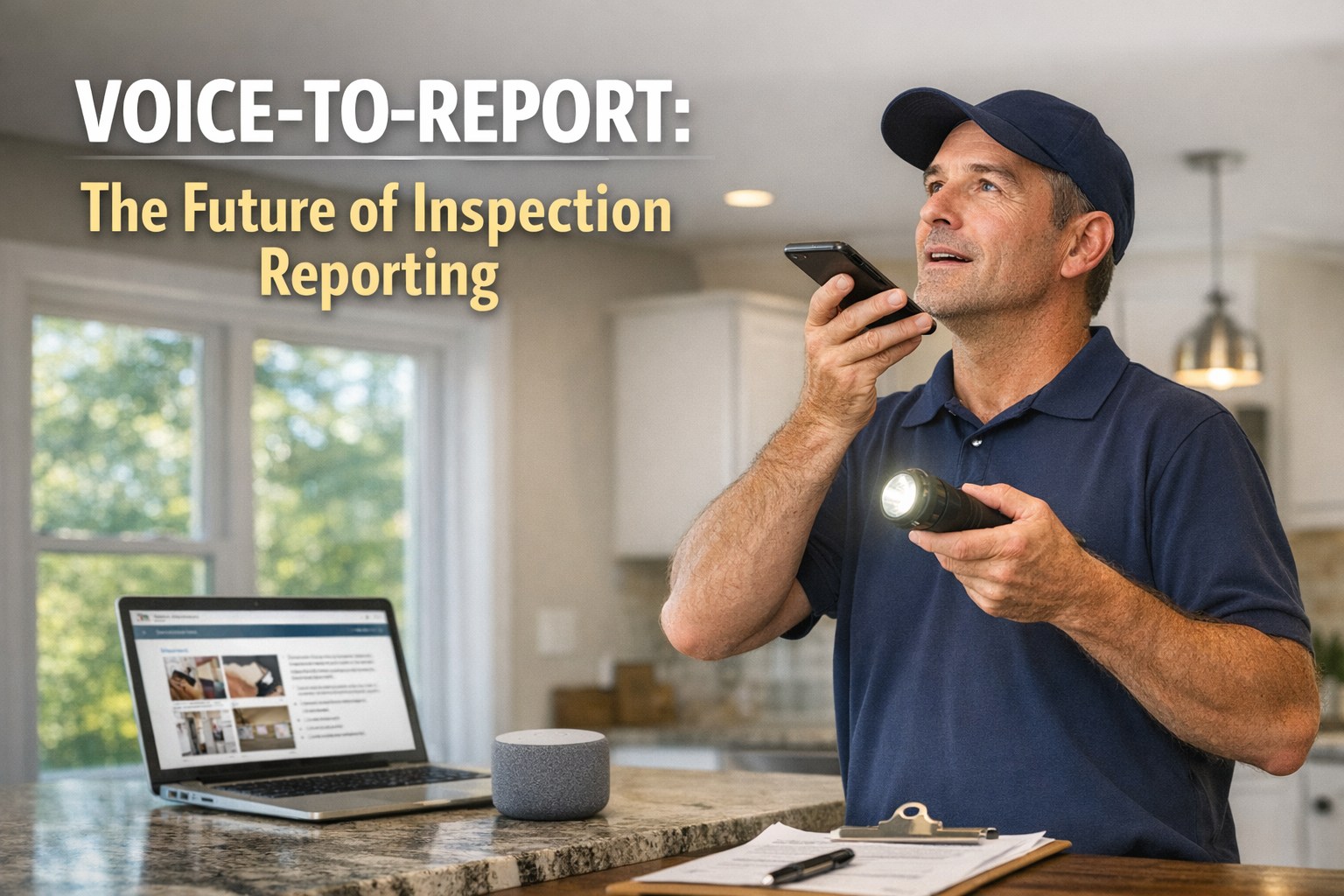
Voice-to-Report Dictation
EmergingSpeak your findings while looking at the defect. AI cleans up filler words, standardizes terminology, and generates a professional narrative with recommendations — in under 10 seconds. Voice-to-report is the fastest-growing feature category in inspection software. Platforms like SwiftReporter and Binsr Inspect are leading with native AI voice engines that work even offline. The technology turns every inspector into a same-day report deliverer without typing a single word.
IoT Sensors & Continuous Monitoring
Future WaveThe next frontier: properties equipped with IoT sensors that continuously monitor moisture, temperature, air quality, and structural movement — providing real-time data between annual inspections. Insurance companies are already requiring or incentivizing continuous monitoring for flood, fire, and mold risk assessment. For inspectors, this creates new service tiers: install monitoring sensors during inspections, provide ongoing data interpretation, and offer annual checkups that compare current data to baseline. This transforms inspection from a one-time transaction into a recurring revenue relationship.
Technology Adoption: Where Inspectors Stand in 2026
Build on the Right Platform for 2026 and Beyond
HomeInspecto is cloud-first, mobile-native, and designed to integrate with every technology trend in this guide — thermal, drone, AI, and voice.
Frequently Asked Questions
The Future Belongs to Tech-Forward Inspectors
HomeInspecto gives you the cloud-first, mobile-native platform that integrates with every technology trend in this guide. Try free — no credit card required.