
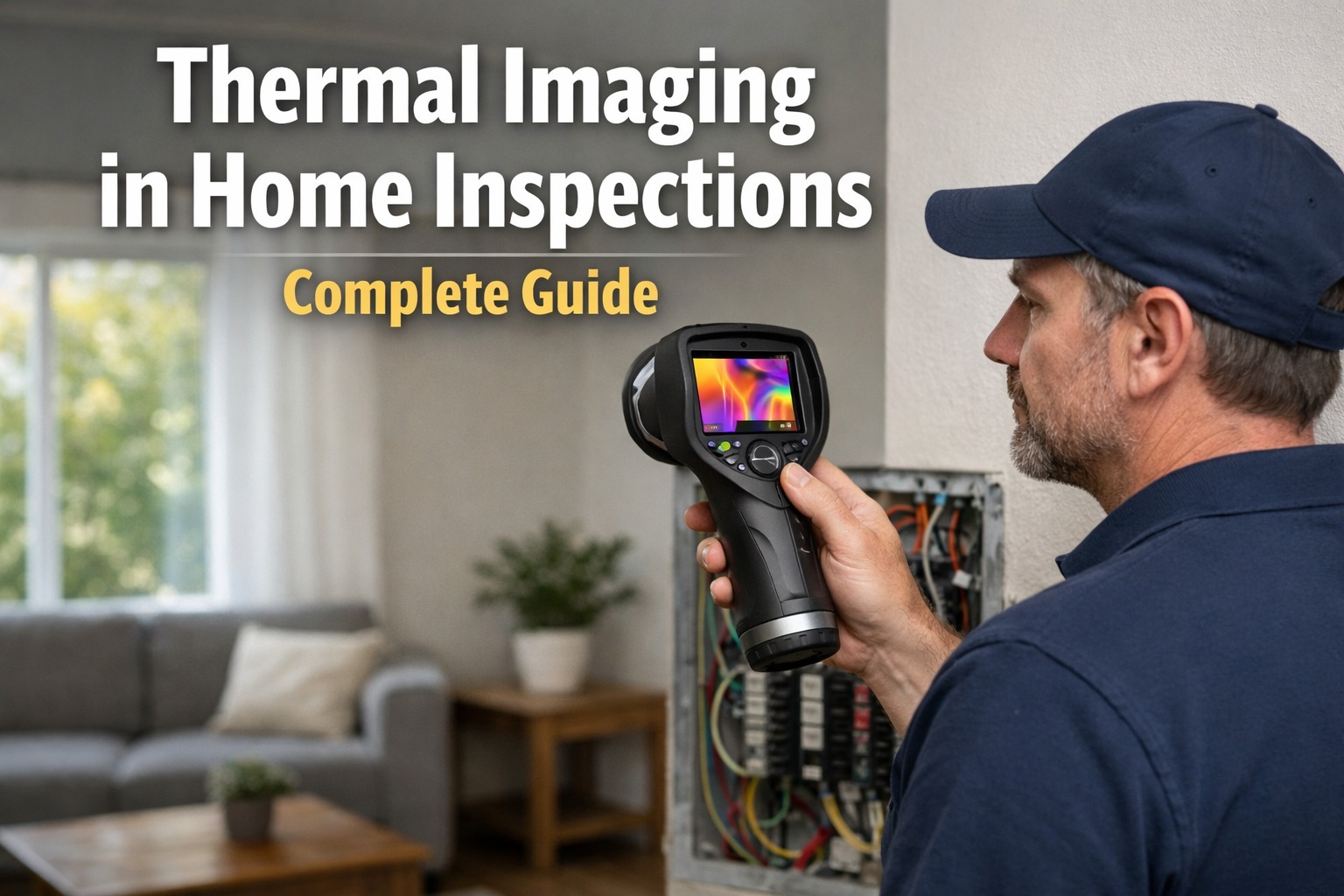
Thermal imaging — also called infrared scanning or IR inspection — has gone from a premium add-on to an expected tool in modern home inspections. These cameras detect surface temperature differences that reveal problems invisible to the naked eye: moisture behind drywall, missing insulation in walls, overheating electrical circuits, HVAC duct leaks, and even pest infestations. The technology doesn't see through walls — it detects thermal anomalies on surfaces that indicate something underneath needs attention. For inspectors, adding thermal imaging generates $100–$300 per inspection as an add-on and positions your business as tech-forward — and 28% of US home inspectors now use thermal imaging cameras as part of their workflow. For buyers, a thermal scan can uncover $5,000–$50,000+ in hidden damage that a standard visual inspection would miss entirely. The global thermography building inspection market reached $3.32 billion in 2023 and is growing at 6.9% CAGR, while the broader thermal imaging market hit $8.93 billion in 2026 growing at 7.7% annually. With professional-grade cameras available from $129 to $4,000 and 62% of homebuyers now insisting on professional inspections before purchase, thermal imaging is no longer optional for inspectors who want to stay competitive in 2026.
How Thermal Imaging Works
Thermal cameras detect infrared radiation (heat) emitted by all objects and convert it into a visual image showing temperature patterns. The key principle: where there's an unexpected temperature difference, there's usually a problem worth investigating.
Camera Detects IR Radiation
Every object above absolute zero emits infrared energy. The camera's microbolometer sensor captures this radiation across thousands of pixels, measuring surface temperatures with precision.
Software Creates Thermal Image
The camera converts temperature data into a color-coded image (thermogram). Cool areas appear in blues/purples, warm areas in yellows/reds. Temperature differences as small as 0.1 degrees are visible.
Inspector Identifies Anomalies
Trained inspectors recognize patterns: a cold spot on an insulated wall means missing insulation. A hot spot on an electrical panel means overloaded circuit. A wet area shows as cooler than dry surroundings.
Findings Documented in Report
Thermal images are captured, annotated with explanations, and embedded in the inspection report alongside standard photos — giving clients visual proof of hidden issues they'd never see otherwise.
What Thermal Imaging Detects
Thermal cameras don't diagnose problems — they reveal temperature anomalies that indicate where problems likely exist. Here's what each type of anomaly typically means and what it could cost if missed.
Show Clients What's Invisible to the Eye
HomeInspecto embeds thermal images right alongside standard photos in your branded PDF — with annotations that explain exactly what each anomaly means.
Recommended Cameras for Home Inspectors (2026)
Camera selection depends on your budget, inspection volume, and whether you prefer a smartphone attachment or standalone device. Here's how the most popular options compare.
What Thermal Imaging Does NOT Do
Understanding limitations is just as important as knowing capabilities. Misinterpreting thermal images can lead to false conclusions and liability issues.
Does NOT See Through Walls
IR cameras detect surface temperatures only. They reveal anomalies that suggest underlying issues, but cannot image objects behind or inside building materials. Always confirm with additional tools (moisture meter, visual access).
Does NOT Detect Mold Directly
Thermal cameras detect moisture, which is a precursor to mold — but they cannot identify mold species or confirm its presence. If moisture is found, recommend professional mold testing.
Does NOT Work Without Temperature Differential
If indoor and outdoor temperatures are nearly identical, thermal anomalies may not appear. Best results occur when there's at least a 15–20 degree difference between inside and outside temperatures.
Does NOT Replace Visual Inspection
Thermal imaging is a supplemental tool — it enhances a visual inspection, not replaces it. Use IR to identify areas that need further investigation, then confirm with visual assessment and diagnostic tools.
For Inspectors: The ROI of Thermal Imaging
Revenue per Inspection
Add-on pricing: $100–$300 per scan. If 30% of your clients add thermal imaging and you do 200 inspections per year, that's $6,000–$18,000 in additional annual revenue — from a camera that costs $129–$4,000 once.
Equipment Payback
A $429 FLIR ONE Pro pays for itself in 2–4 inspections. A $2,500 professional camera pays for itself in 10–25 inspections. Most inspectors see full ROI within their first quarter of offering the service.
Marketing Differentiation
Thermal images are visually impressive and memorable. Agents and buyers specifically request inspectors who offer IR scanning. Including thermal images in your report sets you apart from every competitor still doing visual-only inspections.
Report Quality with HomeInspecto
HomeInspecto lets you embed thermal images directly into your branded PDF alongside standard photos — with annotations explaining what each anomaly means. Book a demo to see the full thermal report workflow. Or start your free trial.
Frequently Asked Questions
Make Hidden Defects Visible in Every Report
HomeInspecto embeds thermal images alongside standard photos in branded PDFs — with annotations, severity ratings, and clear explanations. Try free today.