
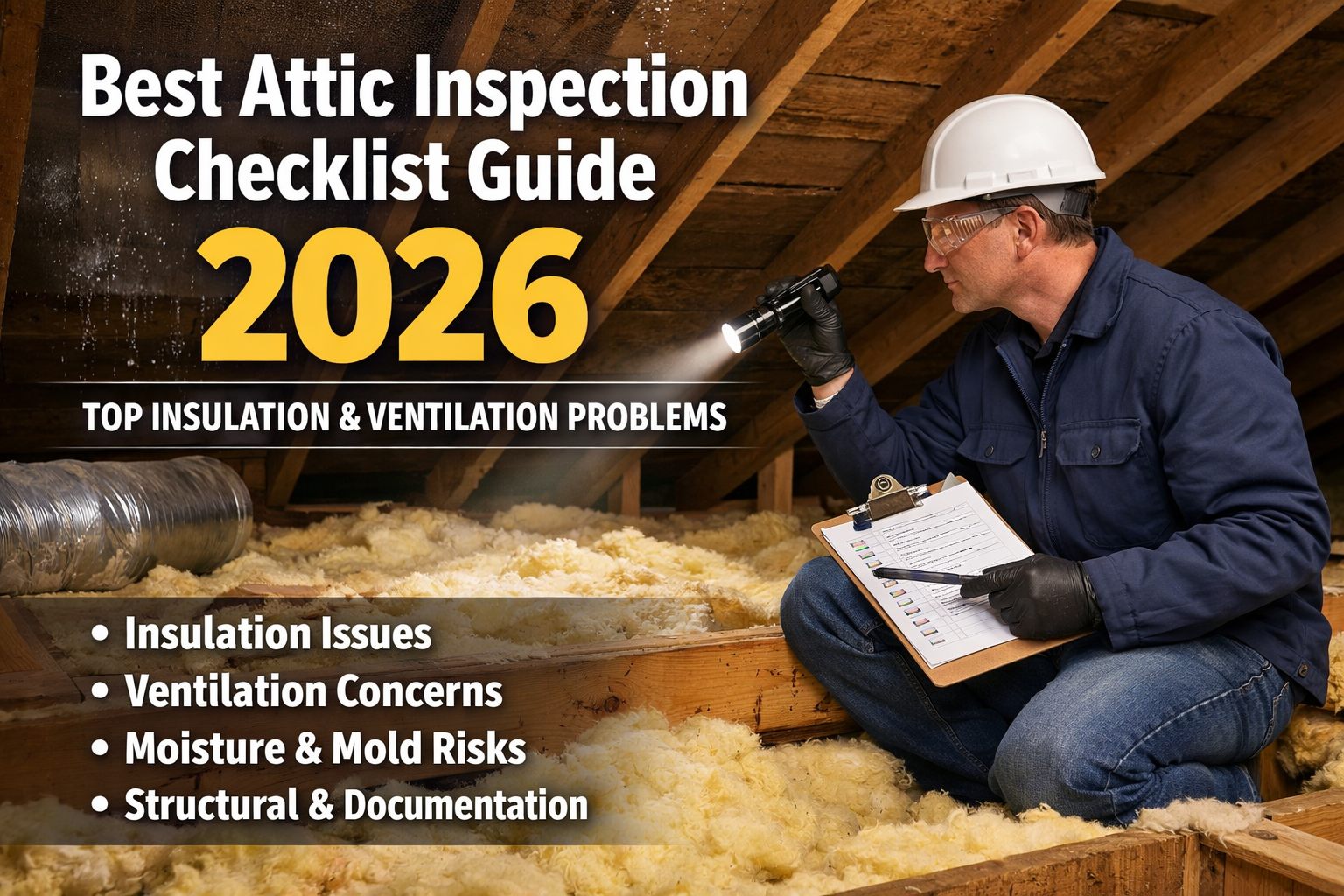
Your attic is one of the most revealing spaces in any home inspection. It exposes insulation deficiencies, ventilation failures, moisture intrusion, structural concerns, and electrical hazardsall in one visit. According to NAIMA estimates, 90% of U.S. homes are under-insulated, making the attic a prime area for identifying energy loss and hidden damage.
This guide covers what every inspector should check, the most common defects found in 2026, and documentation best practices that protect both you and your clients.
Why Attic Inspections Are Critical
The attic impacts every major system in a home. A thorough attic inspection reveals problems that affect comfort, safety, and long-term structural integrity.
Energy Efficiency
Inadequate insulation and air leaks cause heating and cooling systems to work overtime. The DOE reports under-insulated homes waste up to 20% of energy costs.
Moisture & Mold Risks
Poor ventilation traps moisture, leading to condensation, mold growth, and wood rot. These issues compromise indoor air quality and structural integrity.
Roof Damage Detection
The attic provides the best view of the roof's underside. Water stains, daylight penetration, and decking damage are often visible before exterior signs appear.
Structural Safety
Rafters, trusses, and sheathing are fully exposed in the attic. Sagging, cracks, pest damage, and improper modifications are immediately visible.
Complete Attic Inspection Checklist
Use this category-by-category checklist to ensure thorough coverage during every attic inspection.
Insulation Inspection
- Insulation type: Identify fiberglass batts, blown cellulose, spray foam, or older materials (vermiculite may contain asbestos)
- R-value adequacy: Measure depth and calculate R-value. ENERGY STAR recommends R-30 to R-60 depending on climate zone
- Gaps or compression: Check for missing sections, compressed batts, and areas around penetrations
- Distribution evenness: Insulation should be uniform—not piled in center with thin coverage at eaves
- Rodent damage: Look for tunneling, nesting, and contamination from droppings or urine
Ventilation Inspection
- Soffit vents: Verify they're present, open, and not blocked by insulation. Baffles should maintain airflow path
- Ridge vents: Check for proper installation and that they're not clogged or covered by roofing debris
- Gable vents: Ensure screens are intact and vents aren't blocked by stored items
- Power ventilators: Test operation if present; check thermostat and humidistat settings
- Blocked airflow: Look for insulation pushed against roof sheathing, blocking soffit-to-ridge airflow
Moisture & Leak Detection
- Roof leaks: Check sheathing for water stains, especially around penetrations (vents, chimneys, skylights)
- Condensation: Look for rusted nail tips, frost in winter, or moisture droplets on sheathing—signs of ventilation failure
- Mold or mildew: Dark staining on wood surfaces, musty odors, or visible mold growth indicate moisture problems
- Water stains: Discoloration on rafters, trusses, or sheathing indicates past or active leaks
- Ice dam evidence: Water damage patterns at eaves suggest heat loss and ventilation issues
Structural & Framing Inspection
- Rafters: Check for cracks, splits, notches, or modifications that weaken structural capacity
- Trusses: Verify no members have been cut or modified—any truss alteration is a serious defect
- Sagging: Sight down ridge and rafters for visible deflection or bowing
- Wood rot: Probe suspect areas with a screwdriver; soft wood indicates decay
- Collar ties & bracing: Confirm proper installation and secure connections
Electrical & Safety Inspection
- Exposed wiring: Check for damaged insulation, improper splices, or wiring buried under insulation
- Junction boxes: All connections should be in covered boxes—no open splices allowed
- Chimney clearance: Combustibles must maintain proper clearance (typically 2" minimum for masonry)
- Recessed lights: Non-IC-rated fixtures must have clearance from insulation to prevent fire
- Exhaust terminations: Bathroom and kitchen vents must exit through roof—never terminate in attic
Most Common Attic Defects Found in 2026
These issues appear repeatedly in inspection reports. Recognizing them quickly improves inspection efficiency and report accuracy.
Poor or Inadequate Ventilation
Blocked soffits, missing ridge vents, or insulation pushed against sheathing. Results in moisture damage, ice dams, and premature shingle failure.
Insufficient Insulation
Insulation below recommended R-values for climate zone, or visible floor joists. Causes energy waste and comfort complaints.
Hidden Roof Leaks
Water stains around penetrations, valleys, or chimney flashings. Often detected in attic before visible inside living spaces.
Improper Exhaust Vent Termination
Bathroom fans and dryer vents exhausting directly into attic instead of through roof. Major cause of moisture damage and mold.
Pest Infestation Evidence
Droppings, nesting materials, damaged insulation, or entry points at soffit gaps. Compromises insulation effectiveness and air quality.
R-Value Requirements by Climate Zone
Knowing the recommended attic insulation levels helps you identify deficiencies quickly during inspections.
Documentation & Reporting Best Practices
Professional documentation protects inspectors and provides clients with actionable information.
Photo Evidence
Capture insulation depth with ruler in frame. Document all defects, labels, and access points. Wide shots plus close-ups.
Moisture Meter Readings
Use pin or pinless meters to verify moisture content in suspect areas. Document readings in report for objective evidence.
Thermal Imaging
IR cameras reveal insulation gaps, air leaks, and moisture patterns invisible to the naked eye. Include thermal images in reports.
Standardized Reports
Use consistent formats with clear categories. Digital inspection software ensures nothing is missed and creates professional deliverables.
Expert Review: Attic Safety Reminders
Attic inspections come with unique hazards. Follow these protocols to inspect safely and efficiently.
Attic Inspection FAQs
How long should an attic inspection take?
A thorough attic inspection typically takes 15-30 minutes depending on attic size, accessibility, and complexity. Allow extra time for documentation, especially if using thermal imaging or moisture meters. Don't rush—the attic reveals issues that affect the entire home.
What if the attic isn't accessible?
Document inaccessibility in your report with photos of the access point. Note what prevented entry (no access panel, blocked by storage, unsafe conditions, etc.). Recommend the client have the attic inspected when access can be provided.
How do I identify insulation type?
Fiberglass batts are pink, yellow, or white and fluffy. Blown fiberglass is loose and fluffy. Cellulose is gray, dense, and paper-like. Spray foam is rigid and typically white or yellow. Vermiculite is gray, pebble-like, and potentially hazardous—do not disturb.
What's the difference between condensation and a roof leak?
Condensation appears as widespread moisture, rusted nail tips, or frost on sheathing—caused by poor ventilation. Roof leaks show localized staining around penetrations, valleys, or damaged areas. Condensation issues affect large areas; leaks are typically isolated.
Should I recommend repairs in my report?
Describe the defect and its implications, but avoid specifying repair methods or costs. Recommend evaluation by qualified contractors (insulation specialist, roofer, electrician) for significant issues. Your role is to identify and document—not prescribe solutions.
Conclusion
The attic is a diagnostic goldmine for home inspectors. It reveals insulation performance, ventilation effectiveness, roof condition, structural integrity, and electrical safety—all from one location. Using a systematic checklist ensures consistent, thorough inspections that protect your clients and your professional reputation.
Professional Attic Inspection Reports
HomeInspecto provides digital checklists, photo annotation tools, and professional report templates to streamline your attic inspections.