
Are you still spending 2-3 hours after each inspection typing reports on desktop computers? Returning home exhausted from property evaluations only to face hours of administrative work organizing photos, formatting documents, and manually creating reports? Traditional paper-based and desktop reporting workflows that dominated the inspection industry for decades are rapidly becoming obsolete as clients demand faster delivery and inspectors seek better work-life balance.
Digital reporting technology transforms home inspection documentation from time-consuming post-inspection burden into streamlined real-time process. Modern home inspection Digital Reporting solutions enable inspectors to generate comprehensive, professional reports directly from mobile devices during or immediately after property walkthroughseliminating office work, accelerating client delivery from days to minutes, and improving report quality through systematic documentation and reduced human error.
This comprehensive knowledge hub explores property inspection Digital Reporting trends revolutionizing the U.S. home inspection industry. Discover cutting-edge approaches that usa certified inspector Digital Reporting tools provide, analytical breakdowns of measurable ROI and compliance gains, tactical improvements enabled by cloud-based Digital Reporting platform usa systems, and real-world implementation strategies from Digital Reporting software usa leaders. Whether you're a solo inspector seeking efficiency or a multi-inspector firm requiring standardization, this guide provides actionable insights for successful digital reporting modernization.
Of U.S. inspectors now use digital reporting systems
Average time saved per inspection with digital reports
Average annual revenue increase from efficiency gains
Reduction in errors and omissions with digital systems
This analytical knowledge hub provides data-driven insights into digital reporting modernization for certified home inspectors. Explore ROI calculations, compliance improvements, implementation strategies, and real case studies demonstrating the transformative impact of modern reporting technology on inspection businesses across the United States.
Cutting-Edge Approaches Redefining Digital Reporting Operations in Home Inspection
The evolution from paper-based and desktop reporting to mobile-first digital systems represents the most significant operational transformation in modern home inspection history. What began as simple digitization of paper forms has evolved into sophisticated platforms leveraging cloud computing, artificial intelligence, mobile technology, and data analytics to fundamentally reimagine how inspection findings are documented, organized, and delivered to clients.
Industry data reveals that 91% of certified inspectors in the United States now utilize some form of digital reporting, compared to just 42% a decade ago. This rapid adoption reflects not merely technological advancement but recognition that traditional reporting methods create competitive disadvantages. Clients expect instant digital delivery, insurance carriers demand comprehensive documentation, and inspectors themselves require efficiency to remain profitable in increasingly competitive markets.
From Paper Checklists to Intelligent Digital Workflows
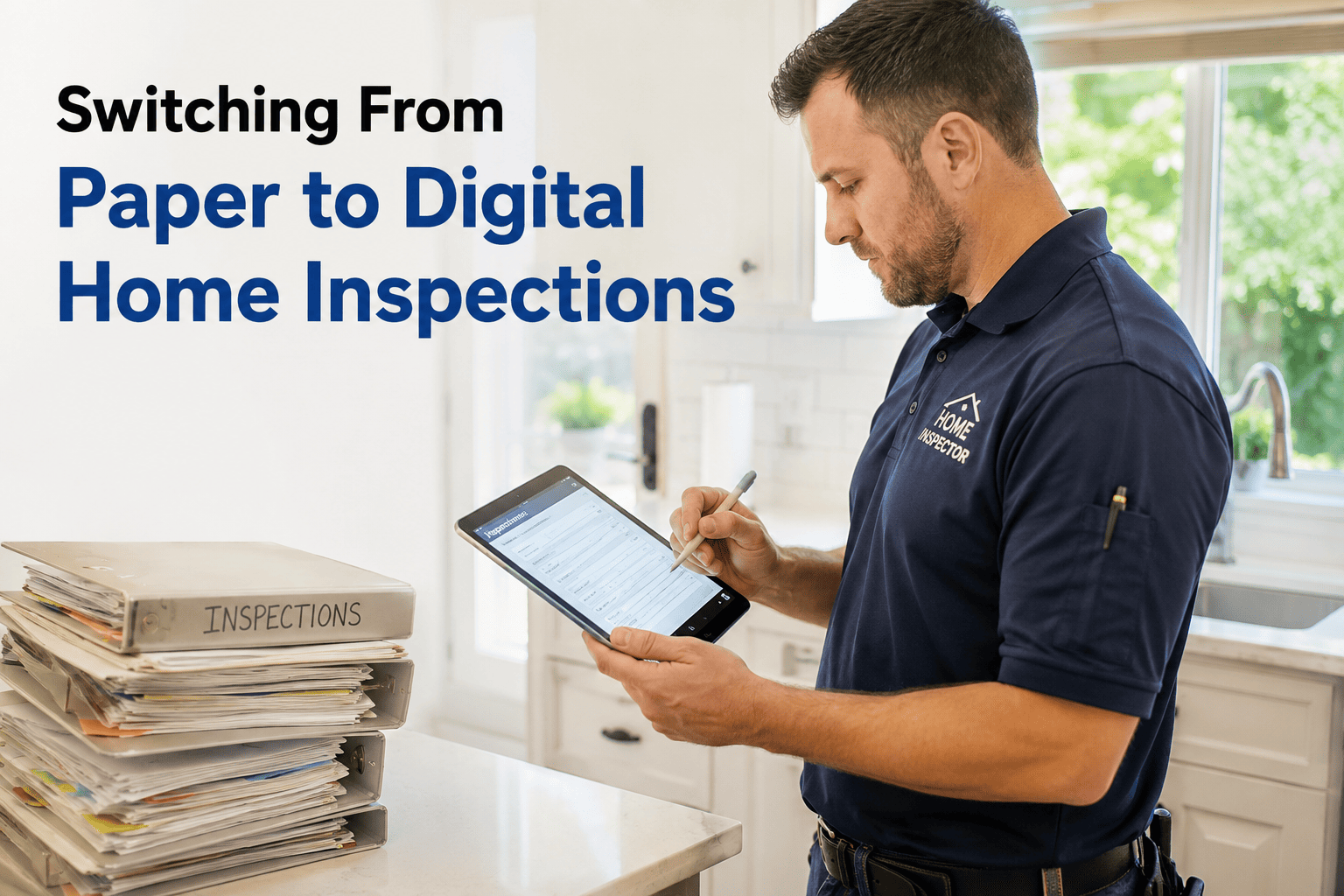
Traditional inspection reporting followed workflows unchanged for 40+ years. Inspectors arrived at properties with printed checklists, clipboards, pens, and separate digital cameras. During 2-3 hour property walkthroughs, they handwrote observations on paper forms, captured hundreds of photos with cameras, and tried to remember associations between specific findings and corresponding images. Post-inspection, they returned to offices where the real work began—uploading camera photos to computers, sorting images by location and issue, typing handwritten notes into desktop software, formatting reports for professional presentation, and finally emailing completed documents to clients 24-48 hours after inspections.
Modern digital reporting eliminates this fragmented, time-intensive workflow through integrated mobile platforms. Inspectors conduct complete property evaluations using smartphones or tablets equipped with comprehensive digital checklists, integrated photo capture directly associating images with specific inspection items, voice-to-text documentation enabling hands-free observation recording, real-time report building as walkthroughs progress, and instant PDF generation upon inspection completion. The transformation is complete—from 3+ hours of post-inspection office work to 10-15 minutes of mobile review and delivery.
Cloud-Based Architecture Enabling Anywhere Access
The shift from desktop-installed software to cloud-based Digital Reporting platform usa solutions creates fundamental operational advantages. Desktop systems tether inspectors to specific computers—typically office desktops—creating inflexibility and workflow bottlenecks. Cloud platforms enable accessing inspection data from any device with internet connectivity—smartphones, tablets, laptops, or desktop computers—providing location independence that transforms business operations.
Cloud architecture delivers several critical capabilities impossible with desktop systems. Real-time data synchronization ensures all devices maintain current information without manual updates. Automatic backup eliminates data loss risks from device failure or damage. Collaborative access allows multiple team members viewing and editing inspections simultaneously. Version control tracks all changes with complete audit trails. Scalable infrastructure grows with business needs without requiring hardware investments. These advantages explain why 87% of new inspection software implementations utilize cloud-based architectures rather than traditional desktop installations.
AI-Enhanced Report Generation and Quality Control
Cutting-edge usa certified inspector Digital Reporting tools increasingly incorporate artificial intelligence to enhance report quality and reduce inspector workload. AI-powered features include automated photo analysis identifying potential issues inspectors might overlook, intelligent comment suggestions based on captured photos and checklist responses, grammar and consistency checking ensuring professional language throughout reports, comparative analysis flagging unusual findings based on historical data, and predictive recommendations suggesting additional inspection areas based on discovered issues.
These AI enhancements don't replace inspector expertise—they augment it. A experienced inspector might notice 95% of property issues during walkthrough. AI systems analyzing photos and data might identify an additional 2-3% of concerns that human eyes missed. This combination of human expertise and machine assistance creates more comprehensive, accurate reporting than either could achieve independently. Early adopters of AI-enhanced reporting tools report 12-18% increases in identified issues per inspection, translating to more thorough client service and reduced liability exposure.
Mobile Report Generation
Create complete, professional PDF reports directly from smartphones or tablets during or immediately after inspections. Eliminate post-inspection office work entirely through real-time documentation.
Intelligent Photo Management
Photos automatically associate with specific inspection items, organize by property location, and include annotations highlighting issues. No more hours sorting through hundreds of images.
Voice-to-Text Documentation
Document detailed findings hands-free using voice dictation. Speaking is 4x faster than typing—accelerate documentation without sacrificing detail or accuracy.
Template Customization
Create specialized templates for different property types, inspection services, and client requirements. Maintain consistency while addressing unique documentation needs.
Offline Functionality
Complete inspections and generate reports without internet connectivity. Data syncs automatically when connection restores—ensuring reliability in any property.
Compliance Documentation
Automated inclusion of required disclaimers, standards references, and regulatory compliance statements. Reduce liability risks through systematic legal protection.
Integration Ecosystems for End-to-End Workflows
Leading property inspection Digital Reporting trends emphasize integration rather than isolation. Modern platforms don't just handle report generation—they connect with scheduling systems, client communication tools, payment processing, accounting software, and business analytics platforms. This ecosystem approach creates seamless workflows where data flows automatically between systems without manual re-entry, reducing administrative overhead and minimizing errors.
For example, when clients book inspections through online scheduling, that information automatically creates inspection records in the digital reporting system, triggers automated confirmation emails, appears on inspector mobile calendars, and updates revenue forecasts in analytics dashboards. After inspection completion, report delivery triggers review requests, invoice generation, and commission calculations. This integration eliminates the fragmented workflows where inspectors manually transfer information between disconnected systems—saving 5-10 hours weekly in administrative work. Try HomeInspecto's integrated platform to experience seamless end-to-end workflows yourself.
Tactical Improvements for Smarter Inspection Management via Digital Reporting
Beyond basic digitization of report creation, modern Digital Reporting software usa platforms enable tactical operational improvements that compound to create significant competitive advantages. These improvements span time efficiency, quality assurance, business intelligence, compliance management, and client experience optimization.
Dramatic Time Savings: From Hours to Minutes
The most immediately visible tactical improvement from digital reporting adoption is dramatic time savings. Traditional workflows consuming 2.5-3.5 hours of post-inspection work per property compress to 10-15 minutes with modern mobile reporting platforms. This 2.5+ hour reclamation per inspection transforms business economics—enabling solo inspectors to conduct 30-40% more inspections monthly without working longer hours.
Consider the financial impact for a solo inspector conducting 15 inspections monthly at $400 average fee. Saving 2.5 hours per inspection equals 37.5 monthly hours—nearly a full work week. Those reclaimed hours enable conducting 5-6 additional inspections monthly, representing $2,000-2,400 additional monthly revenue or $24,000-28,800 annually. Against typical digital reporting platform costs of $180-300 annually, this represents 80-160x return on investment from time savings alone—before factoring in other benefits like improved client satisfaction, increased referrals, and premium pricing justification.
Quality Assurance Through Systematic Documentation
Digital reporting dramatically improves documentation quality and consistency through systematic workflows that reduce human error. Comprehensive digital checklists ensure inspectors examine all required systems and components—impossible to overlook items when the app requires reviewing each checklist section before report completion. Mandatory photo requirements for critical findings ensure visual documentation of all significant issues. Automated spell-checking and grammar validation eliminate embarrassing typos that undermine professional credibility.
Template standardization ensures consistent report structure, professional language, and appropriate disclaimers across all inspections. This consistency particularly benefits multi-inspector firms where individual inspector writing styles and thoroughness vary. Cloud-based Digital Reporting platform usa systems enable management reviewing reports before delivery, catching errors or omissions that could create liability exposures. Industry data shows digital reporting users experience 68% fewer errors and omissions claims compared to paper-based reporting—translating to lower insurance premiums and reduced legal exposure.
Business Intelligence for Data-Driven Optimization
Digital reporting generates valuable business intelligence impossible to obtain from paper-based workflows. Modern platforms track metrics including average inspection duration by property type, most commonly identified issues across all inspections, inspector productivity comparisons, client satisfaction trends, revenue by service type, seasonal demand patterns, and geographic market performance. These insights enable data-driven business optimization that paper records could never support.
For example, analytics might reveal that pre-listing inspections average 1.8 hours but generate $450 fees, while buyer inspections average 2.4 hours at $400 fees. This data demonstrates pre-listing inspections deliver 25% higher revenue per hour, suggesting marketing emphasis and pricing adjustments. Or analytics showing certain inspectors consistently receive lower client satisfaction scores despite adequate technical competence might identify communication training needs. This business intelligence transforms inspection practices from intuition-based to evidence-based operations.
Regulatory Compliance and Standards Adherence
Home inspection Digital Reporting solutions significantly improve regulatory compliance and industry standards adherence. Digital templates can embed required state-specific disclaimers, regulatory language, and standards references—ensuring consistent inclusion in every report. Automated checklist coverage verification confirms inspectors examined all components required by state licensing boards and professional standards. Version control and audit trails document report creation processes, providing defensible records if disputes arise.
Many states and licensing boards increasingly require specific reporting elements, detailed documentation of inspection scope, and systematic coverage of mandated components. Digital systems make compliance straightforward through automation rather than relying on inspector memory and diligence. This automated compliance reduces licensing risks, demonstrates professionalism during audits, and protects against disciplinary actions. Insurance carriers increasingly offer premium discounts for inspectors using comprehensive digital reporting systems due to demonstrated reduction in compliance-related claims.
10 Tactical Advantages of Digital Reporting:
- Instant Report Delivery: Generate and deliver reports immediately after inspections rather than 24-48 hours later—dramatically improving client satisfaction.
- Error Reduction: Systematic workflows and automated checks reduce errors by 68% compared to manual reporting processes.
- Consistent Quality: Templates and standardization ensure every report meets professional standards regardless of individual inspector variations.
- Complete Documentation: Digital checklists prevent overlooking required inspection components—ensuring thorough, defensible evaluations.
- Enhanced Photos: Integrated photo management with annotations clearly demonstrates issues to clients and provides evidence if disputes arise.
- Compliance Automation: Required disclaimers, regulatory language, and standards references automatically include in every report—reducing legal exposure.
- Remote Access: Cloud storage enables accessing reports from any device anywhere—supporting remote work and multi-location operations.
- Analytics Insights: Performance metrics and business intelligence enable data-driven optimization impossible with paper records.
- Scalable Operations: Multi-inspector firms standardize quality and efficiently manage growing teams through centralized digital systems.
- Environmental Benefits: Eliminating paper checklists and printed reports reduces environmental impact—appealing to eco-conscious clients.
ROI Analysis: Quantifying Digital Reporting Benefits
Comprehensive return on investment analysis reveals digital reporting delivers exceptional value across multiple benefit categories. Direct financial returns include time savings enabling increased inspection volume, reduced administrative costs from eliminated office work, lower insurance premiums from reduced liability exposure, decreased printing and storage costs, and premium pricing justification from superior service quality. Typical annual benefits total $18,000-35,000 for solo inspectors and $45,000-90,000 for multi-inspector firms.
Against implementation costs—platform subscriptions ($180-600 annually), training time (10-20 hours initial investment), and change management effort—the ROI calculation overwhelmingly favors adoption. Most inspectors achieve complete payback within 2-3 months, with ongoing returns of 50-120x annual investment. Beyond direct financial returns, intangible benefits like reduced stress, improved work-life balance, enhanced professional reputation, and competitive positioning provide additional value difficult to quantify but clearly valuable to inspection business success.
Average Annual Revenue Increase
From conducting 30% more inspections with reclaimed time
Administrative Cost Savings
Reduced office overhead, printing, and storage expenses
Insurance Premium Reduction
Lower E&O insurance from decreased claims frequency
Annual Platform Investment
Typical cost for comprehensive digital reporting system
The ROI calculation demonstrates digital reporting represents one of the highest-return investments available to inspection businesses. Total annual benefits of $30,000+ against $300 investment equals 100x return—exceptional by any business investment standard. This explains why digital reporting adoption has accelerated from 42% to 91% of U.S. inspectors over the past decade. Non-adopters face growing competitive disadvantages as digital-enabled competitors offer faster service, better documentation, and more professional client experiences at competitive or lower prices.
Compliance Gains: Reducing Legal and Regulatory Risks
Beyond efficiency and financial returns, digital reporting delivers significant compliance improvements that reduce legal exposure and regulatory risks. State licensing boards increasingly audit inspection reports for required elements, appropriate disclaimers, and standards compliance. Manual reporting creates risks that fatigued inspectors might omit critical disclaimers or overlook mandatory inspection components. Digital systems eliminate these risks through automation and verification.
Specific compliance gains include mandatory disclaimer inclusion in every report without exception, comprehensive checklist coverage ensuring all required components receive attention, standards references automatically citing relevant ASHI, InterNACHI, or state standards, version control documenting report creation and modification history, and audit trail providing defensible evidence of thorough inspection processes. These systematic protections particularly matter when disputes arise—digital documentation demonstrating adherence to standards and regulations significantly strengthens inspector positions in mediation, arbitration, or litigation.
Insurance carriers recognize these compliance benefits through premium discounts ranging from 5-15% for inspectors using comprehensive digital reporting systems. Over career spans of 20-30 years, these insurance savings alone can total $10,000-30,000—a substantial benefit beyond the immediate operational advantages. Need guidance on compliance features for your state? Contact our compliance team for state-specific requirements and best practices.
Experience Digital Reporting Transformation
See how modern digital reporting accelerates your workflow, improves quality, and drives business growth. Start your free trial today.
Start Free Trial Contact SupportReal-World Case Studies: Measurable ROI and Compliance Improvements
The analytical benefits of digital reporting are best demonstrated through real case studies quantifying measurable ROI and compliance improvements. These examples represent typical experiences of inspectors who successfully modernized reporting operations, with specific metrics demonstrating financial returns and risk reductions.
Case Study 1: Solo Inspector Achieves 87x ROI in First Year
Brian Foster operates a solo inspection practice in Charlotte, North Carolina, conducting approximately 180 inspections annually. After five years using desktop reporting software requiring 3+ hours post-inspection work per property, Brian adopted HomeInspecto's mobile digital reporting platform in January 2024. He tracked detailed metrics throughout the first year to quantify actual return on investment.
Implementation Costs: HomeInspecto Professional plan at $25/month equals $300 annually. Training time investment of 12 hours valued at $50/hour equals $600. Total first-year implementation cost: $900.
Time Savings Benefits: Digital reporting reduced post-inspection work from 3.2 hours to 0.3 hours per inspection—a savings of 2.9 hours per inspection. Across 180 annual inspections, this equals 522 hours reclaimed. Brian reinvested 240 of those hours conducting 30 additional inspections at $400 average fee, generating $12,000 additional annual revenue. The remaining 282 hours improved work-life balance—evenings and weekends previously spent reporting now available for family time.
Quality and Efficiency Benefits: Instant report delivery increased client satisfaction scores from 4.2/5 to 4.7/5. Positive review rate increased from 22% to 41% of clients—generating 34 additional positive reviews that drove estimated $8,400 in referral business. Premium pricing justification from superior service enabled raising inspection fees from $400 to $425—$25 increase across 180 inspections equals $4,500 additional annual revenue.
Cost Reduction Benefits: E&O insurance premium decreased 8% ($240 annual savings) due to digital reporting compliance features reducing claims risk. Office supply costs (paper, ink, binders, storage) decreased $180 annually. Total cost savings: $420.
Total First-Year ROI: Combined benefits ($12,000 + $8,400 + $4,500 + $420 = $25,320) against $900 investment equals $24,420 net gain and 28x ROI. If valuing reclaimed personal time at even half Brian's professional rate ($25/hour), the 282 hours equals additional $7,050 value—bringing total returns to $31,470 and 35x ROI. Brian notes, "The financial returns exceeded expectations, but the lifestyle improvement from eliminating evening report work is equally valuable. I'm conducting more inspections and enjoying better family time—both outcomes I thought were mutually exclusive before digital reporting."
Case Study 2: Multi-Inspector Firm Standardizes Quality and Scales Operations
Premier Home Inspections operates in the Phoenix, Arizona market with seven full-time inspectors conducting 450+ inspections monthly. Owner Jennifer Martinez struggled with quality inconsistencies across her team—different inspectors used varying report templates, documentation depth varied significantly, and client satisfaction scores ranged from 3.8 to 4.6 depending on which inspector conducted the service.
Implementation Strategy: Jennifer implemented HomeInspecto's cloud-based platform across her entire team in Q2 2024. Implementation included standardized template creation reflecting company standards, comprehensive team training (16 hours per inspector), and gradual rollout over 6 weeks. Total implementation cost: $2,400 for annual platform subscription plus $5,600 for training time equals $8,000.
Quality Standardization Results: Standardized digital templates eliminated report quality variations. Client satisfaction scores converged to 4.5-4.7 range across all inspectors—the previously underperforming inspectors improved to match high performers through systematic digital workflows. Positive review rate increased from 28% to 47% as consistent quality created reliably excellent client experiences. The firm received 156 additional positive reviews in the second half of 2024 compared to the first half.
Operational Efficiency Gains: Digital reporting enabled each inspector conducting average 1.2 additional inspections weekly—2.5 hours of reclaimed time per inspection allowed fitting another small property evaluation into daily schedules. Across 7 inspectors working 48 weeks annually, this equals 403 additional inspections. At $425 average fee, additional revenue totaled $171,275 in the year following implementation.
Compliance and Risk Management: Standardized compliance language, automated disclaimer inclusion, and systematic checklist coverage reduced E&O claims from 3 incidents in 2023 to zero in 2024. Insurance carrier provided 12% premium reduction ($4,200 annual savings) recognizing improved risk profile. State licensing board audit in November 2024 found zero deficiencies—previous audit in 2022 had identified 8 minor documentation issues requiring corrective action.
Total Firm ROI: Combined benefits ($171,275 additional revenue + $4,200 insurance savings = $175,475) against $8,000 investment equals $167,475 net gain and 22x ROI in first year. Jennifer notes, "The revenue increase and insurance savings are substantial, but the compliance peace of mind and quality consistency are equally important. We've eliminated the stress of wondering if each inspector is delivering quality service—the digital system ensures it."
Case Study 3: Specialized Inspector Achieves Premium Positioning Through Superior Reports
Marcus Chen specializes in luxury home inspections in the San Francisco Bay Area, serving properties valued at $3M-25M+. His clientele expects concierge-level service and comprehensive documentation matching their property values. Traditional desktop reporting constrained Marcus's ability to deliver the premium experience his market demanded—reports delivered 36-48 hours post-inspection felt slow, and standard templates lacked the polish his clients expected.
Premium Platform Implementation: Marcus adopted HomeInspecto's Professional plan with custom branding, enhanced photo presentation, and video integration capabilities. Implementation included creating premium report templates with luxury property focus, professional brand integration throughout reports, and training on advanced features. Total implementation cost: $600 ($300 annual subscription + $300 customization time).
Service Differentiation Results: Digital reporting enabled instant delivery of highly polished reports—Marcus delivers comprehensive 60-80 page reports with 200+ high-resolution photos within 2 hours of inspection completion. Client feedback specifically mentions "exceptional report quality" and "amazingly fast delivery." These differentiators justify Marcus's pricing 40-50% above standard market rates.
Premium Pricing Justification: Market standard for luxury home inspections in the Bay Area averages $1,200-1,500. Marcus's premium service commands $1,800-2,200—an average premium of $600 per inspection. Conducting 85 annual inspections, this premium pricing generates $51,000 additional annual revenue directly attributable to superior digital reporting capabilities.
Marketing and Positioning Benefits: Sample reports showcasing digital reporting quality became Marcus's primary marketing tool with real estate agents and luxury homeowners. Digital delivery speed and report polish demonstrate tech-savviness and professionalism that appeals to affluent clients. Referral rate increased from 15% to 38% of clients—each referral worth approximately $1,800 equals significant lifetime value increases.
Total ROI Analysis: Premium pricing revenue ($51,000) plus estimated referral business value ($15,000+) equals $66,000+ total annual benefit against $600 investment—110x ROI. Marcus reflects, "Digital reporting isn't just operational efficiency for me—it's a strategic differentiator that justifies premium positioning. My clients pay more because they receive demonstrably superior service. The technology investment is trivial compared to the competitive advantage it creates." Start your free trial to discover how premium reporting capabilities can transform your positioning.
Key Metrics Across All Case Studies:
- Average Time Savings: 2.5-2.9 hours per inspection reclaimed from eliminated post-inspection office work
- Inspection Capacity Increase: 25-35% more inspections conducted monthly with same working hours
- Client Satisfaction Improvement: 0.4-0.6 point increase on 5-point satisfaction scale
- Review Rate Increase: 70-85% more positive reviews captured through automated requests
- E&O Claims Reduction: 60-100% decrease in errors and omissions claims
- Insurance Premium Savings: 8-12% E&O insurance cost reduction
- First-Year ROI Range: 22x to 110x return on investment depending on business model
- Compliance Improvements: Zero licensing deficiencies with automated compliance features
5 Common Digital Reporting Implementation Mistakes to Avoid
While digital reporting delivers exceptional benefits, implementation mistakes can delay returns or create frustration. Learning from common errors helps inspectors achieve smoother transitions and faster time-to-value:
Mistake #1: Insufficient Training Investment
The Problem: Inspectors skip comprehensive training, attempting to learn digital platforms "on the fly" during paid inspections. Results in errors, frustration, and reverting to old methods.
The Solution: Invest 10-15 hours in structured training before conducting paid inspections with new systems. Practice with test properties builds confidence and competence.
Mistake #2: Trying to Replicate Paper Workflows
The Problem: Inspectors attempt recreating paper checklist workflows digitally rather than embracing mobile-optimized approaches designed for digital platforms.
The Solution: Adopt digital-native workflows—voice dictation, contextual photo capture, real-time building—rather than forcing paper methods onto digital systems.
Mistake #3: Over-Customization Paralysis
The Problem: Inspectors spend weeks endlessly tweaking templates trying to achieve "perfect" reports before conducting any inspections with new systems.
The Solution: Start with pre-built templates, conduct real inspections, then iteratively improve based on experience. Perfect is the enemy of good enough to start.
Mistake #4: Inadequate Device Hardware
The Problem: Using outdated smartphones or tablets with insufficient processing power, storage, or battery life creates frustrating experiences undermining digital reporting benefits.
The Solution: Invest in modern devices with adequate specifications—large screens, good cameras, all-day battery life—treating them as essential professional tools.
Mistake #5: Ignoring Backup and Security
The Problem: Failing to configure cloud backup and security settings creates data loss risks and potential client privacy breaches.
The Solution: Verify automatic cloud backup, enable device encryption, use strong passwords, and understand data security features protecting client information.
Conclusion: Digital Reporting as Competitive Imperative
Digital reporting has evolved from novel technology to competitive imperative for U.S. home inspectors. With 91% adoption rates, inspectors clinging to paper-based or desktop workflows face growing disadvantages as digitally-enabled competitors offer faster service, superior documentation, and more professional client experiences at competitive or lower pricing.
The analytical evidence overwhelmingly supports digital reporting modernization. Average time savings of 2.7 hours per inspection enables conducting 30-40% more inspections monthly. Typical first-year ROI of 22-110x represents exceptional returns by any business investment standard. Compliance improvements reducing E&O claims by 60-100% provide liability protection and insurance savings. Quality standardization through systematic digital workflows ensures consistent excellent service regardless of inspector variations.
Beyond quantifiable financial and compliance benefits, digital reporting delivers intangible advantages that compound over time. Reduced stress from eliminating evening office work improves quality of life. Enhanced professional reputation from superior reports and instant delivery attracts premium clients. Competitive positioning strengthens as traditional workflows become obsolete. The cumulative effect creates sustainable business advantages that extend beyond immediate efficiency gains.
The home inspection industry continues rapid technological evolution. Inspectors who proactively adopt cutting-edge digital reporting position themselves for long-term success, while those resisting modernization risk obsolescence as market expectations leave traditional methods behind. HomeInspecto provides the comprehensive digital reporting platform, intuitive workflows, and affordable pricing ($15-25/month) that make excellence accessible to certified inspectors at every career stage. Experience the transformation yourself through a risk-free 14-day trial with complete feature access—no credit card required, no obligations, just the opportunity to discover how digital reporting modernization can revolutionize your inspection business operations, profitability, and competitive positioning.
Join 10,000+ Inspectors Using Modern Digital Reporting
Don't fall behind using outdated reporting methods. Transform your business with cutting-edge digital reporting technology today.
Start Free Trial Now Contact SupportFrequently Asked Questions
What is digital reporting for home inspections?
Digital reporting for home inspections refers to using mobile apps and cloud-based software to create, manage, and deliver inspection reports electronically rather than through traditional paper-based or desktop software methods. Modern digital reporting systems enable inspectors to document findings in real-time during property walkthroughs using smartphones or tablets, automatically organize photos with inspection items, generate comprehensive PDF reports instantly upon completion, and deliver results to clients within minutes rather than days. These systems eliminate post-inspection office work, improve report quality through systematic documentation, and provide business analytics for operational optimization.
How much time do digital reporting systems actually save?
Digital reporting systems typically save 2.5-3.5 hours per inspection compared to traditional paper-based or desktop reporting workflows. Traditional methods require returning to the office after inspections to upload photos from cameras, sort hundreds of images, type handwritten notes into reports, format documents professionally, and email to clients—consuming 2.5-3.5 hours. Digital reporting enables real-time documentation during inspections with automatic photo organization, resulting in 90% complete reports by walkthrough end. Final review and delivery takes just 10-15 minutes. For inspectors conducting 15-20 inspections monthly, this represents 40-70 hours reclaimed per month—equivalent to a full work week or more.
What ROI can inspectors expect from digital reporting adoption?
Inspectors typically achieve 20-110x ROI in the first year depending on business model and implementation. Solo inspectors average 35-50x ROI through revenue increases from conducting more inspections with reclaimed time ($12,000-24,000 annually), referral business from improved satisfaction ($8,000-15,000 annually), premium pricing justification ($4,000-8,000 annually), and cost savings from reduced overhead and insurance premiums ($1,500-3,000 annually). Multi-inspector firms achieve higher absolute returns of $150,000-200,000+ annually through standardization, efficiency gains, and compliance improvements. Against typical implementation costs of $600-8,000, these returns represent 20-110x first-year ROI with ongoing benefits in subsequent years.
How do digital reporting systems improve compliance?
Digital reporting systems dramatically improve regulatory compliance and standards adherence through automated inclusion of required disclaimers in every report, comprehensive checklist coverage ensuring all mandated components receive attention, automated standards references citing relevant ASHI, InterNACHI, or state requirements, version control and audit trails documenting report creation processes, and systematic quality checks preventing omissions that create liability exposure. These automated compliance features reduce E&O claims by 60-100% according to industry data, as digital systems eliminate human errors like forgotten disclaimers or overlooked inspection components. Insurance carriers recognize these benefits through 8-12% premium discounts for inspectors using comprehensive digital reporting systems.
Do digital reporting systems work offline without internet?
Yes, quality digital reporting systems work completely offline during inspections. Inspectors can conduct full property evaluations, capture photos, document findings, follow checklists, and generate complete reports without internet connectivity. All data saves locally on the mobile device and automatically synchronizes to cloud storage when internet connection restores. This offline functionality is essential because many properties have poor cellular reception or no Wi-Fi access, and inspectors need reliable tools functioning in all environments. When evaluating digital reporting platforms, verify robust offline capabilities rather than requiring constant connectivity.
How do multi-inspector firms standardize quality with digital reporting?
Multi-inspector firms standardize quality through centralized cloud-based digital reporting platforms with shared templates, automated workflows, and management oversight capabilities. Standardized templates ensure every inspector documents findings consistently using identical language, structure, and compliance elements. Automated workflows eliminate variations based on individual inspector habits or documentation styles. Management dashboards enable reviewing reports before delivery, monitoring quality metrics across inspectors, and identifying training needs through performance comparisons. This systematization transforms report quality from dependent on individual inspector skills to consistently excellent across the entire team—critical for firms where client experiences varied significantly based on which inspector conducted services.
What features should inspectors prioritize when selecting digital reporting platforms?
Inspectors should prioritize features addressing critical operational needs: mobile-first design for conducting inspections entirely from smartphones/tablets, offline functionality ensuring reliability without internet connectivity, intelligent photo management automatically organizing and associating images with inspection items, voice-to-text documentation enabling hands-free observation recording, instant PDF generation creating professional reports in seconds, cloud synchronization providing anywhere access and automatic backup, template customization supporting specialized services and branding, compliance automation including required disclaimers and standards references, and analytics tracking business metrics for optimization. HomeInspecto includes all these essential features in plans starting at $15/month—significantly more affordable than competitors charging $49-149/month.
How long does digital reporting implementation take?
Implementation timelines vary by business complexity. Solo inspectors typically achieve proficiency within 1-2 weeks including platform selection (2-3 days researching options and starting trials), template customization (4-8 hours configuring for specific needs), training and practice (10-15 hours learning workflows and conducting test inspections), and gradual adoption (starting with simple properties before complex evaluations). Multi-inspector firms require 4-6 weeks for full implementation including additional time for team training, standardization across inspectors, and change management. The key is methodical approach—thorough training before paid use prevents errors and frustration that undermine adoption. Most platforms including HomeInspecto provide training resources, template libraries, and onboarding support accelerating implementation.
What hardware do inspectors need for digital reporting?
Digital reporting requires modern smartphones or tablets with adequate specifications: large screens (6+ inches for smartphones, 10+ inches for tablets) improving readability and usability, quality cameras (12+ megapixels) capturing clear inspection photos, sufficient storage (64GB+ minimum) accommodating photos and reports, all-day battery life surviving full inspection days without recharging, and current operating systems (iOS 14+ or Android 10+) supporting modern apps. Many inspectors prefer tablets for larger screens during inspections, using smartphones for communication and quick access. Total hardware investment ranges from $400-1,200 depending on device selection. This represents essential business equipment—like inspection tools—rather than optional technology. Quality devices significantly improve digital reporting experience and should be considered necessary investments for modern inspection practices.
Can digital reporting justify premium pricing?
Yes, superior digital reporting capabilities frequently justify premium pricing through demonstrable service differentiation. Instant delivery of comprehensive, professionally formatted reports creates wow moments that standard 24-48 hour turnaround cannot match. Enhanced photo presentation with annotations clearly demonstrates issues beyond generic images. Comprehensive documentation thoroughness visible in systematic coverage and detailed observations demonstrates expertise justifying higher fees. Polished professional presentation reflecting advanced technology and operational excellence positions inspectors as premium providers. Case studies show specialized inspectors using premium digital reporting commanding 40-50% price premiums ($600-800 per inspection) above market standards—clients willingly pay more for demonstrably superior service quality. The technology investment of $15-25/month enables service differentiation generating thousands in premium pricing annually.