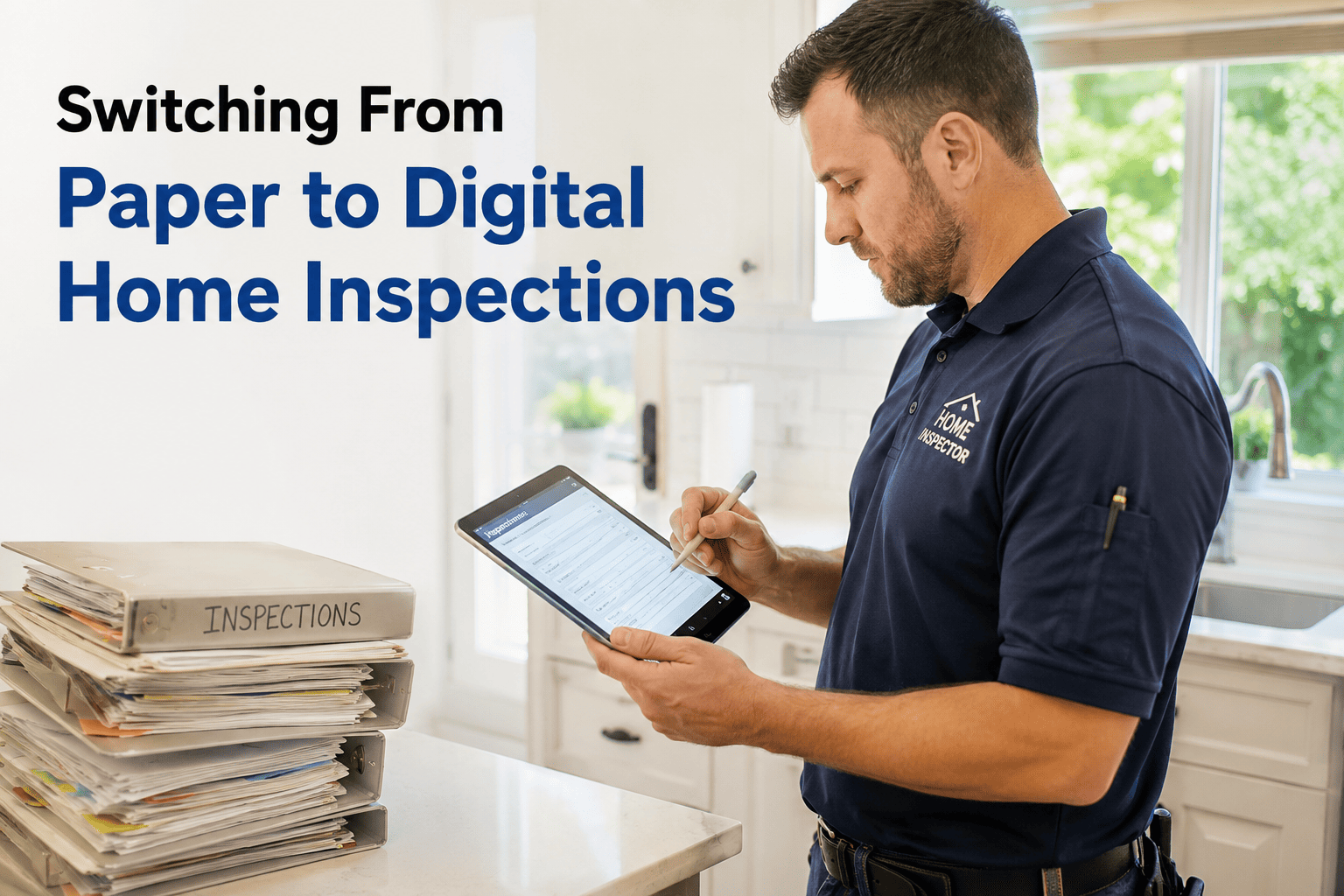

You just finished a 3-hour inspection. Your clipboard is filled with handwritten notes, abbreviations only you understand, and a few coffee stains. Now you face the real work: 2-3 hours at home typing everything into a document, sorting through 200+ photos, and formatting a report that needs to look professional enough to justify your fee.
Meanwhile, another inspector across town finished the same size house, delivered the report before leaving the driveway, and is already home with their family.
The difference? One uses paper. One uses digital.
This comparison breaks down exactly what each approach offersthe honest pros and cons—so you can decide what works better for your inspection business in 2025.
WHY THIS DECISION MATTERS MORE THAN EVERWhy This Decision Matters More Than Ever
The home inspection industry is changing faster than most inspectors realize. According to the National Association of Realtors, 60% of home buyers now prefer technology-enhanced transactions. They expect professional, digital deliverables—not handwritten notes on a clipboard.
Three factors are forcing this conversation:
Buyers compare your report to the polished materials they receive from agents, lenders, and title companies. A basic typed document or handwritten checklist stands out—and not in a good way.
In competitive markets, agents need information fast. Inspectors who deliver same-day reports get more referrals than those who take 24-48 hours. Speed has become a differentiator.
Online reviews increasingly mention report quality and delivery time. Clients notice—and comment publicly—when reports are hard to read, slow to arrive, or look unprofessional.
Part-time inspectors doing fewer than 5 inspections monthly who prioritize simplicity over efficiency and whose clients do not expect digital deliverables.
You do 10+ inspections monthly, spend more than an hour on post-inspection report writing, want to grow your business, or compete in markets where agents expect fast, professional reports.
Paper Inspection Reports: Pros and Cons
Let us be fair to paper. It has served this industry for decades, and some inspectors still prefer it. Here is an honest assessment:
- No learning curve or software to master
- No monthly subscription costs
- Works without batteries or internet
- Familiar and comfortable process
- Complete control over format and content
- 2-3 hours of report writing after each inspection
- Handwriting can be illegible, causing confusion
- Photos separated from findings, hard to match
- Double data entry (notes, then typed report)
- Physical storage and retrieval challenges
- No backup if papers are lost or damaged
Paper seems free until you count your time. At $50/hour for your labor:
- Report writing: 2 hours × $50 = $100 per inspection in time cost
- Photo management: 45 minutes × $50 = $37.50 per inspection
- Physical filing and storage: Ongoing costs for cabinets, space, organization
- Liability risk: Lost or damaged records can cost thousands in disputes
At 400 inspections per year, paper's "free" approach costs $55,000+ annually in time value alone.
Digital Inspection Reports: Pros and Cons
Digital reporting has become the industry standard for a reason, but it is not without trade-offs:
- Complete reports on-site before leaving
- Photos auto-attach to relevant sections
- Pre-written comment libraries save hours
- Consistent, professional formatting every time
- Instant delivery to clients and agents
- Cloud storage with automatic backup
- Searchable records for years of inspections
- Monthly software costs ($50-150)
- Initial learning curve (1-2 weeks)
- Requires device (tablet or smartphone)
- Battery management during long inspections
- Potential technology frustrations initially
Modern inspection apps are designed for field conditions. They work offline in basements and rural areas with no cell service, syncing automatically when you reconnect. Most inspectors find that after the initial adjustment period, digital is actually easier than paper—not harder.
Side-by-Side Comparison
Here is how paper and digital reports compare across the factors that matter most to inspection businesses:
Impact on Clients, Agents, and Reviews
Your report format affects more than just your workflow. It shapes how clients perceive your professionalism—and whether agents recommend you again.
Clients judge your expertise partly by how your report looks. A well-organized digital report with labeled photos and clear explanations builds confidence that you know what you are doing. Handwritten notes or basic typed documents can undermine the perceived value of your inspection—even if your findings are excellent.
Digital reports with photos embedded next to findings reduce misunderstandings. Clients can see exactly what you saw. Paper reports with separate photo folders create confusion: "Which picture goes with which problem?" This confusion leads to callbacks, clarification requests, and occasionally disputes.
Happy clients leave reviews. Frustrated clients leave reviews too—different kinds. Inspectors with professional digital reports and fast delivery consistently receive better reviews than those with slow, confusing paper processes. These reviews directly impact your future business.
When Inspectors Typically Switch to Digital
Most inspectors do not wake up one day and decide to go digital. They reach a tipping point where paper stops working. Common triggers include:
You are doing more inspections but still spending 2-3 hours per report. The math stops working—you cannot grow without working unsustainable hours.
At 15+ inspections per week, paper becomes a bottleneck. Reports pile up. Weekends disappear into catch-up work. Something has to change.
You receive a complaint about something you inspected but did not document clearly. Or you cannot find the records from a past inspection when you need them. The liability risk becomes real.
A client or agent comments on your report quality—or you see a competitor's polished digital report and realize you look outdated by comparison.
Agents start recommending other inspectors who deliver faster, more professional reports. You realize speed and presentation have become competitive factors.
How Digital Reporting Addresses These Challenges
Digital inspection software is not about technology for its own sake. It solves specific workflow problems that paper creates:
Instead of writing the same descriptions repeatedly, select from professionally-worded comments for common findings. Customize when needed, but start with proven language that communicates clearly to clients.
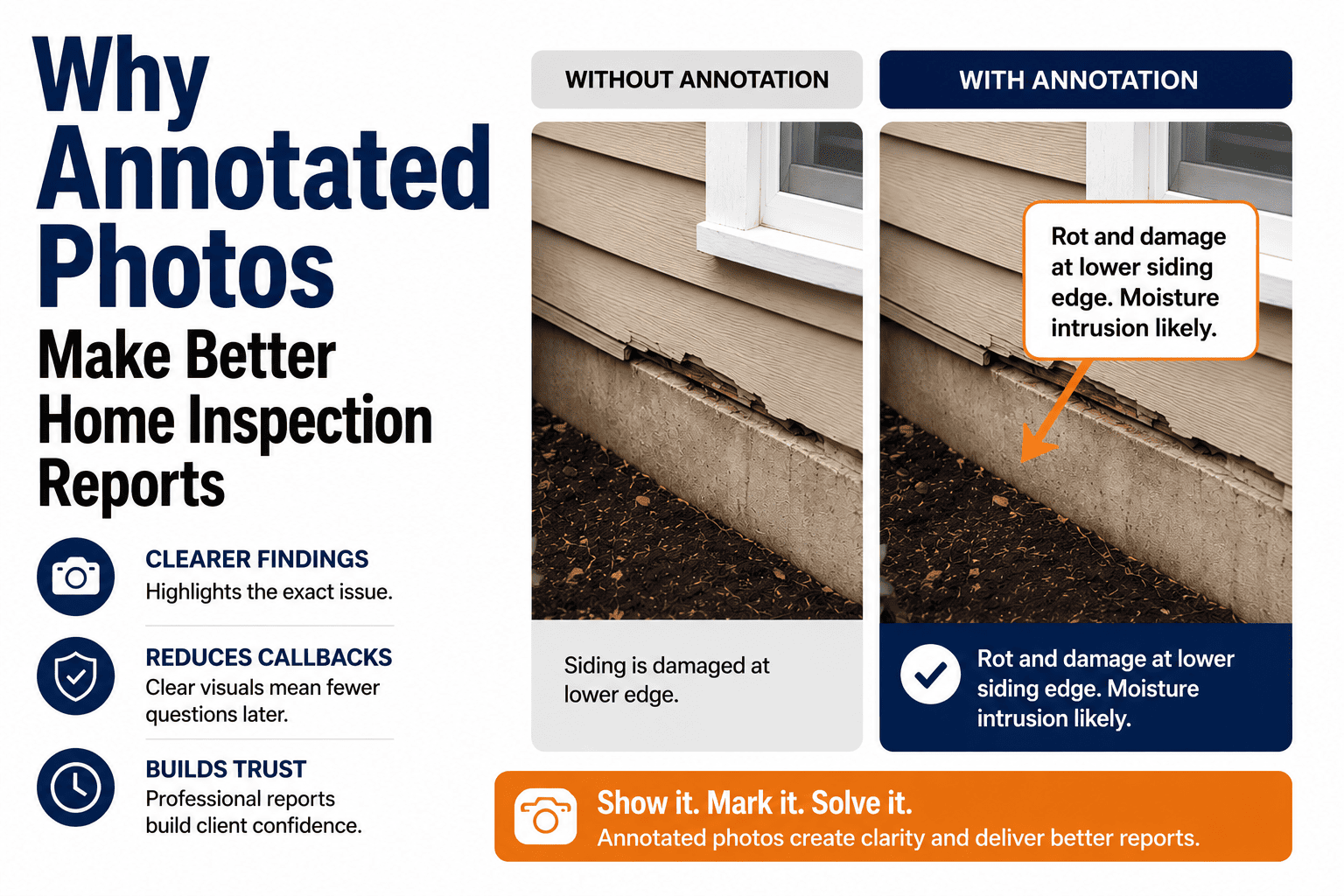
Photos attach automatically to the section where you took them. Add arrows, circles, and annotations to highlight exactly what you are describing. No more matching photo files to report sections.
Email the completed report before leaving the property. Clients and agents receive it immediately. No 24-48 hour delay, no "when will the report be ready" phone calls.
Every inspection is stored, searchable, and accessible from any device. Need to reference an inspection from three years ago? Find it in seconds. No digging through filing cabinets or storage boxes.
Is Paper Still Acceptable in 2025?
Legally, yes. Paper inspection reports are still accepted in all 50 states. There is no law requiring digital reports.
Practically, the answer is more nuanced.
- Agent expectations: Many agents now expect digital reports they can forward to clients immediately. Paper creates friction in their workflow.
- Buyer demographics: Younger home buyers—now the largest buyer segment—expect digital everything. A paper report feels outdated to them.
- Competitive pressure: In most markets, the majority of successful inspection companies have switched to digital. Paper-only inspectors increasingly compete on price rather than quality.
- Liability protection: Digital reports with timestamped photos, consistent documentation, and automatic backups provide better liability protection than paper records.
Paper is not illegal or wrong. But in 2025, it positions you differently in the market than digital does. That positioning affects referrals, reviews, and revenue.
CTA BANNER FAQ SECTIONFrequently Asked Questions
The Bottom Line
The choice between paper and digital inspection reports is not really about technology. It is about professionalism, efficiency, and how you want to compete in your market.
Paper works for inspectors who prioritize simplicity over speed, who do low volume, and whose clients do not expect modern deliverables. There is nothing wrong with that choice—if it matches your business goals.
Digital works for inspectors who want to deliver faster, look more professional, reduce liability, and scale their business without working longer hours. The monthly software cost is offset many times over by time savings.
The question is not "which is better?" The question is "which serves your business and your clients better in 2025?"
If you are spending evenings writing reports instead of spending time with family—or if agents have stopped calling as often as they used to—it may be time to evaluate your current workflow honestly.