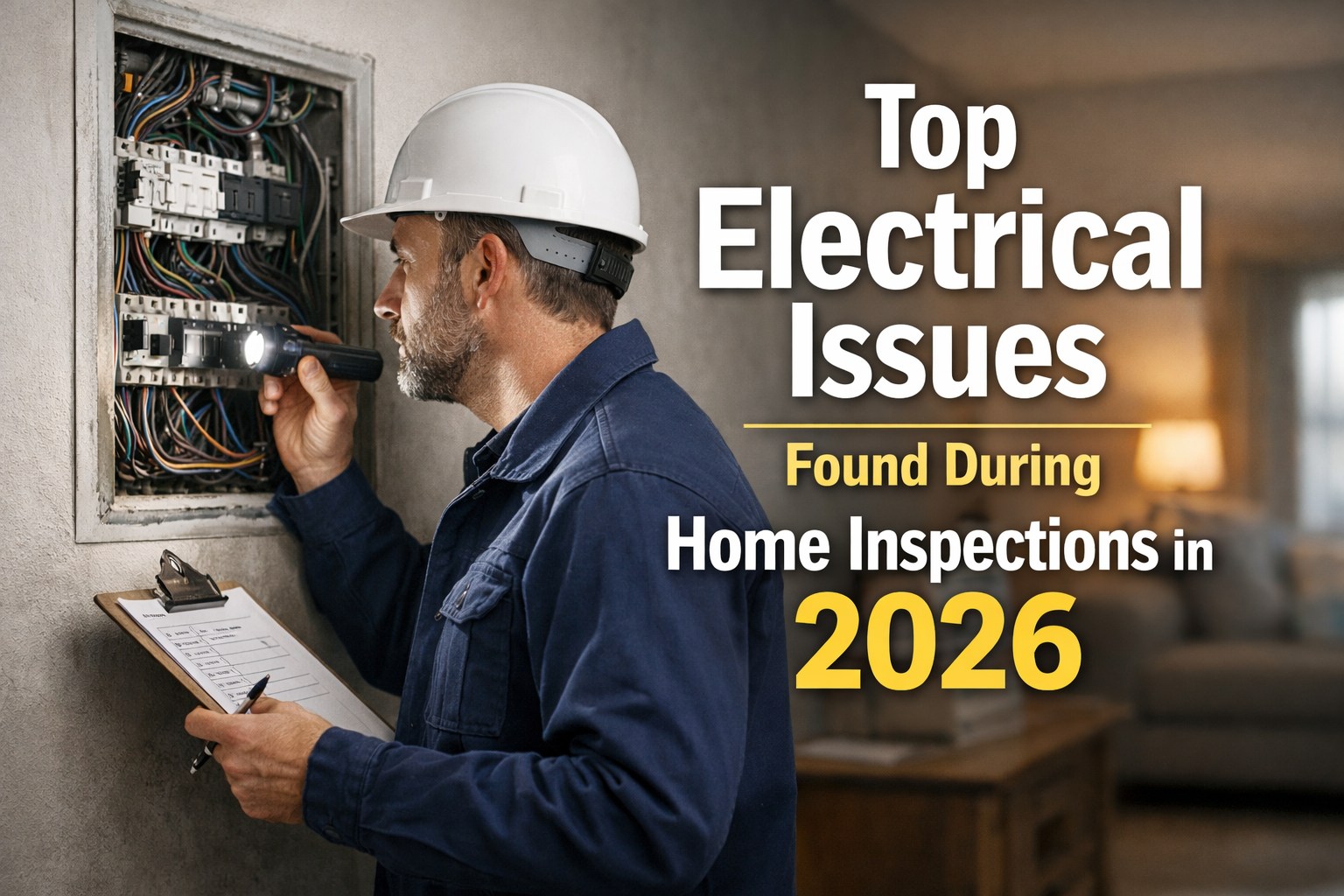

The electrical panel is one of the most importantand most scrutinizedparts of your inspection report. Miss a double-tapped breaker or fail to clearly document an undersized service, and you're opening yourself to callbacks and liability. Here's how to identify, photograph, and document common panel issues with professional, defensible language.
What Are the Most Common Electrical Panel Issues to Report?
The most frequently reported panel defects include double-tapped breakers (multiple wires on single-pole breakers not rated for it), missing knockouts creating openings in the panel, improper breaker brands (non-compatible breakers installed), evidence of overheating (discoloration, melted plastic), and undersized service for the home's electrical load. Each requires clear documentation with photos showing the specific issue and professional narrative language.
Need pre-written electrical panel narratives? Schedule a demo to see HomeInspecto's 200+ electrical comments ready for one-tap insertion.
Double-Tapped Breakers
Double-tapping is the most common panel defect you'll encounter. It occurs when two or more wires connect to a single breaker terminal not designed for multiple conductors.
Double-Tapped Breaker
Safety ConcernWhat to Look For
- Two or more wires under a single breaker terminal screw
- Check breaker labeling—some are rated for two wires
- Square D and Cutler-Hammer make some dual-rated breakers
- Most single-pole breakers are NOT rated for multiple wires
Why It Matters
- Loose connections cause arcing and overheating
- One wire can back out over time
- Creates potential fire hazard
- Violates NEC installation standards
"Double-tapped breaker observed at the electrical panel—two conductors connected to a single-pole 20-amp breaker not rated for multiple wires. This condition creates a potential loose connection and fire hazard. Recommend evaluation and correction by a licensed electrician to ensure each circuit has a dedicated, properly-rated breaker connection."
Missing Knockouts
Open knockouts allow pests, debris, and fingers to enter the panel enclosure—a safety and code violation that's easy to spot and document.
Missing Knockout / Open Panel
Repair NeededWhat to Look For
- Open holes where knockouts have been removed
- Missing cable clamps at wire entry points
- Gaps around conduit connections
- Missing dead-front cover or damaged enclosure
Why It Matters
- Exposes energized components
- Allows pest entry (rodents, insects)
- Accumulates debris and moisture
- NEC requires panel enclosure integrity
"Open knockout(s) observed on the electrical panel enclosure, creating an unsealed opening to energized components. This condition presents a safety hazard and allows entry of pests and debris. Recommend installing appropriate knockout seals or fillers to restore panel enclosure integrity."
Improper Breaker Brand
Breakers must be compatible with the panel—using a different brand can cause poor fit, arcing, and overheating even if the breaker appears to work.
Incompatible Breaker Brand
Safety ConcernWhat to Look For
- Breaker brand doesn't match panel manufacturer
- Check panel labeling for approved breaker types
- Common issue: GE breakers in Square D panels
- Some "classified" breakers are UL-listed for specific panels
Why It Matters
- Poor bus bar contact causes arcing
- May not trip properly under fault conditions
- Voids panel UL listing
- Insurance and code compliance issues
"Breaker(s) installed in the electrical panel do not match the panel manufacturer and are not listed as compatible replacements. [Brand] breakers were observed in a [Panel Brand] panel. Incompatible breakers may not properly engage the bus bars, creating a fire hazard. Recommend replacement with manufacturer-approved breakers by a licensed electrician."
Evidence of Overheating
Discoloration, melted plastic, or heat damage indicates serious electrical issues that require immediate attention. Document thoroughly with photos.
Overheating / Thermal Damage
Immediate ActionWhat to Look For
- Discolored, brown, or blackened wiring insulation
- Melted plastic on breakers or bus bars
- Burn marks on panel enclosure
- Smell of burnt plastic or electrical odor
- Warm or hot breakers (use back of hand)
Why It Matters
- Indicates active or past overloading
- Damaged insulation exposes live conductors
- May indicate failing breaker or connection
- Fire hazard requiring immediate evaluation
"Evidence of overheating observed in the electrical panel—[describe specific location: e.g., discoloration on the 40-amp breaker, melted insulation on conductors at the main lug]. This condition indicates a potentially serious electrical issue and fire hazard. Recommend immediate evaluation by a licensed electrician prior to close of escrow. Power to affected circuits should be limited until repairs are completed."
More Common Panel Issues
Beyond the major defects above, watch for these additional issues during your panel inspection:
No Main Disconnect
Six-throw rule requires main disconnect or max 6 breakers to shut off all power
Improper Grounding
Missing ground rod, improper bonding, or no grounding electrode conductor
Corroded Components
Rust, corrosion, or moisture damage inside panel enclosure
Missing/Illegible Labels
Circuit directory missing, incomplete, or unreadable
Undersized Service
60-amp or 100-amp service may be inadequate for modern electrical loads
Aluminum Wiring
Single-strand aluminum branch wiring (1965-1973) requires special handling
Federal Pacific / Zinsco
Known defective panels with documented failure rates
Overfused Circuits
Breaker amperage exceeds wire rating (e.g., 30A breaker on 14-gauge wire)
200+ electrical narratives ready to use. HomeInspecto includes complete comment libraries for panels, wiring, outlets, and more. Start your free trial →
Photo Documentation Tips
Good photos make your electrical findings defensible. Here's what to capture:
Panel Overview (Cover On)
Show panel location, clearance, and labeling. Include any visible damage or rust on enclosure.
Panel Overview (Cover Off)
Overall shot showing all breakers, wiring, and general condition. Capture the whole picture first.
Data Plate / Label
Manufacturer, model, amperage rating, and approved breaker types. Critical for documentation.
Specific Defects (Close-Up)
Individual shots of each issue—double-taps, corrosion, damaged wires. Get close enough to show detail.
Grounding System
Ground rod, bonding connections, and grounding electrode conductor where visible.
Service Entry
Meter base, service entrance cables, weatherhead, and mast condition if accessible.
Pro Photo Tip
Use a flashlight to illuminate inside the panel—smartphone flashes often wash out details. Hold steady and take multiple shots of each defect from slightly different angles.
Panel Inspection Workflow
Follow this sequence for thorough, consistent panel inspections:
Safety First
Stand on dry surface, use insulated tools, never touch bus bars. Ensure good lighting.
Exterior Check
Location, clearance (30" front, 36" depth), damage, weatherproofing if outdoor.
Document Data Plate
Photo and note manufacturer, model, amperage, approved breaker types.
Remove Dead Front
Carefully remove cover. Photo overall interior condition before detailed inspection.
Systematic Scan
Check each breaker, connection, and wire. Look for double-taps, corrosion, damage.
Document Findings
Photo and note each defect with location. Include close-ups and context shots.
See Electrical Reporting in Action
Watch how HomeInspecto streamlines panel documentation with guided checklists and one-tap narratives.
Schedule 15-Min DemoComplete Sample Report Narratives
Copy and adapt these professionally-written narratives for your reports:
The electrical panel is a 200-amp Square D Homeline located in the garage. The panel appeared to be in serviceable condition. Breakers were properly seated with no evidence of double-tapping, overheating, or corrosion observed. The panel was properly grounded and bonded. Circuit directory was present and legible. No deficiencies noted at the time of inspection.
The 150-amp electrical panel is located in the basement utility room. The following conditions were observed: (1) Two instances of double-tapped breakers on 15-amp circuits—breakers not rated for multiple conductors; (2) One missing knockout seal on the lower right of the enclosure; (3) Circuit directory is incomplete with several unlabeled breakers. Recommend evaluation and correction of these conditions by a licensed electrician.
A Federal Pacific "Stab-Lok" electrical panel was identified. These panels have a documented history of breaker failures and are considered a significant fire hazard by industry professionals. Evidence of overheating was observed on the main breaker connections—discoloration and slight melting of wire insulation visible. Due to the known issues with this panel type and the evidence of overheating, recommend immediate evaluation by a licensed electrician and strong consideration of panel replacement prior to close of escrow.
Frequently Asked Questions
Should I operate breakers during the inspection?
Most standards of practice don't require operating breakers, and doing so can create issues (tripping GFCI/AFCI, resetting clocks, disrupting equipment). If you do test, inform the client first. Focus on visual inspection—proper seating, evidence of tripping, physical damage. Operating breakers is generally optional and at your discretion.
How do I report a Federal Pacific or Zinsco panel?
State the facts: identify the panel brand/type, note that these panels have documented issues with breaker failure, and recommend replacement by a licensed electrician. Avoid predicting specific outcomes ("will cause a fire") but be clear about the known concerns. Reference that information is available from CPSC and industry sources if needed.
What about "classified" or aftermarket breakers?
Some breakers are UL-classified as acceptable replacements for specific panel brands (e.g., Eaton CL breakers). Check the breaker label—it should list compatible panels. If the breaker is classified for that panel, it's acceptable. If not labeled as compatible, report as an incompatible breaker. When in doubt, recommend electrician verification.
How do I assess if service size is adequate?
Note the service amperage (typically stamped on main breaker or data plate). 100-amp is minimum for most modern homes; 200-amp is standard for larger homes or those with high electrical loads (electric heat, EV charging, hot tubs). Don't perform load calculations—that's beyond inspection scope. Simply note the service size and recommend evaluation if it appears undersized for the home's needs or if the panel is full with no expansion capacity.
Should I report on the service entrance and meter?
Yes, document visible conditions: weatherhead, mast, drip loops, meter base corrosion, and service entrance cable condition. Note that the meter and utility connections are typically utility company responsibility. Report obvious defects (damaged cables, improper clearances, missing weather protection) and recommend utility company or electrician evaluation as appropriate.
Professional Electrical Reports, Faster
HomeInspecto includes 200+ pre-written electrical narratives, panel checklists, and photo prompts.
- ✓ One-tap electrical comments
- ✓ Panel inspection checklists
- ✓ Photo documentation guides
- ✓ Mobile inspection app