
A professional inspection report separates successful inspectors from struggling ones. The right template doesn't just organize your findings—it protects you legally, impresses agents, and helps clients actually understand what you found. This guide covers the essential report templates every inspector needs, plus how to customize them for your market.
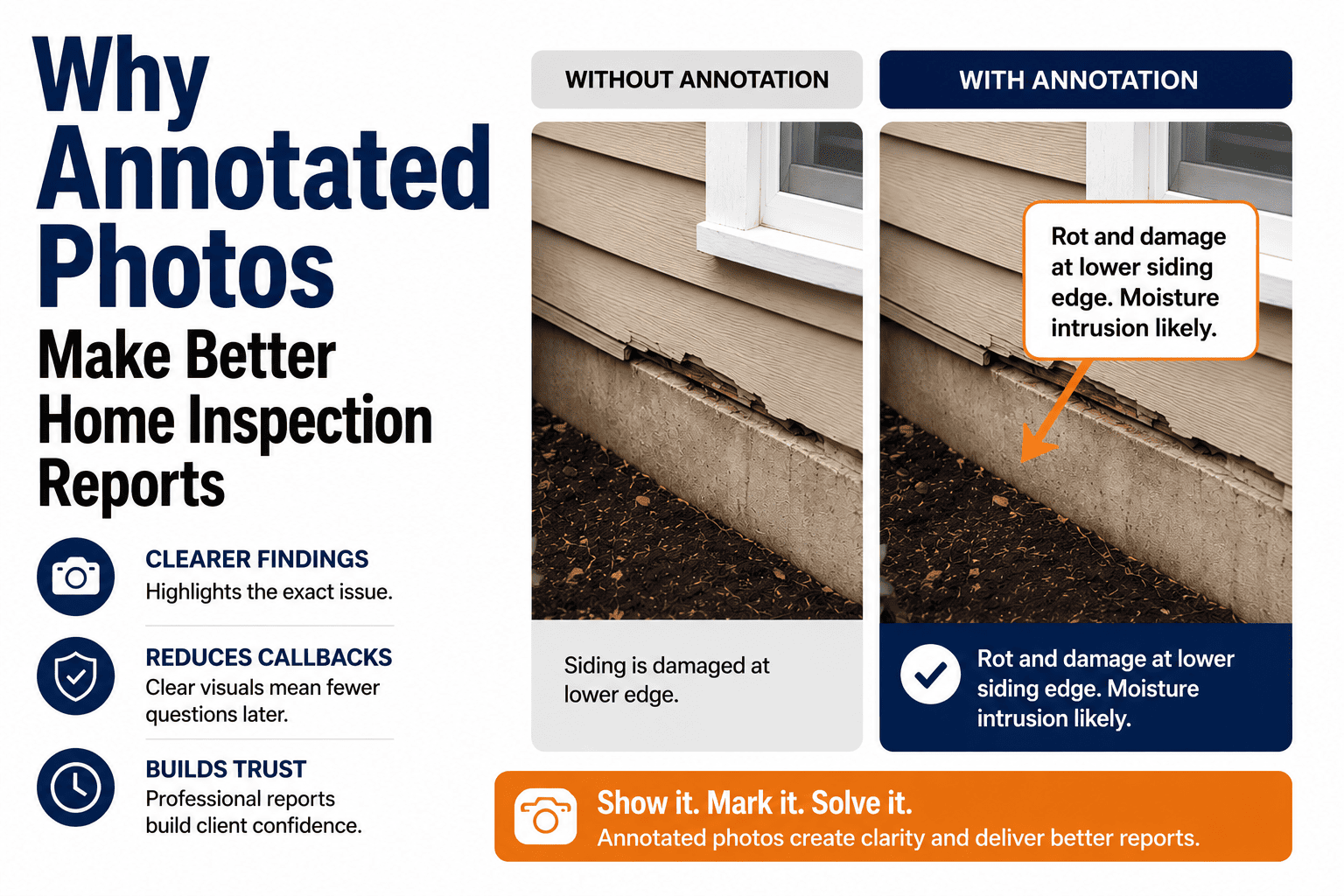
What makes a great inspection report template? The best templates include five core elements: (1) clear property identification, (2) systematic organization by component, (3) standardized severity ratings, (4) photo integration with annotations, and (5) summary sections for quick reference. A well-designed template cuts report writing time by 40% while improving client satisfaction scores.
HomeInspecto includes 25+ report templates—fully customizable, legally reviewed, and optimized for mobile delivery. Start with proven layouts, make them yours.
The 5 Elements of Effective Report Templates
Every professional report template should include these components:
Property & client info
Key findings overview
Organized by component
Visual documentation
Severity indicators
Essential Report Sections (10 Templates)
Cover Page Template
Professional first impression with property photo, address, inspection date, inspector credentials, and company branding. Include license number and E&O insurance info for credibility.
Executive Summary
One-page overview highlighting major concerns, safety issues, and recommended actions. Agents and clients read this first. Organize by priority: safety, major defects, maintenance items.
Property Information
Square footage, year built, foundation type, roof material, HVAC age, water heater specs. Creates baseline reference and helps with future comparisons.
Scope & Limitations
Clear statement of what was inspected, what wasn't accessible, and why. Weather conditions, occupancy status. Critical for liability protection—never skip this section.
Exterior Section
Siding, trim, windows, doors, grading, drainage, driveways, walkways, decks, porches. Include directional references (north side, front elevation) for clarity.
Roofing Section
Covering material, flashing, penetrations, gutters, ventilation, estimated age and remaining life. Always note inspection method: walked, ladder, drone, ground-level only.
Structural Section
Foundation, framing, floor systems, load-bearing walls. Settlement cracks vs. structural concerns. Use clear language distinguishing cosmetic from structural issues.
Systems Sections
Electrical, plumbing, HVAC each get dedicated sections with equipment specs, age, condition, and defects. Include model/serial numbers for age verification.
Interior Section
Room-by-room or component-based approach covering walls, ceilings, floors, doors, windows, stairs. Consistent organization helps clients follow along during walkthrough.
Maintenance Recommendations
Seasonal maintenance checklist, service schedules for HVAC/water heater, general homeowner tips. Value-add section that clients appreciate and reference later.
Residential Report Templates (8)
Single-Family Home
Comprehensive template for detached homes covering all major systems, exterior, interior, and site conditions. Most common template—customize for your market's typical home age and style.
Condo/Townhome
Modified template focusing on unit-specific items. Notes HOA responsibility areas, limited common elements, shared systems. Include disclaimer about areas outside inspection scope.
New Construction
Punch-list focused template for homes under builder warranty. Emphasizes workmanship, code compliance, completion items. Include builder warranty reminder and recommend 11-month follow-up.
Pre-Listing (Seller)
Same thoroughness as buyer inspection but framed for seller use. Helps sellers address issues before listing. Recommend repairs vs. disclose—seller decides action items.
Investor/Rental
Focus on capital expenditure items, deferred maintenance costs, safety compliance. Less emphasis on cosmetics. Include estimated repair costs when possible—investors want numbers.
Historic Home
Specialized template acknowledging period-appropriate construction methods, materials, and systems. Note what's original vs. updated. Distinguish "different" from "defective."
Mobile/Manufactured Home
HUD-specific requirements, anchoring systems, chassis inspection, leveling. Different standards than site-built. Include HUD data plate info and note applicable standards.
Multi-Family (2-4 Units)
Template covering multiple dwelling units with shared and individual systems. Unit-by-unit organization. Note which systems serve which units. Common area documentation.
Commercial Report Templates (6)
Small Commercial
Office buildings, retail spaces, small warehouses. Similar to residential but with commercial-specific systems. ADA compliance notes, fire suppression, commercial HVAC, 3-phase electrical.
Property Condition Report
ASTM E2018 compliant template for commercial due diligence. Detailed cost tables, remaining useful life. Required format for many lenders and institutional buyers.
Restaurant/Food Service
Kitchen equipment, grease traps, ventilation hoods, walk-in coolers, health code considerations. Note what requires health dept approval vs. general building issues.
Industrial/Warehouse
Clear height, dock equipment, floor load capacity, fire suppression, industrial electrical. Environmental concerns—note but don't assess (Phase I territory).
Mixed-Use Building
Combination commercial/residential requiring both approaches. Clear separation between use types. Document egress, fire separation, and utility metering for each use.
Property Condition Update
Follow-up template for previously inspected commercial properties. Tracks changes, completed repairs. Reference original report findings. Note what's improved, deteriorated, unchanged.
HomeInspecto includes all report templates above—professionally designed, mobile-optimized, and ready to customize with your branding.
- 25+ report templates — Residential, commercial, specialty inspections
- Auto-formatting — Photos, narratives, and summaries generate automatically
- Brand customization — Your logo, colors, and contact info on every report
- Instant delivery — PDF, web link, or both—clients get reports in minutes
No credit card required • Full access • Cancel anytime
Specialty Report Templates (8)
Radon Testing
EPA-compliant radon test documentation. Device placement, testing period, results interpretation. Include EPA action level reference (4.0 pCi/L) and mitigation recommendations.
Wood-Destroying Organisms
State-specific WDO/WDI report template. Evidence of infestation, damage, conducive conditions. Use your state's required form format if mandated.
Mold Assessment
Visual mold inspection documentation. Moisture readings, affected areas, sampling locations if applicable. Clear disclaimer: visual inspection only unless lab testing performed.
Pool & Spa
Pool shell, equipment, safety barriers, electrical bonding. Hot tubs, water features. Safety focus: GFCI, barriers, entrapment hazards, diving depth.
Septic System
Tank location, capacity, condition. Distribution system evaluation. Pumping records if available. Note limitations—inspection ≠ certification. Recommend pumping/further evaluation.
Well Water
Well equipment, flow rate, pressure tank, water quality sampling documentation. Include lab results format, interpretation guidance, and treatment recommendations.
Sewer Scope
Video inspection documentation template. Pipe material, condition, defects, locations. Screenshot integration. Include footage timestamps and distance markers for reference.
11-Month Warranty
Builder warranty inspection before 1-year coverage expires. Focus on warranty-covered items. Prioritize items builder is obligated to address under warranty terms.
Stop Building Reports From Scratch
With HomeInspecto's template library, you'll have a professional starting point for every inspection type. Customize once, reuse forever—your reports will be consistent, complete, and client-ready.
Template Customization Tips
Make any template work for your business:
Add Your Branding
Logo, company colors, contact info, license numbers. Consistent branding builds recognition and trust with agents.
Customize for Your Market
Basements in the North, termites in the South, earthquakes in California. Add region-specific sections.
Include Your Agreement
Inspection agreement, scope of work, and limitations should be part of every report package.
Test with Real Inspections
Use new templates on 3-5 real inspections before making them your default. Refine based on actual use.
Report Template FAQs
25-50 pages is typical for a thorough residential inspection. Length varies by property size and condition. Focus on completeness over brevity—but don't pad with unnecessary content. Include photos (30-100 is common) and write concise narratives.
Put the summary at the beginning. Busy agents and clients want key findings immediately. The full report provides backup details. Some inspectors also include a summary at the end—but the beginning is essential.
Offer both. PDF for printing and archiving, web-based for easy mobile viewing. Web reports with interactive features (clickable table of contents, expandable sections) get higher client engagement. Most software offers both formats.
Use ranges, not specific numbers. "Typical cost: $2,000-$4,000" is better than "$2,500." Always recommend getting quotes from contractors. Some inspectors avoid costs entirely—check your E&O policy for guidance.
Use a base template with variations. Your core residential template works for 80% of inspections. Create variations for condos, new construction, and specialty services. This ensures consistency while addressing different inspection types appropriately.
Professional Reports, Zero Effort
HomeInspecto's templates are designed by inspectors, for inspectors. Start creating polished, branded reports that impress clients and agents.