
Your clients don't speak "inspector." They speak "Is this house safe?" and "How much will this cost me?" Yet most inspection reports read like technical manualsfilled with jargon, overwhelming details, and buried recommendations that leave buyers confused and anxious.
The result? Confused clients call you back repeatedly. Agents get frustrated, and deals fall through over misunderstandings that clear templates could have prevented.
This guide shows you exactly how to structure report templates that clients actually understandreducing callbacks by up to 60% while speeding up your report writing time.
The Client Confusion Crisis
Why Clients Don't Understand Traditional Reports
Understanding the root causes of client confusion helps you build better templates. Here are the four most common problems inspectors face with their reports:
Technical Jargon Overload
"Differential settlement observed" means nothing to a first-time buyer. They need plain language: "foundation showing minor uneven settling—common in homes this age." Always translate technical terms into everyday language that anyone can understand.
No Priority System
When everything looks equally important, clients panic over cosmetic issues while missing critical safety concerns. A loose doorknob shouldn't have the same visual weight as exposed electrical wiring. Clear prioritization prevents unnecessary anxiety.
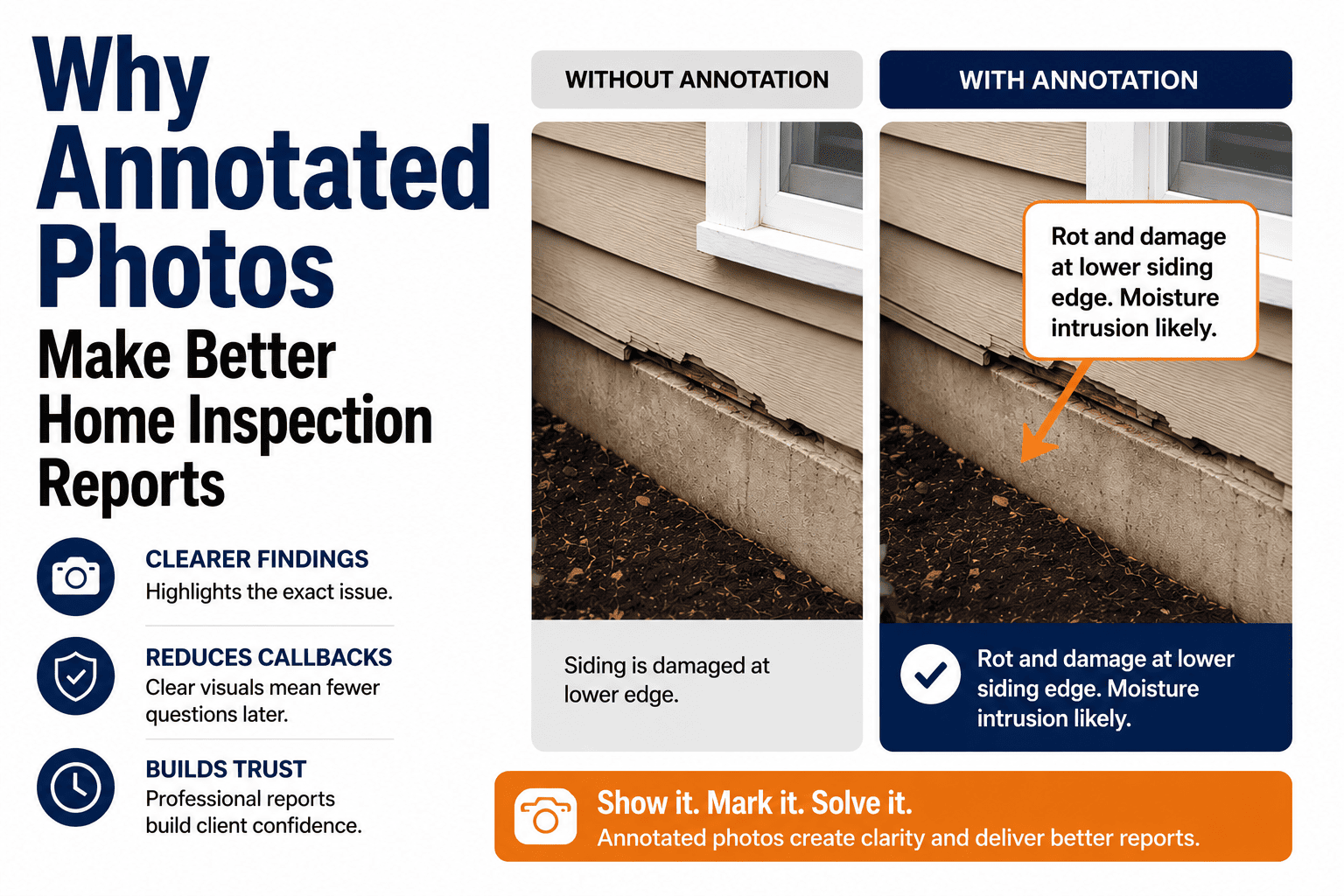
Photos Without Context
A picture of a crack means nothing without arrows, annotations, and explanations of what the client is looking at. Is that crack serious? Where exactly is it? Annotated photos with clear labels answer these questions instantly.
Missing "So What?" Factor
Reports list findings but don't explain implications. Clients need to know: "This aging water heater means you'll likely need a $1,200-1,500 replacement within 2-3 years." Context transforms observations into actionable intelligence.
The Client-Friendly Report Framework
Top inspectors use the FIR Method (Finding → Implication → Recommendation) to transform confusing observations into actionable insights. This framework ensures every issue answers three questions: What's wrong? Why does it matter? What should I do?
Finding
What you observed
Implication
Why it matters
Recommendation
What to do next
The Ideal Report Template Structure
A well-organized report guides clients through your findings logically. Here's the proven four-section structure that reduces confusion and keeps clients engaged:
Executive Summary
One-page overview with major findings, safety concerns, and estimated repair costs. This is what 80% of clients read first—make it count with a clear verdict on the home's condition.
System-by-System Findings
Organized sections for Roof, Electrical, Plumbing, HVAC, Structure, and Interior. Each section follows the FIR method with annotated photos placed directly next to relevant findings.
Maintenance Recommendations
Future care items that help homeowners plan ahead. This positions you as a trusted advisor—not just someone who finds problems. Include seasonal tips and replacement timelines.
Glossary & Resources
Simple definitions of technical terms plus links to educational resources for clients who want to learn more. This prevents confusion without cluttering your main findings.
The Priority System Clients Love
Visual categorization helps clients instantly understand what needs immediate attention versus what can wait:
Priority 1: Safety Hazard
Immediate attention required. Could cause injury or major damage if not addressed before move-in.
Priority 2: Major Defect
Significant repair needed within 30-90 days. Should be negotiated before closing or budgeted immediately.
Priority 3: Minor Issue
Maintenance items or cosmetic concerns. Can be addressed after move-in at homeowner's convenience.
Priority 4: Monitor
Not a current problem but worth watching. Include in annual maintenance checks.
Report Language: Before vs. After
Common Questions About Report Templates
Quality over quantity. A focused 25-30 page report with clear photos beats a 70-page technical manual. The executive summary should be one page maximum.
Yes—cost ranges are helpful. Use words like "typically" and "approximately" to provide value while protecting yourself from guarantees.
Executive summaries solve this. Agents get a quick one-page overview while detailed findings remain available for clients who want depth.
Start with a core template, but customize for property types. Condos need HOA sections; older homes need age-related checks like lead paint.