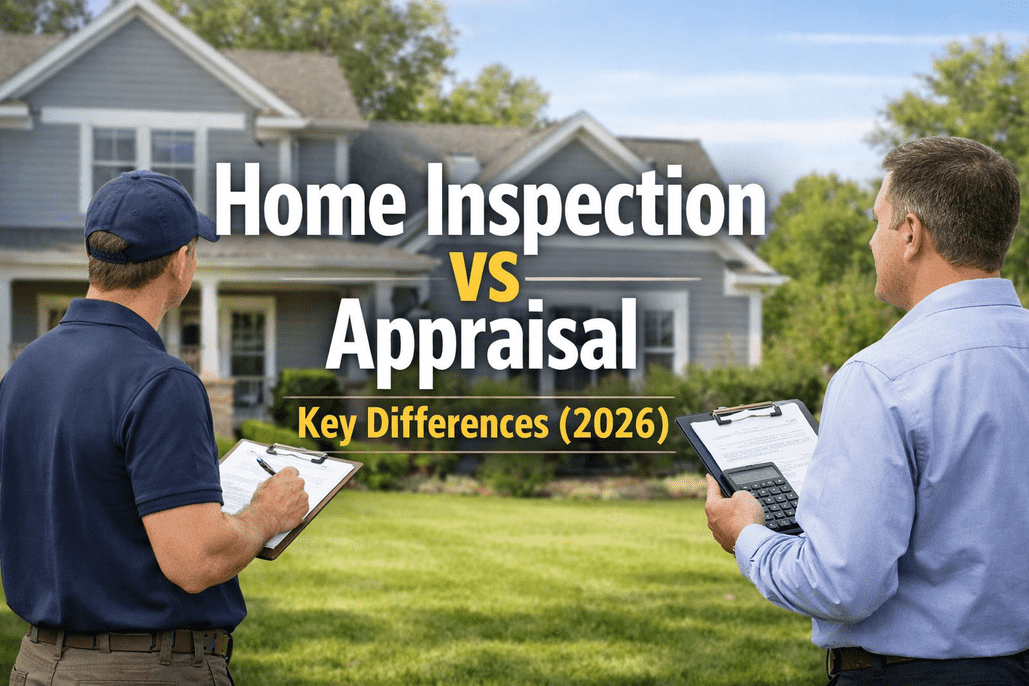
First-time buyers often confuse home inspections and appraisals — and it's easy to see why. Both involve a professional visiting the property, both happen during the buying process, and both cost around $300–$500. But they serve completely different purposes, are conducted by different professionals, and protect different parties in the transaction. Here's the short version: an appraisal determines what the home is worth; an inspection determines what condition it's in. One protects the lender's investment; the other protects yours. In most purchases, you'll need both — and spending the combined $600–$800 is one of the smartest moves you'll make when the average home costs $385,000 and 86% of inspections reveal at least one issue that needs repair. This guide breaks down every difference so you know exactly what to expect, what each costs, who pays, and how to use both to negotiate the best deal in 2026.
Inspection
"What condition is this house in?"
PurposeEvaluates physical condition
ProtectsThe buyer
Required?Optional (but strongly recommended)
Average Cost$296 – $424
Duration2 – 4 hours
Who PaysBuyer (at time of inspection)
Hired ByBuyer or buyer's agent
VS
Appraisal
"What is this house worth?"
PurposeDetermines market value
ProtectsThe lender
Required?Yes (for any mortgage)
Average Cost$313 – $422
Duration30 min – 1 hour on-site
Who PaysBuyer (included in closing costs)
Hired ByLender selects the appraiser
$343Avg inspection cost
$357Avg appraisal cost
$14KAvg savings from inspection negotiations
86%Inspections find issues
Your inspection report matters. HomeInspecto helps inspectors deliver photo-rich, branded reports that give buyers the clarity they need to negotiate confidently.
Start Free Trial
Head-to-Head: What Each Evaluates
While both professionals visit the property, they're looking at very different things — and their reports serve different audiences.
Foundation & structural integrity
Detailed
Basic
Roof condition & remaining life
Detailed
Basic
Electrical system & wiring
Detailed
Not checked
Plumbing — pipes, fixtures, water heater
Detailed
Not checked
HVAC — heating & cooling systems
Detailed
Basic
Comparable home sales (comps)
Not evaluated
Core focus
Market conditions & location
Not evaluated
Core focus
Square footage & lot size
Not evaluated
Measured
Safety hazards (fire, electrical, gas)
Detailed
Flagged if obvious
Estimated repair costs
Sometimes
Not provided
Thoroughly Evaluated
Basic / Partial
Not Covered
When Each Happens in the Buying Process
Timing matters. Always get the inspection done first — if it reveals major issues, you may want to renegotiate or walk away before the appraisal locks in the value.
1
Offer AcceptedPurchase contract signed with inspection & appraisal contingencies
2
Home InspectionDays 3–10 after offer. Buyer hires inspector. 2–4 hour on-site visit.
3
Negotiate RepairsReview report. Request repairs, price reduction, credits, or walk away.
4
Home Appraisal1–2 weeks before closing. Lender orders appraiser. 30–60 min visit.
5
Close the DealBoth contingencies met. Finalize mortgage. Sign closing documents.
What Happens When Results Are Bad?
Both inspection and appraisal results can change the course of your purchase — but in different ways.
AAccept as-is — minor issues you're willing to handle yourself after closing
BRequest repairs — ask the seller to fix specific issues before closing (46% of buyers do this)
CNegotiate price — lower the purchase price to cover future repair costs (avg savings: $14,000)
DWalk away — your inspection contingency lets you cancel and recover earnest money
AIncrease down payment — pay cash to cover the gap between appraised value and loan amount
BNegotiate lower price — ask the seller to reduce the price to match the appraised value
CRequest reconsideration — challenge the appraisal with additional comparable sales data (ROV)
DWalk away — your appraisal contingency lets you cancel and recover earnest money
Better Reports Mean Better Negotiations
HomeInspecto helps inspectors deliver clear, photo-rich reports with severity ratings — giving buyers the evidence they need at the negotiation table.
Do You Need Both? A Quick Decision Guide
Buying with any mortgage (conventional, FHA, VA, USDA)
First-time homebuyer (you need maximum protection)
Older home (pre-1990s with aging systems)
Any property where you want full negotiating power
Buying with cash (appraisal not required but inspection still protects you)
Buying "as-is" (inspection tells you what you're accepting)
New construction (65% of new builds have issues; 24% fail first inspection)
Pre-listing (sellers use inspections to fix issues before listing)
Refinancing your existing mortgage
Applying for a home equity loan or HELOC
Divorce proceedings requiring property valuation
Appealing property tax assessment
2026 Trends Both Buyers and Inspectors Should Know
Market
Fewer Buyers Waiving Inspections
In 2022's peak, many buyers waived inspections to win bidding wars. That's dropped 60%. In 2026, only about 14% of buyers skip inspections — the lowest rate in five years. The balanced market gives buyers leverage again.
NAR Impact
Buyers Negotiating More Aggressively
Since the NAR settlement, buyers are paying their own agent fees (2–3%). This makes inspection-informed negotiations even more critical — buyers are using reports to offset these new costs through repair credits and price reductions.
Technology
Same-Day Reports with AI Tools
30% of inspectors now use AI-powered reporting tools. Same-day report delivery is becoming the norm, giving buyers faster access to findings and more time to negotiate within their contingency window.
Frequently Asked Questions
What is the main difference between a home inspection and an appraisal?
An inspection evaluates the physical condition of the home — structure, roof, electrical, plumbing, HVAC, and more — to identify problems and safety hazards. An appraisal estimates the home's market value by comparing it to similar recently sold properties. The inspection protects the buyer; the appraisal protects the lender.
Do I need both an inspection and an appraisal?
If you're buying with a mortgage, the appraisal is required by your lender. The inspection is technically optional but strongly recommended — 86% of inspections find issues, and buyers who use results to negotiate save an average of $14,000. The combined cost of about $700 is a small price for the protection both provide on a $385,000 purchase.
Which should I do first — the inspection or the appraisal?
Always get the inspection first, within the first 7–10 days after your offer is accepted. If the inspection reveals major problems, you can renegotiate or walk away before spending money on an appraisal. The appraisal typically happens 1–2 weeks before closing.
Can a bad inspection kill the deal?
It can, but it usually doesn't have to. Most buyers use inspection results to negotiate rather than walk away. You can request repairs, ask for a price reduction, or accept the findings. Your inspection contingency gives you the option to cancel if the seller won't cooperate. In 2026's balanced market, sellers are generally more willing to negotiate than during the 2021–2022 frenzy.
What happens if the appraisal comes in lower than the purchase price?
A low appraisal creates an "appraisal gap" — the lender won't loan more than the appraised value. You can cover the difference with cash, negotiate a lower price with the seller, request a reconsideration of value (ROV), or walk away using your appraisal contingency. This is less common in a balanced market but still happens.
How can I find a good home inspector?
Look for ASHI or InterNACHI certification, state licensing, and strong online reviews. Ask your agent for recommendations but verify independently. A great inspector uses modern tools like
HomeInspecto to deliver detailed, photo-rich reports with severity ratings and clear summaries.
Schedule a demo to see what a professional report looks like.
The Best Reports Make the Best Negotiations
HomeInspecto helps inspectors deliver clear, professional reports that give buyers the evidence they need. Try free today.