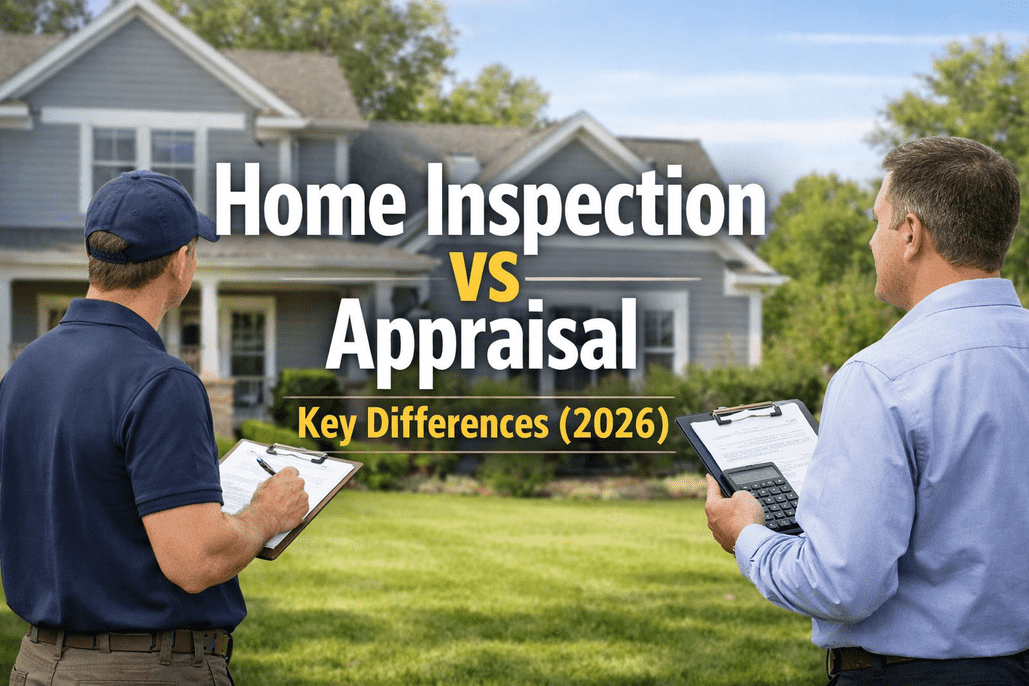

When buying a home, you'll encounter two important evaluations that can make or break your purchase decision: the home inspection and the appraisal. While both involve professionals examining your prospective property, they serve completely different purposes and understanding this difference between home inspection and appraisal can save you thousands of dollars.
First-time buyers often ask "do I need both inspection and appraisal?" thinking one might substitute for the other. According to the National Association of Realtors (NAR), 86% of home inspections uncover issues requiring attention—issues that appraisals simply don't look for. This is why understanding inspection vs appraisal explained properly is crucial before you sign any contracts.
This guide breaks down everything you need to know, helping you understand when each happens, what each covers, and why skipping either one could be the most expensive decision you make as a homebuyer.
Home Inspection vs Appraisal: Quick Comparison
Before diving into the details, here's a side-by-side comparison that explains appraisal vs inspection for buyers at a glance:
| Factor | Home Inspection | Home Appraisal |
|---|---|---|
| Primary Purpose | Evaluate physical condition | Determine market value |
| Key Question Answered | "What's wrong with this house?" | "What is this house worth?" |
| Who Performs It | Licensed home inspector | Licensed appraiser |
| Who Orders It | Buyer | Lender |
| Required? | Optional (but strongly recommended) | Required for most mortgages |
| Average Cost (2026) | $296 – $424 | $314 – $424 |
| Duration | 2 – 4 hours on-site | 30 minutes – 1 hour on-site |
| Report Delivery | 24 – 48 hours | 3 – 10 business days |
| Who Benefits | Primarily the buyer | Primarily the lender |
| Affects Loan Approval? | Indirectly (through contingency) | Directly (loan amount tied to value) |
What Is a Home Inspection?
A home inspection is a thorough, visual examination of a property's physical condition performed by a licensed professional inspector. The inspector works for youthe buyer—and their job is to identify existing problems, potential safety hazards, and items that may need repair or replacement.
According to standards published by the American Society of Home Inspectors (ASHI), a standard home inspection should examine all major systems and components that are visible and accessible. The inspector doesn't just glance at things; they test, probe, and document everything they find.
What Home Inspectors Examine
Structural Components
- Foundation walls and slabs
- Floor framing and joists
- Roof framing and trusses
- Load-bearing walls
- Basement and crawlspace
Exterior Elements
- Roof covering and flashing
- Gutters and downspouts
- Siding and trim
- Windows and doors
- Driveways and walkways
Electrical Systems
- Main service panel
- Circuit breakers and wiring
- Outlets and switches
- GFCI/AFCI protection
- Grounding and bonding
Plumbing Systems
- Water supply lines
- Drain and waste pipes
- Water heater condition
- Fixtures and faucets
- Water pressure testing
HVAC Systems
- Heating equipment
- Cooling equipment
- Ductwork condition
- Thermostats
- Ventilation adequacy
Interior Condition
- Walls, ceilings, floors
- Stairways and railings
- Fireplaces and chimneys
- Attic insulation
- Garage door operation
The inspection typically takes 2-4 hours depending on the home's size and condition. You'll receive a detailed written report—often 30-50 pages with photos—documenting every finding, from minor maintenance items to major defects requiring immediate attention. Professional inspectors using modern inspection reporting software can deliver these comprehensive reports same-day, helping buyers make faster decisions.
What Is a Home Appraisal?
A home appraisal is an independent, professional assessment of a property's fair market value. Unlike an inspection, the appraisal is primarily designed to protect the lender—not you. The bank wants to verify that the home you're buying is worth at least as much as the loan they're giving you.
Appraisers are licensed professionals who determine value by examining the property and comparing it to similar homes (called "comparables" or "comps") that have recently sold in the area. They consider factors like location, square footage, number of bedrooms and bathrooms, lot size, age, condition, and recent market trends.
What Appraisers Evaluate
The appraiser spends about 30 minutes to an hour at the property, then several hours researching comparable sales and preparing the report. Unlike inspectors, appraisers don't test systems or look for hidden defects—they assess value, not condition. This is why buyers who want complete protection schedule a professional inspection in addition to the required appraisal.
Key Differences Between Inspection and Appraisal
Understanding the difference between home inspection and appraisal comes down to recognizing that these services answer fundamentally different questions:
Purpose: Condition vs. Value
Inspections reveal what needs to be fixed. Appraisals determine what the property is worth. An inspector might find a cracked foundation; an appraiser calculates whether the home justifies a $400,000 loan.
Who They Protect
Inspections protect buyers from purchasing a money pit with hidden defects. Appraisals protect lenders from lending more than a property is worth. Both protect your interests differently.
Required vs. Optional
Lenders require appraisals for mortgage approval—no appraisal means no loan. Inspections are technically optional, but waiving one means accepting unknown risks.
Depth of Examination
Inspectors spend hours testing every accessible system. Appraisers do a general walkthrough focused on features affecting value—they won't check if the furnace works or test electrical outlets.
Impact on Your Purchase
A bad inspection gives you negotiating power or the option to walk away. A low appraisal can kill your financing unless you renegotiate the price or bring extra cash to closing.
Streamline Your Inspection Business
Join thousands of inspectors using HomeInspecto to create detailed reports faster. Document findings, add photos, and deliver professional reports that clients trust—all from your mobile device.
Do You Need Both an Inspection and an Appraisal?
The short answer: Yes, you absolutely need both.
Many first-time buyers ask, "Do I need both inspection and appraisal?" thinking one might substitute for the other. This is a dangerous assumption. Here's why you need both:
The Appraisal Alone Won't Protect You Because:
- Appraisers don't test systems or look for hidden defects
- They won't find faulty wiring, plumbing leaks, or foundation cracks
- Their job is value assessment, not safety evaluation
- A house can appraise at full value while hiding $50,000 in needed repairs
The Inspection Alone Won't Protect You Because:
- Inspectors don't determine if you're overpaying
- They can't tell you if the price matches market value
- Without an appraisal, your lender won't approve the mortgage
- You could buy a perfect house at an inflated price
The appraisal ensures you're not overpaying. The inspection ensures you're not buying a disaster. Together, they give you the complete picture you need to make an informed decision. For inspectors looking to deliver reports that build client confidence, signing up for digital inspection tools can streamline the entire documentation process.
What Happens If the Appraisal Comes In Low?
A low appraisal—when the appraised value is less than your agreed purchase price—creates a financing gap. Your lender will only loan you money based on the appraised value, not the contract price.
For example: You agreed to pay $400,000, but the appraisal comes back at $380,000. The lender will only base your loan on $380,000, leaving a $20,000 gap you'll need to cover.
Your Options When Facing a Low Appraisal:
Which Comes First: Inspection or Appraisal?
One of the most common questions buyers ask is "home inspection or appraisal first?" The answer: the home inspection typically comes before the appraisal in most real estate transactions—and there's a good reason for this sequence.
After your offer is accepted, you usually have 7-14 days for the inspection contingency period. This gives you time to:
Usually within 5-10 days of accepted offer
Decide if issues are deal-breakers
Or walk away if needed
After you commit to moving forward
This order makes financial sense: Why pay for an appraisal if the inspection reveals problems that make you walk away? Complete the inspection first, confirm you want the house, then proceed with the appraisal. If you're a home inspector wanting to deliver faster, more professional reports, schedule a demo to see how modern software can transform your workflow.
Cost Comparison: Inspection vs. Appraisal
Both services cost roughly the same, though prices vary by location and property size:
| Service | Average Cost | Typical Range |
|---|---|---|
| Home Inspection | $343 | $296 – $424 |
| Home Appraisal | $358 | $314 – $424 |
| Both Services | ~$700 | $600 – $950 |
For less than $1,000, you get complete protection: knowledge of the home's condition AND confirmation of its value. Considering the average home costs over $400,000, this investment represents less than 0.25% of your purchase price. Professional inspectors who want to maximize their business efficiency can get started with inspection software that makes report creation faster and more professional.
The Biggest Mistake Buyers Make
Skipping the Inspection to "Win" a Competitive Offer
In hot markets, some buyers waive the inspection contingency to make their offer more attractive. This is the single most dangerous decision a homebuyer can make.
Here's the reality: saving $343 on an inspection could cost you $10,000 to $50,000 in surprise repairs.
Consider what inspection findings often reveal:
- Foundation repairs: $2,200 – $25,000+
- Roof replacement: $5,800 – $13,000+
- Electrical panel upgrade: $800 – $4,000
- Plumbing repairs: $180 – $4,000+
- HVAC replacement: $5,000 – $10,000
- Mold remediation: $1,500 – $9,000
As Frank Lesh, ambassador for the American Society of Home Inspectors (ASHI), puts it: "A home does not have a 'check engine' light. Things may be wrong that the homeowner or purchaser are honestly unaware of."
The few hundred dollars you spend on an inspection is the best insurance policy you'll ever buy.
For Professional Home Inspectors
Deliver comprehensive inspection reports that help buyers make confident decisions. Modern inspection software lets you document findings with photos, create clear reports, and build client trust.
Frequently Asked Questions
What is the main difference between a home inspection and an appraisal?
The main difference is purpose: a home inspection evaluates the physical condition of a property to identify defects and safety issues, while an appraisal determines the home's fair market value for lending purposes. Inspections answer "What's wrong?" while appraisals answer "What's it worth?"
Can a home pass appraisal but fail inspection?
Absolutely. A home can appraise at full market value while having significant defects that an inspection would reveal. Appraisers don't test systems or look for hidden problems—they assess value based on comparable sales and general condition. A house might be worth $400,000 on paper but need $30,000 in repairs that only an inspection would uncover.
Do I need both a home inspection and an appraisal when buying a house?
Yes, you need both for complete protection. The appraisal is typically required by your lender to approve the mortgage. The inspection, while technically optional, protects you from buying a home with costly hidden defects. Skipping either one leaves you exposed to significant financial risk.
Which happens first—the home inspection or the appraisal?
The home inspection typically happens first, usually within 7-14 days after your offer is accepted. This sequence allows you to identify problems and potentially walk away before paying for an appraisal. Once you're committed to moving forward after the inspection, the lender orders the appraisal.
How much do home inspections and appraisals cost in 2026?
According to HomeAdvisor data, home inspections average $343 (ranging $296-$424) and appraisals average $358 (ranging $314-$424). Combined, expect to pay $600-$950 for both services. Costs vary by location, property size, and complexity. Larger homes and specialized inspections cost more.
Related Questions Buyers Ask
Is appraisal more important than inspection?
Neither is more important—they serve different purposes. The appraisal is required by lenders for mortgage approval, so without it, you can't get financing. However, the inspection is critical for protecting yourself from costly hidden defects. A home can appraise at full value while hiding $30,000 in needed repairs. Smart buyers prioritize both.
Can seller refuse repairs after inspection?
Yes, sellers can refuse to make repairs after an inspection. However, buyers typically have options: negotiate a price reduction instead of repairs, request a credit at closing to cover repair costs, accept the property as-is, or exercise their inspection contingency to walk away from the deal. The inspection gives you leverage, but doesn't obligate sellers to fix anything.
Does appraisal check for code violations?
Generally, no. Appraisers focus on determining market value, not identifying code violations. They may note obvious safety issues or conditions affecting value, but they don't perform code compliance inspections. For FHA and VA loans, appraisers check specific minimum property requirements, but these are not comprehensive code reviews. A licensed home inspector is better equipped to identify potential code issues.
Can you renegotiate after inspection?
Absolutely. Renegotiating after inspection is common practice. If the inspection reveals significant issues, buyers typically request repairs, ask for a price reduction, or negotiate a credit at closing. According to NAR data, 46% of buyers use inspection findings to negotiate. Your leverage depends on your contract terms and whether you included an inspection contingency in your offer.
Conclusion: Protect Your Investment with Both
The home inspection vs appraisal question isn't about choosing one or the other—it's about understanding that both serve essential but completely different purposes in your home buying journey.
The appraisal protects your lender (and you) from overpaying for a property. The inspection protects you from buying a home that could drain your bank account with unexpected repairs. Together, they give you the knowledge and confidence to make what might be the largest purchase of your life.
Don't let the excitement of finding "the one" cloud your judgment. Don't waive the inspection to win a bidding war. The few hundred dollars you invest in these evaluations could save you tens of thousands in the long run.
For professional home inspectors, delivering clear, comprehensive reports is what builds your reputation and generates referrals. Modern inspection reporting software helps you document findings efficiently and create reports that help buyers make informed decisions—exactly what this process is designed to do.
This guide references inspection standards published by the American Society of Home Inspectors (ASHI), real estate transaction data from the National Association of Realtors (NAR), and cost data from HomeAdvisor and Bankrate. All statistics reflect 2025-2026 national averages from verified industry sources.