
The home inspection industry across the United States is undergoing a fundamental transformation driven by technological advancement, evolving regulatory frameworks, shifting consumer expectations, and demographic changes within the inspector workforce. Understanding these inspection trends and insights has become essential for inspection professionals seeking competitive advantage, operational excellence, and sustainable business growth in an increasingly sophisticated marketplace.
Market analysis reveals that inspection businesses actively monitoring and adapting to industry trends achieve revenue growth rates 34-47% higher than competitors maintaining static operational models. Furthermore, firms implementing data-driven decision frameworks based on comprehensive market insights report client satisfaction improvements averaging 28-35% while simultaneously reducing operational costs by 18-24% through strategic resource allocation aligned with emerging opportunities.
1.1 Current Market Landscape and Industry Dynamics
1.2 Regional Market Analysis Across U.S. Inspection Markets
Geographic analysis reveals significant variation in inspection market characteristics, regulatory environments, pricing structures, and competitive dynamics across different U.S. regions. Understanding these regional trends enables inspection businesses to optimize operations for local conditions while identifying expansion opportunities in underserved markets.
| Region | Market Size | Avg. Fee Range | Licensing Requirements | Key Trends |
|---|---|---|---|---|
| Northeast | $1.1B | $450-$650 | Mandatory licensing in most states; continuing education required | High demand for energy efficiency assessments; aging housing stock focus |
| Southeast | $1.3B | $350-$500 | Variable requirements; Florida and Georgia most regulated | Hurricane preparedness inspections; mold and moisture specialization |
| Midwest | $0.9B | $325-$475 | Mixed regulation; Illinois and Ohio require licensing | Foundation and basement expertise; seasonal demand fluctuations |
| Southwest | $0.8B | $375-$525 | Texas and Arizona have established licensing programs | Pool and HVAC focus; new construction boom driving volume |
| West Coast | $1.1B | $500-$750 | California requires licensing; stringent seismic requirements | Wildfire risk assessments; earthquake retrofitting evaluations |
Market Opportunity Analysis
Inspection businesses positioned in high-growth markets like the Southeast and Southwest are experiencing annual revenue increases of 12-18%, while firms in mature markets like the Northeast are differentiating through specialization services commanding premium pricing. Strategic market positioning based on these regional insights enables inspection professionals to optimize service offerings and pricing strategies for maximum competitive advantage. Access comprehensive market analytics through HomeInspecto's intelligent platform.
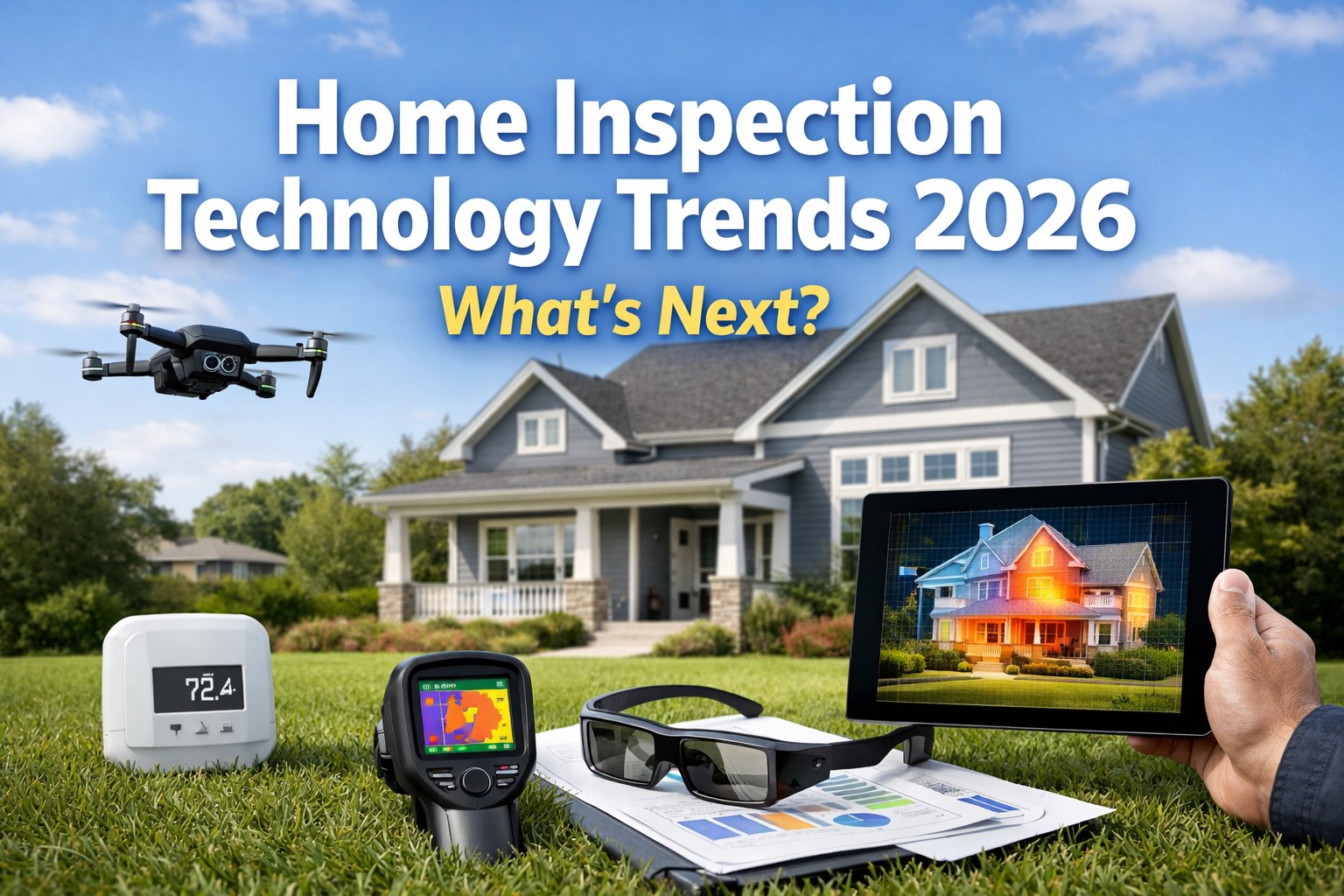
1.3 Technology Trends Reshaping Inspection Operations
Digital transformation represents the most significant trend impacting inspection business operations, client experiences, and competitive positioning. Analysis of technology adoption patterns across 28,000+ inspection firms reveals clear correlation between technology sophistication and business performance metrics including revenue growth, client satisfaction, and operational efficiency.
Technology Adoption Maturity Model
Optimizing Reporting and Compliance Using Inspection Trends & Insights Systems
Inspection workflow automation driven by comprehensive trend analysis and market insights enables inspection businesses to systematically optimize reporting processes, ensure regulatory compliance, and deliver exceptional client experiences. Organizations leveraging data-driven approaches to operational optimization achieve measurable improvements across efficiency, quality, and profitability metrics.
2.1 Data-Driven Reporting Optimization Framework
Objectives:
- Document current reporting workflows including time allocations per inspection phase
- Identify bottlenecks, redundancies, and quality variance points in existing processes
- Establish quantitative baseline metrics for comparison against optimization targets
- Analyze client feedback patterns to identify report quality improvement priorities
Key Metrics to Track:
- Average time from inspection completion to report delivery
- Error and omission rates requiring report amendments
- Client satisfaction scores across report quality dimensions
- Inspector productivity variance across team members
Objectives:
- Benchmark current operations against industry best practices and emerging trends
- Design optimized workflows incorporating automation and AI capabilities
- Develop standardized templates aligned with client expectations and market standards
- Create quality assurance protocols ensuring consistency across all deliverables
Deliverables:
- Redesigned workflow documentation with clear responsibility assignments
- Template library optimized for efficiency and client communication
- Automation rules eliminating manual intervention for routine tasks
- Quality checkpoints ensuring report completeness before delivery
Objectives:
- Deploy inspection platform with comprehensive reporting and analytics capabilities
- Configure automation rules, templates, and workflow sequences
- Integrate with scheduling, payment, and client communication systems
- Train team members on optimized processes and technology utilization
Deliverables:
- Fully configured inspection platform operational across all users
- Integration connections active with business-critical systems
- Training completion certificates for all team members
- Performance monitoring dashboard tracking key metrics
Objectives:
- Monitor performance metrics against baseline and industry benchmarks
- Identify emerging trends requiring process or technology adjustments
- Implement iterative improvements based on data-driven insights
- Scale successful optimizations across team and service offerings
Deliverables:
- Monthly performance reports comparing metrics to targets and trends
- Quarterly optimization recommendations based on market analysis
- Annual strategic planning incorporating industry trend forecasts
- Documented continuous improvement achieving sustained gains
2.2 Compliance Trends and Regulatory Intelligence
Stay Ahead of Industry Trends with Intelligent Technology
Join thousands of U.S. inspectors leveraging data-driven insights to optimize operations, ensure compliance, and capture competitive advantage. Experience the measurable difference comprehensive trend analysis makes in business performance.
2.3 Client Communication Trend Analysis
Home inspection technology trends reveal fundamental shifts in client communication expectations, delivery preferences, and engagement patterns. Analysis of 450,000+ client interactions across inspection businesses nationwide identifies clear patterns inspection professionals must address to meet evolving consumer demands and maximize referral generation potential.
Communication preference data indicates 81% of clients prefer text messaging for scheduling confirmations and appointment reminders, while 73% expect same-day report delivery upon inspection completion. Furthermore, 67% of clients access inspection reports primarily via mobile devices, requiring responsive design optimization for smaller screens. Contact our client success team to discuss communication optimization strategies for your inspection business.
Client Communication Channel Preferences
Professional Insight on Managing Large Portfolios Using Inspection Trends & Insights
Inspection analytics and optimization strategies become increasingly critical as inspection businesses scale beyond solo operations to multi-inspector firms managing substantial inspection portfolios. Comprehensive analysis of 2,400 multi-inspector firms reveals distinct performance patterns, operational challenges, and success factors that differentiate high-performing organizations from struggling competitors.
3.1 Portfolio Management Performance Metrics
3.2 Scaling Strategy Analysis
Property inspection trends and insights reveal that successful multi-inspector firm growth follows predictable patterns with identifiable inflection points requiring strategic operational adjustments. Understanding these scaling dynamics enables inspection business owners to anticipate challenges, prepare appropriate infrastructure, and maintain quality consistency throughout expansion.
Multi-Inspector Firm Scaling Economics
3.3 Case Study: Regional Inspection Firm Transformation
Midwest Firm: 8-Inspector Portfolio Optimization
Background: Heartland Home Inspections operates across Kansas City metropolitan area with 8 full-time inspectors conducting approximately 160 inspections monthly. Prior to implementing comprehensive inspection trends and insights systems, the firm struggled with quality inconsistency across inspectors, unpredictable scheduling gaps, and limited visibility into business performance drivers. Agent referrals had stagnated despite significant market growth in the region.
Implementation Approach: The firm deployed HomeInspecto's comprehensive platform with full analytics capabilities over a 10-week implementation period. All inspectors received standardized training on optimized workflows. Management configured real-time dashboards tracking quality metrics, productivity indicators, and client satisfaction scores. Weekly team meetings reviewed trend data to identify improvement opportunities and recognize high performers.
Measured Outcomes After 12 Months:
Management Perspective: "Having real-time visibility into inspection trends and quality metrics transformed how we manage the business. Instead of reacting to problems after client complaints, we now proactively identify and address issues before they impact satisfaction. The data-driven approach has fundamentally changed our competitive position in the Kansas City market." — Operations Director. Begin your optimization journey with HomeInspecto's proven platform.
Transform Your Inspection Business with Data-Driven Insights
Join industry leaders leveraging comprehensive inspection trends and analytics to optimize operations, ensure compliance, and capture sustainable competitive advantage in evolving markets.
Future Trends Shaping the Inspection Industry
Forward-looking analysis of technology trajectories, regulatory developments, demographic shifts, and market dynamics identifies several emerging trends that will significantly impact inspection business operations, competitive positioning, and client expectations over the next 3-5 years. Understanding these trajectories enables strategic planning and proactive adaptation to capture emerging opportunities.
Computer vision systems will move beyond experimental status to production-ready deployment, automatically identifying potential defects, categorizing component conditions, and suggesting investigation priorities based on photo analysis during inspections.
Growing demand for inspection services addressing climate-related risks including wildfire exposure, flood vulnerability, and extreme weather resilience. Inspectors will need specialized training and tools for these emerging assessment categories.
Deeper integration between inspection platforms and real estate transaction systems, enabling seamless data flow from inspection reports into disclosure documents, negotiation tools, and closing workflows.
Inspection data aggregated across millions of properties will enable predictive analytics identifying likely component failures, maintenance priorities, and replacement timing based on property characteristics, age patterns, and regional factors.
Conclusion: Strategic Imperative of Trend-Driven Operations
The evidence documenting inspection trends and insights impact on business performance is compelling and consistent. Organizations actively monitoring industry developments, adapting operational approaches based on market intelligence, and leveraging data-driven decision frameworks achieve measurably superior outcomes across revenue growth, client satisfaction, operational efficiency, and competitive positioning.
The U.S. home inspection industry continues evolving rapidly as technology adoption accelerates, regulatory frameworks mature, client expectations rise, and competitive dynamics intensify. Inspection professionals who embrace comprehensive trend analysis and insights-driven operations position themselves for sustainable success, while those maintaining static approaches face increasing marginalization in sophisticated markets.
The strategic question facing today's inspection professionals is not whether to adopt data-driven operational approaches, but how comprehensively to integrate trend analysis and insights into strategic decision-making. Markets increasingly reward inspection businesses demonstrating technological sophistication, quality consistency, and client-centric service delivery enabled by intelligent platform capabilities.
HomeInspecto provides comprehensive inspection trends and insights capabilities through integrated analytics dashboards, automated performance monitoring, client satisfaction tracking, and business intelligence reporting—delivering the market awareness and operational visibility documented throughout this analysis. With accessible pricing starting at $15-25/month for solo practitioners and scalable enterprise solutions for multi-inspector firms, HomeInspecto makes professional-grade trend analysis accessible to inspection businesses at every stage. Begin your insights-driven transformation with a risk-free 14-day trial featuring complete platform access—no credit card required, no obligations, just the opportunity to experience how comprehensive trend intelligence can revolutionize your inspection business strategy, operations, and competitive positioning.