
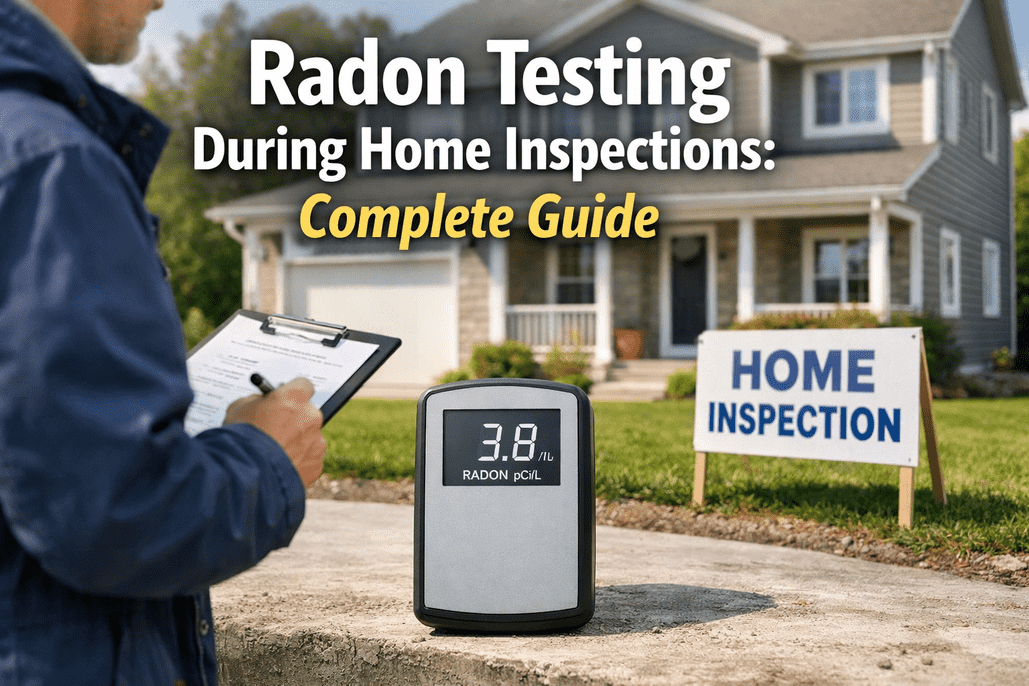
Radon is the second leading cause of lung cancer in the United States — responsible for an estimated 21,000 deaths per year according to the EPA. It's a colorless, odorless, radioactive gas that seeps into homes through cracks in the foundation, and the only way to detect it is to test. For homebuyers, radon testing during the inspection period is one of the most important add-on services you can request. For home inspectors, offering radon testing is one of the fastest ways to increase revenue per inspection — with the average professional test costing $150–$300 as an add-on and requiring minimal extra time on-site. The EPA recommends testing all homes below the third floor, and 1 in 15 American homes has radon levels at or above the 4.0 pCi/L action level. This guide covers everything both buyers and inspectors need to know: EPA guidelines, testing methods, what the numbers mean, state requirements, mitigation basics, and how to add radon testing to your inspection practice.
Testing Methods: Charcoal vs. Continuous Monitor
There are two primary approaches to radon testing. The method you choose depends on whether you're testing for a real estate transaction, long-term monitoring, or your own awareness.
How Radon Testing Works During a Home Inspection
For real estate transactions, the EPA recommends using a certified professional with a continuous radon monitor. Here's the typical process.
Closed-Building Conditions (12 hrs prior)
All exterior windows and doors on the lowest level must be closed for at least 12 hours before the test begins. Normal entry and exit is fine — just don't leave doors open for extended periods. HVAC systems operate normally.
Device Placement (Inspector sets up)
The CRM is placed in the lowest livable level of the home — typically a basement, ground floor, or finished lower level. Avoid kitchens, bathrooms, and hallways. Place in a regularly used room like a living room, den, or bedroom, at least 20 inches above the floor.
Testing Period (48+ hours minimum)
The device records hourly radon readings. Do not disturb, move, or unplug the monitor. Closed-building conditions must be maintained throughout the test. The monitor's tamper sensors will flag any interference.
Results & Report (Same-day delivery)
After the test period, the inspector retrieves the device and generates a report showing hourly readings, the average radon level, and whether the result exceeds the EPA action level of 4.0 pCi/L. Results are typically delivered same-day with the main inspection report.
Where Radon Is Found: High-Risk Zones
Radon can be found in every state, but certain regions have significantly higher concentrations. The EPA's Map of Radon Zones classifies counties into three risk tiers.
Includes large portions of the upper Midwest, Northern Plains, Appalachian region, and parts of the Northeast. States like Iowa, Pennsylvania, Ohio, Colorado, and Minnesota have extensive Zone 1 areas. Testing is essential — many homes in these regions test well above the EPA action level.
Covers portions of every state. Many homes in Zone 2 counties still test above 4.0 pCi/L — the EPA recommends testing regardless of zone classification. Includes areas throughout the mid-Atlantic, Great Lakes, and Pacific Northwest.
Parts of the South, Gulf Coast, and coastal California. However, homes with basements in Zone 3 can still have elevated radon. The EPA recommends testing all homes regardless of zone because radon varies house by house — even neighbors can have drastically different levels.
Inspectors: Add Radon Testing to Grow Revenue
Radon add-ons generate $150–$300 per inspection with minimal extra time. HomeInspecto integrates radon results directly into your branded report.
If Radon Is High: Mitigation Basics
Elevated radon levels are fixable. Mitigation systems can reduce radon by up to 99%, and most homes can be fixed for $800–$2,500 — about the same cost as other common home repairs.
Active Soil Depressurization (ASD)
The most common and effective method. A PVC pipe and fan system pulls radon from under the foundation slab and vents it above the roofline. Works for all foundation types. This is what most mitigation contractors install.
Sub-Membrane Depressurization
For homes with crawl spaces. A plastic membrane covers the soil in the crawl space, and a fan-powered vent system draws radon from beneath the membrane and exhausts it outdoors.
Radon-Resistant New Construction
Passive radon-resistant features built into new homes during construction. If testing after occupancy shows levels at or above 4.0 pCi/L, a fan can be added to activate the system — far cheaper than retrofitting.
For Inspectors: Why You Should Offer Radon Testing
Increase Revenue Per Inspection
Radon add-ons generate $150–$300 per inspection with minimal extra effort. If you do 200 inspections per year and 40% add radon testing, that's $12,000–$24,000 in additional annual revenue.
Differentiate from Competitors
Inspectors who offer radon testing win more jobs from agents and buyers who want a one-stop solution. It's easier to hire one inspector for everything than coordinate separate radon specialists.
Build Trust & Expertise
Offering specialty services positions you as a thorough, knowledgeable professional. Clients and agents refer inspectors who go beyond the basics — radon testing is the easiest way to demonstrate that commitment.
Integrated Reporting with HomeInspecto
HomeInspecto lets you include radon test results directly in your branded PDF report — with EPA context, severity ratings, and clear recommendations. One report covers everything. Start your free trial.
Frequently Asked Questions
Deliver Reports That Cover Every Service
HomeInspecto integrates radon testing, general inspection, and all add-on findings into one professional, branded PDF. Try free — no credit card required.