
A standard home inspection checks the roof, foundation, electrical, plumbing fixtures, and HVAC — but it does not look at what's happening underground. Your sewer line, the pipe that carries all wastewater from your home to the municipal sewer or septic system, is invisible during a normal inspection. And that's a problem — because sewer line repairs cost $1,500–$7,500 for spot fixes and $10,000–$25,000+ for full replacements. A sewer scope inspection uses a small waterproof camera fed through the line to reveal blockages, cracks, root intrusion, pipe collapse, and other hidden issues — all for just $125–$400 as an add-on during your home inspection. For buyers, it's one of the highest-ROI steps in the entire purchase process. For inspectors, it's one of the fastest-growing add-on services — generating $150–$300 per inspection with a 30–60 minute time investment. This guide covers everything you need to know: how the process works, what the camera finds, when it's essential, what the results mean, and how to use findings in your negotiation.
How a Sewer Scope Inspection Works
The process is non-invasive — no digging required. A professional feeds a small camera through your sewer line and records everything it finds.
What the Camera Finds: Common Sewer Line Issues
Sewer lines endure constant stress from wastewater, soil pressure, temperature changes, and biological growth. Here are the most common problems a camera inspection reveals — ranked by severity and typical repair cost.
The #1 issue found during sewer scopes. Tree roots naturally seek moisture and can penetrate tiny cracks or joints in sewer pipes. Once inside, they grow and expand — blocking flow, cracking pipes, and eventually causing backups. Especially common with clay and cast iron pipes near mature oaks, willows, and maples.
Ground movement, heavy traffic overhead, soil settling, and aging cause pipes to crack. Clay and cast iron pipes (pre-1980s) are especially vulnerable. Small cracks invite root intrusion and worsen over time. Longitudinal cracks running along the pipe are more serious than minor hairline fractures.
A "belly" is a low spot in the pipe where soil has shifted and the pipe sags, creating a section where water and debris collect. This leads to recurring blockages and eventually pipe deterioration. Bellies cannot be cleaned out — they require excavation and re-grading of the pipe.
When pipe sections shift due to ground movement, the joints become misaligned — creating gaps where roots can enter and debris can catch. Minor offsets may be monitored; severe offsets where sections have separated significantly need repair.
Cast iron pipes corrode from the inside out, creating rough surfaces where debris catches and eventually thinning the pipe wall until it collapses. The camera reveals scaling, rust buildup, and thinning walls. Homes with cast iron sewer lines (common pre-1970s) should always be scoped.
Grease, soap, and debris accumulation narrows the pipe's interior over time. Usually fixable with a simple drain cleaning or hydro jetting — the least concerning finding, but worth addressing before it becomes a full blockage.
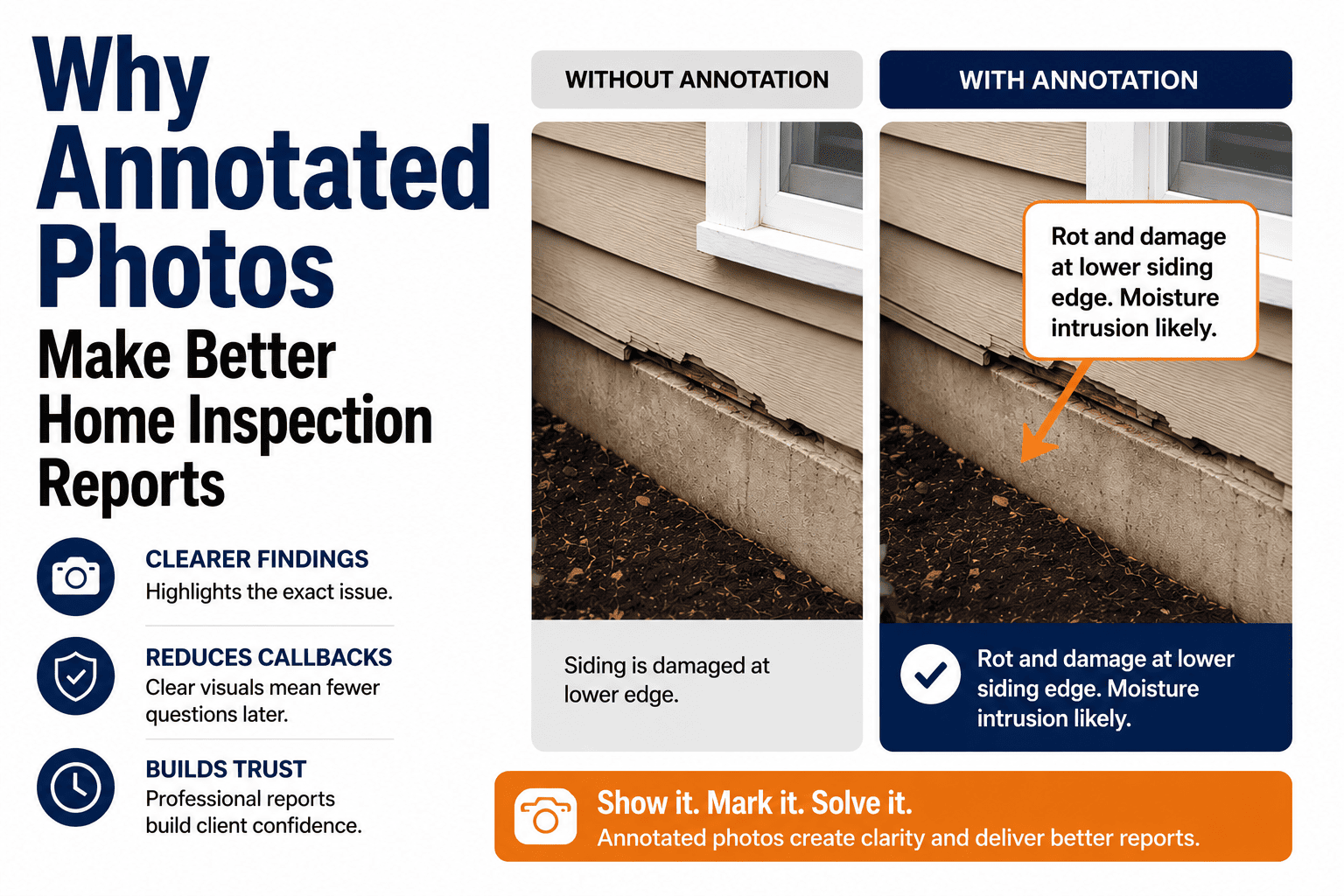
See How Sewer Scope Findings Appear in a HomeInspecto Report
Photo documentation, severity ratings, repair cost context, and clear recommendations — all in one branded PDF.
When Is a Sewer Scope Essential?
Not every home purchase requires a sewer scope — but in these situations, skipping it is a gamble you don't want to take.
What Happens If the Scope Finds a Problem?
Minor Issue (Grease, Small Roots)
Request the seller handle a drain cleaning or hydro jetting before closing. Cost: $100–$500. Usually a quick fix that doesn't affect the deal.
Moderate Issue (Offset, Partial Crack)
Get a plumber's repair estimate and negotiate a price reduction or repair credit. Typical cost: $1,500–$5,000. Most sellers will negotiate rather than lose the deal.
Serious Issue (Collapse, Major Root Invasion)
Request the seller replace the line before closing, or negotiate a $7,500–$25,000 price reduction. If the seller won't cooperate, your inspection contingency lets you walk away.
Clean Report — No Issues Found
Peace of mind. You now know the sewer line is clear, properly graded, and free of damage. This information is worth its weight in gold — and saves you from the anxiety of what might be lurking underground.
For Inspectors: Add Sewer Scoping to Grow Your Business
Revenue Opportunity
Sewer scope add-ons generate $150–$300 per inspection. If 30% of your clients add sewer scoping and you do 200 inspections a year, that's $9,000–$18,000 in additional annual revenue.
Equipment Investment
A professional sewer camera costs $2,000–$8,000. At $200 per scope, the camera pays for itself within 10–40 inspections. Most inspectors see ROI within their first quarter.
Integrated Reporting
With HomeInspecto, sewer scope findings integrate directly into your branded PDF — video stills, annotations, severity ratings, and recommendations all in one report. Book a demo to see the workflow.
Ready to Add Sewer Scoping to Your Services?
HomeInspecto makes it easy to document sewer findings alongside your general inspection — one report, one delivery, one professional impression.
Frequently Asked Questions
One Report. Every Finding. Complete Clarity.
HomeInspecto helps inspectors deliver branded reports that include general inspection, sewer scope, radon, and all add-on findings in one professional PDF.