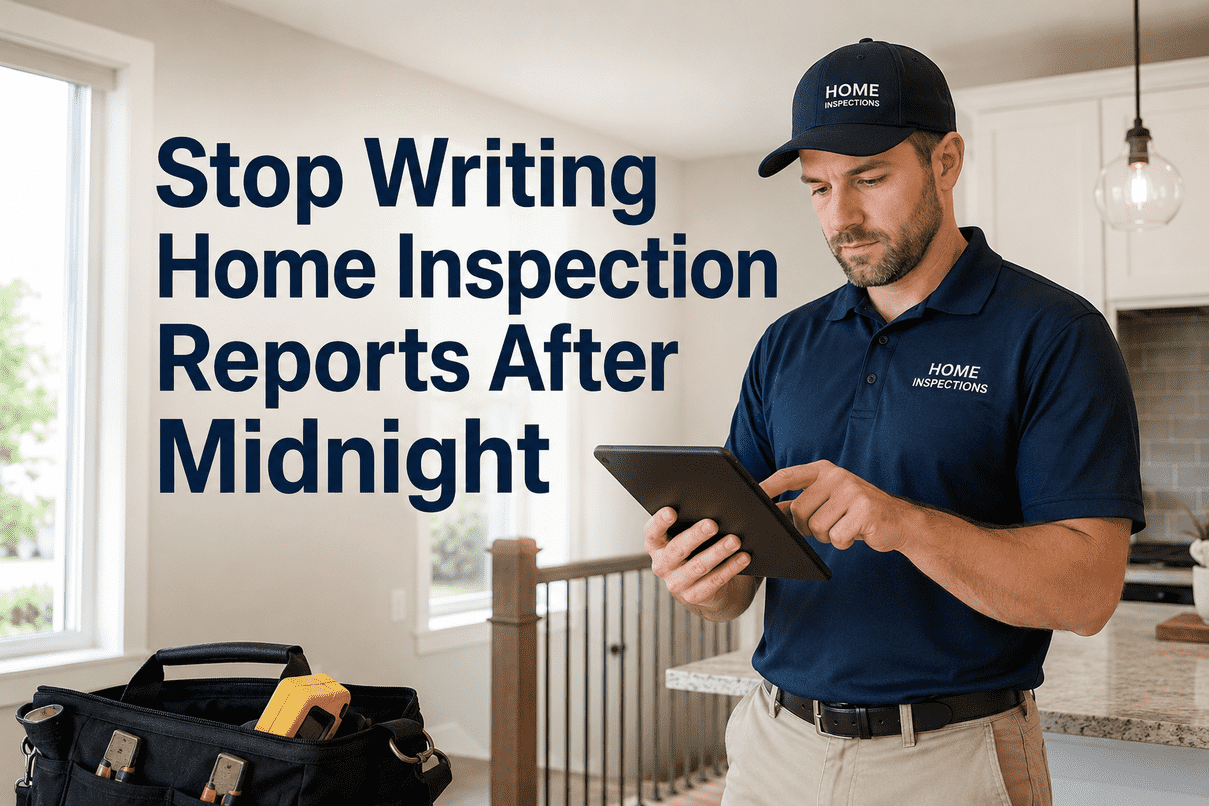

AI cannot climb into an attic. It cannot feel the softness of water-damaged wood. It cannot explain to a nervous first-time buyer why that crack in the foundation is cosmetic not structural. AI cannot take professional responsibility for an inspection or defend your findings in a dispute.
What AI can do is help you write reports faster, catch inconsistencies you might miss when you are tired, and handle the repetitive typing that eats up your evenings.
This article breaks down what AI actually does in home inspection software today—not the futuristic hype, but the practical reality. We will cover the benefits, the limitations, and help you decide whether AI tools make sense for your inspection business.
- Suggest pre-written comments based on photos
- Auto-organize photos into report sections
- Flag potential inconsistencies in reports
- Speed up repetitive data entry
- Help maintain consistent language
- Physically inspect a property
- Make professional judgment calls
- Replace inspector expertise
- Remove your liability
- Guarantee 100% accuracy
Why AI Is Entering Home Inspections Now
AI is not new technology. So why is it suddenly appearing in inspection software? Several factors have converged:
Modern inspection reports include more photos, more detailed descriptions, and more comprehensive coverage than reports from even five years ago. Clients expect 50-100+ page reports with photo documentation of every finding. This creates more work for inspectors.
Agents expect same-day reports. Clients want to review findings immediately. In competitive markets, fast delivery is a competitive advantage. Inspectors need tools that help them work faster without sacrificing quality.
Buyers compare inspection reports to the polished documents they receive from lenders, title companies, and agents. Professional formatting, clear language, and comprehensive documentation are now baseline expectations.
Multi-inspector firms need consistency across their team. AI helps standardize language and formatting so that reports look professional regardless of which inspector conducted the work.
- Inspectors doing 10+ inspections monthly
- Those spending 1+ hours on post-inspection report writing
- Multi-inspector firms wanting consistency
- Inspectors trying to grow without working longer hours
- Part-time inspectors doing fewer than 5 monthly
- Those already satisfied with their report speed
- Inspectors who prefer completely manual control
- Those uncomfortable with any technology assistance
What AI Actually Does in Home Inspection Software
Let us be specific about what AI features exist today in inspection software—not theoretical future capabilities, but tools inspectors are actually using:
AI analyzes the photo you just took and suggests relevant pre-written comments. Photograph a water heater, and AI might suggest: "Gas water heater, approximately 8-10 years old based on serial number. Recommend monitoring for signs of tank failure within the next few years."
You review the suggestion, edit if needed, and approve. The AI handles the typing; you maintain control over what goes in the report.
Some AI tools analyze photos to identify what you are documenting. Take a picture of electrical wiring, and the system recognizes it as electrical content and files it in the appropriate section. More advanced systems can identify specific issues—like double-tapped breakers or missing GFCI protection—and flag them for your attention.
This is not perfect. AI might misidentify things. But it serves as a second set of eyes that catches items you might overlook when you are tired or rushing.
AI can scan your completed report for inconsistencies. Did you note the roof as "good condition" in one section but mention "missing shingles" in another? AI flags the contradiction so you can clarify before delivery.
This quality control layer helps catch mistakes that could create confusion for clients or liability issues for you.
Beyond report writing, AI helps automate routine tasks: organizing photos as you take them, pre-filling property data from MLS records, generating summary sections from your detailed findings, and formatting reports consistently without manual effort.
What AI Does NOT Do (This Is Important)
Honest conversation about limitations builds trust. Here is what AI cannot and should not do:
AI has no idea what 20 years of construction experience feels like. It cannot recognize the subtle signs of structural settlement that come from inspecting thousands of homes. Your professional judgment is irreplaceable. AI is a typing assistant, not an inspector.
Should this be reported as a safety hazard or a maintenance item? Is this crack cause for concern? AI cannot make these judgment calls. It can provide information and suggestions, but every decision in the report is yours.
You sign the report. You are responsible for its contents. If AI suggests an incorrect comment and you approve it without reviewing, that is on you. AI is a tool you use—the professional responsibility never transfers to the software.
AI makes mistakes. It might misidentify a photo, suggest an inappropriate comment, or miss something important. This is why human review is essential. Use AI to speed up your work, not to replace your attention.
AI vs Traditional Inspection Software
How does AI-enhanced software compare to traditional inspection software without AI features?
Real Benefits Inspectors Actually Experience
Moving beyond marketing claims, here is what inspectors report after using AI tools:
The most consistent feedback: reports take less time. Instead of typing descriptions for every finding, you review AI suggestions and approve or edit. Inspectors report finishing reports 30-60 minutes faster on average. For those doing multiple inspections daily, this adds up to hours saved weekly.
AI suggests the same professionally-worded comment every time you photograph a specific condition. This consistency helps clients understand reports better and reduces confusion. It also provides liability protection—your documentation is thorough and standardized.
AI's error-checking catches contradictions and omissions before you deliver the report. Fewer mistakes mean fewer client callbacks asking for clarification. Less rework means more productive use of your time.
AI-suggested comments are often written more clearly than hurried manual entries. When clients understand the report better, they have fewer questions. Clearer reports lead to smoother transactions and better reviews.
Common Concerns Inspectors Have About AI
Skepticism about AI is healthy. Here are the concerns inspectors commonly raise—and honest answers:
When AI Makes Sense to Adopt
AI is not right for everyone at every stage. Here are indicators that AI tools might benefit your business:
If you are doing 10+ inspections monthly and spending significant time on report writing, AI's time savings become meaningful. At lower volumes, the learning investment may not pay off as quickly.
If you want to increase inspection volume without working longer hours, AI helps. Taking on more inspections usually means more report writing—AI breaks that equation by making each report faster.
If you have multiple inspectors and struggle with report consistency, AI helps standardize language and formatting across your team. Every report looks professional regardless of which inspector conducted it.
If you are regularly spending evenings and weekends finishing reports, AI can give you that time back. The goal is not just efficiency—it is quality of life.
If competitors are delivering reports faster and agents are noticing, AI helps you match or exceed their speed without sacrificing quality.
How AI Fits Into Modern Inspection Workflows
The most successful use of AI is not as a replacement for your process, but as an enhancement to it:
Think of AI as a very fast, very consistent assistant who handles the typing while you focus on actually inspecting. You identify the issues; AI helps document them. You make the calls; AI formats the report. The expertise is yours; the administrative burden is shared.
AI lets you be more productive without cutting corners. Instead of rushing through inspections to save time on reports, you can be thorough on-site knowing the reporting process is streamlined. Better inspections, faster reports.
For firms with multiple inspectors, AI ensures consistent quality. New inspectors benefit from AI suggestions that match your company's standards. Experienced inspectors benefit from reduced administrative work. Everyone delivers professional reports.
Frequently Asked Questions
The Bottom Line
AI in home inspection software is not about replacing inspectors or automating away expertise. It is about handling the administrative burden so you can focus on what actually matters: thorough inspections, professional service, and building your business.
The inspectors who benefit most from AI are those who see it clearly: a tool, not a threat. A fast assistant, not a replacement. A way to work smarter, not a shortcut that compromises quality.
If you are spending evenings typing reports, if you want to grow without working longer hours, or if you are curious whether AI could improve your workflow—it is worth exploring. Most AI-enhanced software offers free trials. Test it on a few inspections. See if the time savings are real for your process.
The technology is not perfect. It requires oversight. But for many inspectors, it has become an essential part of delivering fast, professional, consistent reports—while actually having time for life outside of work.