
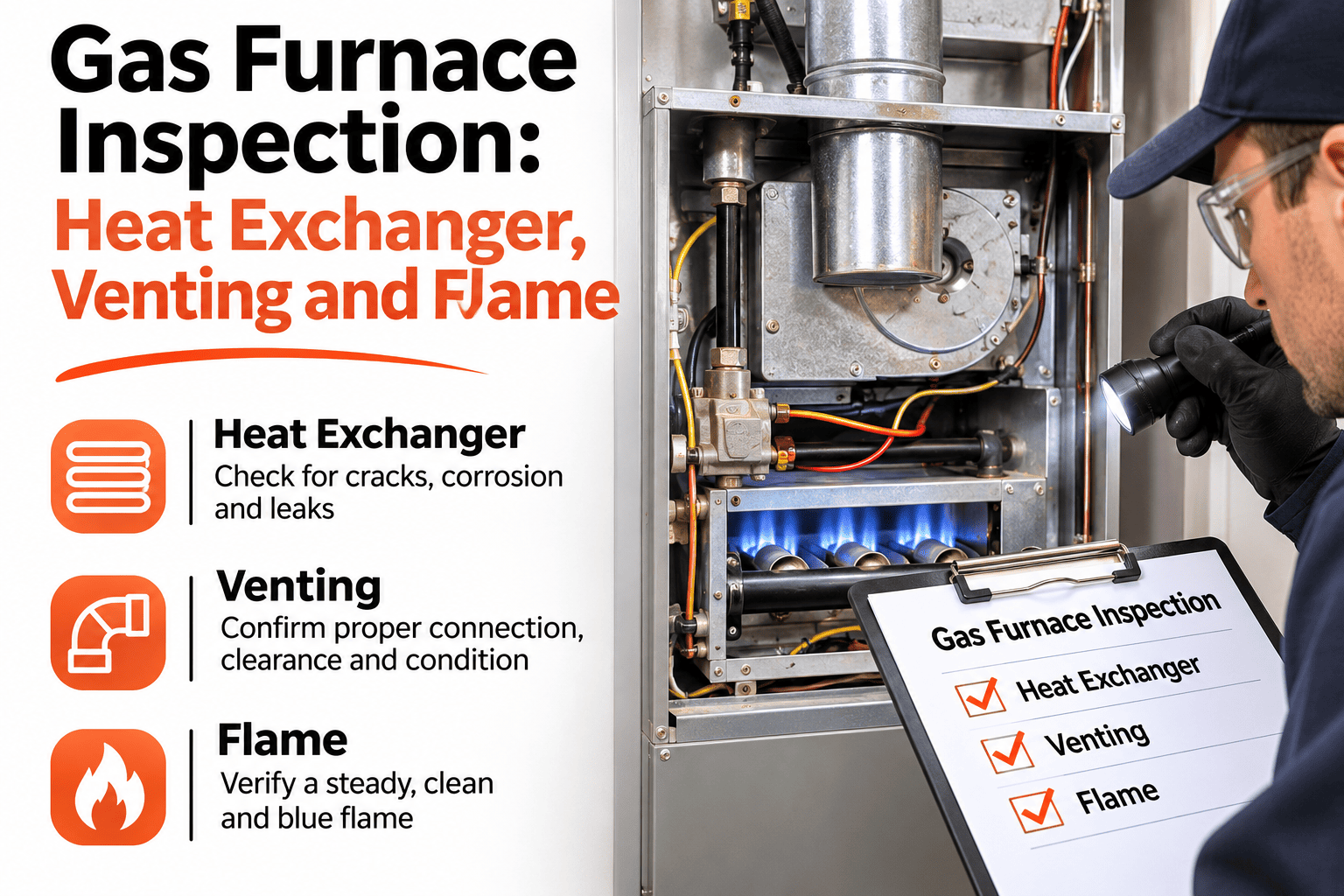
A gas furnace is the one system in a home that can quietly make a house dangerous — a cracked heat exchanger or a blocked flue can push carbon monoxide into the air the family breathes. An inspector can't dismantle the unit, but a careful look at the flame, the venting, the heat exchanger, and the furnace's age tells you when to raise a flag and refer it out. This guide covers what to read, what the signs mean, and how to word it. Document furnace findings in HomeInspecto.
Specialty inspection guide
Gas furnace inspection: heat exchanger, venting, and flame
The flame tells the first part of the story. A steady, tight flame reads healthy; a lazy, wavering one is a warning worth chasing.
- Healthy Steady, tight, blue
- Warning sign Lazy, wavering, yellow
The heat exchanger is the whole safety question
Everything else on a furnace is comfort; the heat exchanger is safety. It's the metal wall that keeps combustion gases on one side and the air blown through your home on the other.
Reading the flame
The burner flame is the most visible clue to how the furnace is burning — but it's a clue, not a diagnosis.
- Steady blueA clean, tight blue flame is the sign of complete combustion — what you want to see.
- Yellow or waveringA moving yellow flame can mean a dirty burner or incomplete combustion, which can produce carbon monoxide.
- Flutter on blower startA flame that bends or flutters when the blower kicks on can point to a cracked heat exchanger.
One honest caveat: flame color alone isn't a reliable test. Burner designs differ, and a yellow flame doesn't automatically mean a crack. It means stop and have a technician evaluate the combustion. See the flame checklist in a demo.
Flame rollout
One of the most dangerous things a furnace can do is push its flames back out of the burner box instead of drawing them into the heat exchanger.
- 1What it is. Flames escape the burner area they should stay inside — sometimes visible, sometimes shown by a tripped rollout switch.
- 2What causes it. Air starvation, a blocked flue, or a cracked heat exchanger forcing the flame backward.
- 3What you'll see. Black soot streaking up the furnace cabinet is the classic field evidence of rollout.
Soot on the cabinet of an older furnace is never cosmetic — it's a combustion problem asking for a technician. Flag rollout evidence in HomeInspecto.
Read the furnace, flag the risk
Photograph the flame, the venting, and any soot, note the age, and refer the heat exchanger out — a report that keeps a buyer safe.
Venting and carbon monoxide
A furnace has to breathe in and exhaust out. When either side is wrong, combustion turns incomplete and carbon monoxide builds.
- The flue or B-vent should be intact, properly sloped, and clear of blockage
- The furnace needs enough combustion air — a starved furnace makes carbon monoxide
- Look for signs of backdrafting at the draft hood and corrosion at the vent connector
- Carbon monoxide is colorless and odorless, so a working CO alarm is essential
Headaches or nausea that clear when occupants leave the house are a classic carbon monoxide pattern worth noting. See the venting checks in a demo.
Age, filter, and the limits of a visual check
-
Age
Most gas furnaces run 15 to 20 years. On an older unit, a serious defect usually means replacement rather than repair.
-
Filter & airflow
A clogged filter starves the furnace of air and stresses combustion — a simple but telling check.
-
The limit of the look
A visual inspection can't confirm a cracked heat exchanger. A suspected crack needs a technician's combustion analysis.
Knowing what a visual check can't settle is as important as what it can. Record age and airflow in HomeInspecto.
How to word it in a report
Furnace safety is a topic where the wording has to inform and refer without claiming more than a visual check can prove.
- Report what you saw. Note the flame behavior, any soot, the venting condition, and the furnace's age.
- Don't declare a crack. A cracked heat exchanger can't be confirmed visually, so flag the concern rather than stating it as fact.
- Refer it out. Recommend evaluation by a licensed HVAC technician, including a combustion analysis where warranted.
- Don't dismantle. Inspecting is non-invasive — leave teardown to the technician.
Observed, flagged, and referred out is the record that protects the buyer and you. See the furnace templates in a demo.
How HomeInspecto handles furnaces
-
Flame & soot notes
Record flame behavior and cabinet soot against the furnace finding.
-
Venting checklist
Flue slope, blockage, and combustion air prompted so none are skipped.
-
Age & filter fields
Capture the data-plate age and filter condition in one place.
-
Refer-out wording
Built-in language that flags the heat exchanger without declaring a crack.
-
Photo on every finding
Flame, soot, and venting documented with the note.
-
Record per property
Findings stay on file for the technician's follow-up and the next season.
Safety-first furnace notes, built into the workflow. Book a demo on your own template.
Frequently asked questions
What does a furnace inspection check?
The burner flame, the heat exchanger area, the venting and combustion air, the filter, and the furnace's age — all to judge whether it's burning and exhausting safely. See the flow in a quick demo.
How do you know if a heat exchanger is cracked?
You often can't confirm it visually. Signs that warrant a technician's combustion analysis include a flame that flutters when the blower starts, soot, a sounding CO alarm, and occupant symptoms that clear away from the home.
Is a yellow furnace flame dangerous?
A moving yellow flame can mean incomplete combustion, which can produce carbon monoxide, so treat it as a reason to stop and have it checked. Flame color alone isn't a definitive test — start a free trial to document it.
What is flame rollout?
It's flames escaping the burner box instead of drawing into the heat exchanger, usually from air starvation, a blocked flue, or a crack. Black soot on the furnace cabinet is the common sign.
How should an inspector report a furnace concern?
Note the flame, soot, venting, and age, flag the heat exchanger as a concern rather than declaring a crack, and refer the furnace to a licensed HVAC technician. See the wording in a demo.
Read it, flag it, refer it
Turn every furnace check into a safe, referable record
Flame and soot notes, a venting checklist, age fields, and refer-out wording — the combustion-safety call, documented the way buyers and technicians trust.


