
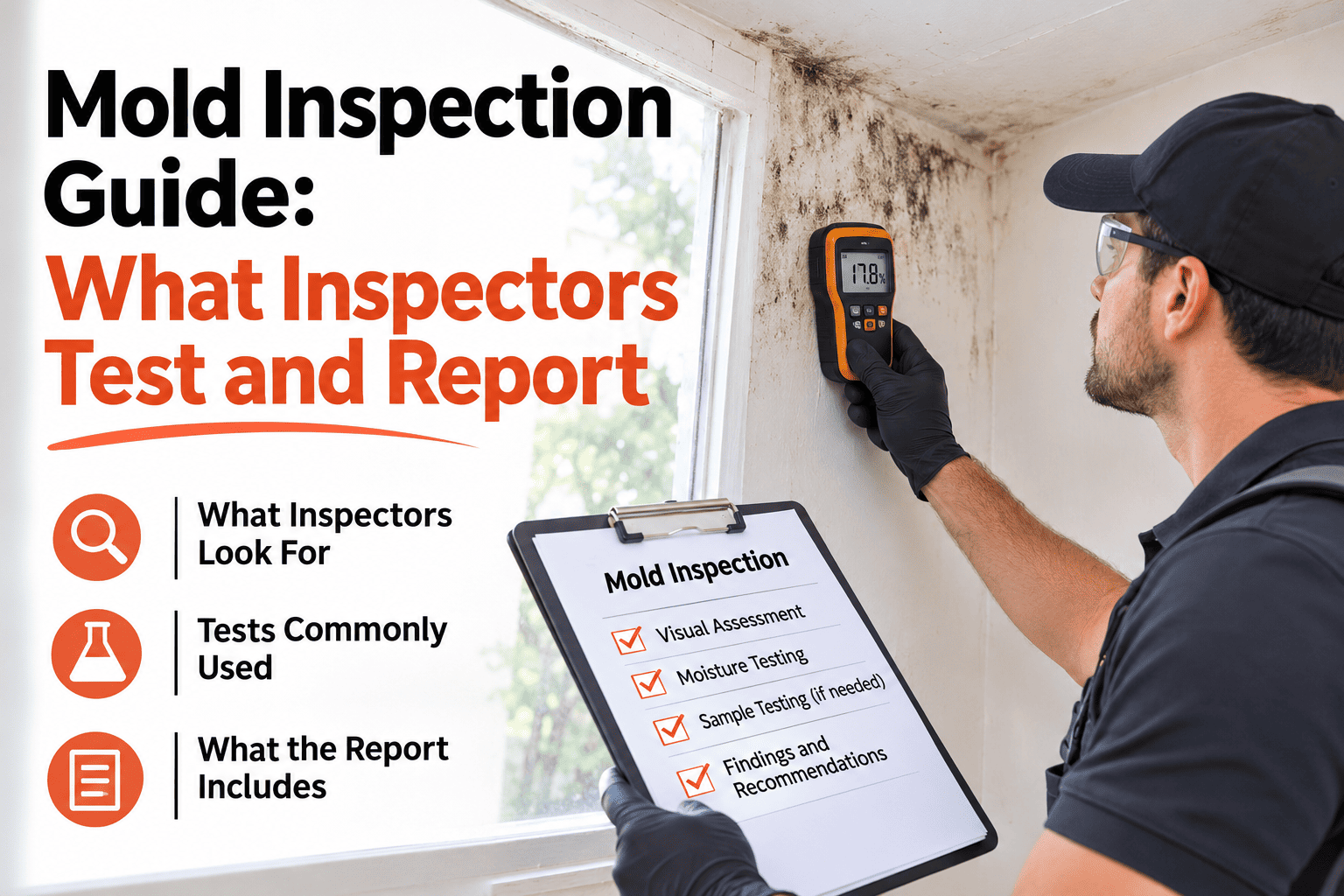
A musty smell, a water stain, a buyer worried about what's behind the drywall — a mold inspection answers it, but the method matters more than the lab result. A good inspection starts with the eyes and a moisture meter, and only reaches for samples when the question can't be answered without them. This guide covers the layered method, air versus surface sampling, where mold hides, when to refer out, and report wording that keeps you clear of liability. Document mold findings in HomeInspecto.
Specialty inspection guide
Mold inspection: what inspectors test, and what they report
It's a moisture problem before it's a mold problem. The inspection works in layers, and most of them end before a sample is ever taken.
- 1LookVisual sweep for growth and water history
- 2MeasureMoisture meter and thermal imaging
- 3SampleAir or surface — only when needed
The layered method
A competent mold inspection moves in order, and each layer often answers the question before the next is needed.
- 01
Visual inspection
A documented sweep for visible growth, water staining, and the conditions that invite mold.
- 02
Moisture mapping
A moisture meter and thermal camera find the damp the eye misses, and point to the source.
- 03
Sampling
Air or surface samples sent to an accredited lab — reserved for the questions visual work can't close.
Mapping the readings matters as much as taking them: a defensible report logs each reading with its location and surface. See moisture logging in a demo.
Air vs surface sampling
The two methods answer different questions, and each has a clear best use.
-
Air sampling
"Is this room's air carrying elevated spores?"
- Spore-trap cassettes, compared against an outdoor baseline
- Best for hidden growth, occupant symptoms, or clearance after cleanup
- Answers airborne exposure, not what's on one spot
-
Surface sampling
"What is growing on this exact spot?"
- A tape-lift or swab pressed to the suspected colony
- Best for identifying the species on a specific material
- Tells you about that spot — nothing about the air
An outdoor baseline air sample is what makes an indoor count mean anything. Capture both sample types in HomeInspecto.
When sampling earns its keep
Sampling is a tool, not a reflex. It pays off in a few specific situations — and is often unnecessary in the obvious ones.
- Occupants report a musty smell or symptoms, but no growth is visible
- Mold is suspected behind a wall or in a cavity you can't open
- Post-remediation verification, to confirm a cleanup worked
- Documentation for a sale, insurance claim, or dispute
Let the moisture map lead the sample
Log every reading with its location, attach the thermal image, and sample only where the evidence calls for it — a report that holds up.
Where mold hides
Moisture and poor airflow decide the hotspots. These are the places worth a closer look and a moisture reading.
- BathroomsPoor ventilation around fans and showers
- AtticsTrapped humidity and blocked soffit vents
- CrawlspacesGround moisture and standing damp
- BasementsChronic damp and past water events
- Around HVACCondensation on coils and ducts
- Behind wallsNear plumbing leaks and window seals
A typical professional visit runs one to three hours and lands between about $300 and $1,000 depending on size and sampling. See the hotspot checklist in a demo.
Report wording that limits liability
Mold is a topic where careful language protects everyone. The wording states what you found and points to the right expert, without playing doctor or remediator.
- Describe, don't diagnose. Report visible growth and moisture conditions, not a health conclusion.
- Call it a screening. Note that a visual-and-moisture inspection is a screening, and samples are a snapshot of one place and time.
- Keep the moisture log. Record each reading with location, surface, and meter mode — it's the backbone of a defensible report.
- Refer remediation out. Recommend an independent remediation firm — the inspector who tests shouldn't be the one who removes.
An independent report, free of a remediation conflict, is the one that resolves cleanly. Keep the moisture log and samples together in HomeInspecto.
How HomeInspecto handles mold findings
-
Moisture reading log
Capture each reading with location, surface, and meter mode in one place.
-
Thermal image attach
Pin the infrared shot to the finding it supports.
-
Sample tracking
Log air and surface samples with their locations and the outdoor baseline.
-
Hotspot checklist
Bathrooms, attics, crawlspaces, and HVAC prompted so none are skipped.
-
Screening-language library
Built-in wording that describes and refers without overstating.
-
Record per property
Every reading and sample stays on file for the clearance re-test.
The moisture-first method, built into the workflow. Book a demo on your own process.
Frequently asked questions
What does a mold inspection involve?
A visual sweep for growth and water history, moisture mapping with a meter and thermal camera, and — only when needed — air or surface samples sent to an accredited lab. See the flow in a quick demo.
What's the difference between air and surface sampling?
Air sampling measures spores in the air against an outdoor baseline, best for hidden growth or symptoms. Surface sampling identifies the species on a specific spot. They answer different questions.
Do I always need a mold test?
No. When mold is visible and the moisture source is clear, the EPA's guidance is to clean it and fix the moisture rather than test. Sampling is for hidden growth, symptoms, or verification — start a free trial.
How much does a mold inspection cost?
Roughly $300 to $1,000 for most homes, depending on size and how many samples are taken. A visual and moisture inspection sits at the lower end; added sampling raises it.
Should the inspector also remove the mold?
Better not. The firm that tests shouldn't be the one that remediates — an independent report avoids the conflict and holds up better in a dispute. See how referrals are handled in a demo.
Moisture first, samples second
Document mold the way that holds up
A moisture reading log, thermal attachments, sample tracking, and screening-language wording — the defensible method, built in.