A dripping faucet and a burst pipe should never sit in the same queue treated the same way — but without a consistent way to classify urgency, that's exactly what happens. When every request gets marked "urgent" because that's the only way anyone thinks it'll get attention, the label stops meaning anything, and a genuine emergency can get lost in the noise of routine requests wearing the same flag. The fix is a small, consistent set of priority levels, applied the same way every time, so a real emergency surfaces immediately and everything else gets scheduled sensibly. This guide covers how to classify repair priority so the label actually predicts the response. If you want repairs triaged by real urgency, book a demo.
Repair Triage
When Everything's Urgent, Nothing Is.
Consistent priority levels mean a real emergency gets today, and routine requests get scheduled sensibly — every time.
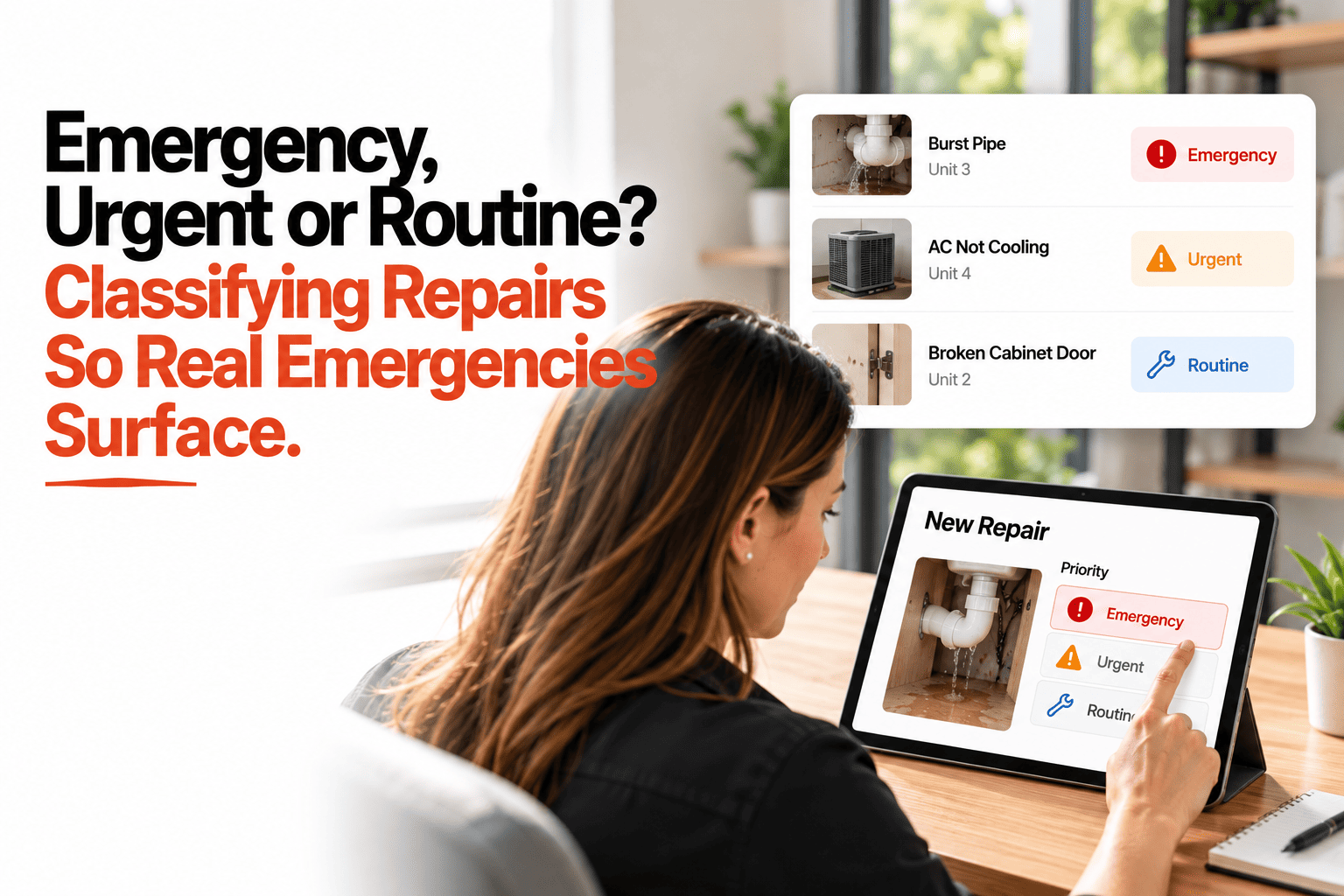
Three Tiers, Applied Consistently
Emergency
Respond Today
Active flooding, no heat in winter, no power, gas smell, security failure — safety or property risk.
Urgent
Respond in 48 Hours
No hot water, a major appliance failure, a persistent leak — inconvenient but not dangerous.
Routine
Scheduled Normally
A squeaky door, a cosmetic fix, a minor cabinet issue — no urgency, handled on the regular cycle.
What Actually Defines "Emergency"
Emergency status should mean something specific: an active safety risk, or damage that gets meaningfully worse with every hour it's left alone. A stuck cabinet door doesn't meet that bar no matter how annoyed the tenant is — and reserving the top tier for what actually qualifies is what keeps it meaningful when a real one comes in.
How Classification Should Happen
The reporter describes the issue
In their own words, at intake — text, call or app — no special form required.
The issue is matched against clear criteria
A short, consistent set of qualifying conditions decides the tier, not a gut feeling in the moment.
The tier sets the expected response
Emergency surfaces immediately; urgent and routine follow their own defined timelines.
Let Real Emergencies Stand Out
HomeInspecto applies consistent priority tiers so urgency means something every time.
Frequently Asked Questions
Can a tenant self-select the priority level when reporting an issue?
They can flag how urgent they believe it is, but the final classification should be checked against clear criteria rather than taken purely at their word.
What happens if a routine issue gets worse and becomes urgent?
A service order's priority can be updated if conditions change, moving it up a tier without needing to file a new request.
Can the priority criteria be customized for my properties?
Yes, what qualifies as emergency, urgent or routine can be adjusted to fit the specific risks and priorities of your properties.
Does classifying by tier slow down reporting a repair?
No, the reporter still just describes the issue as usual — classification happens on the intake side and doesn't add extra steps for them.
Make Urgency Mean Something Again
Consistent priority tiers so real emergencies surface today, and everything else gets scheduled sensibly.