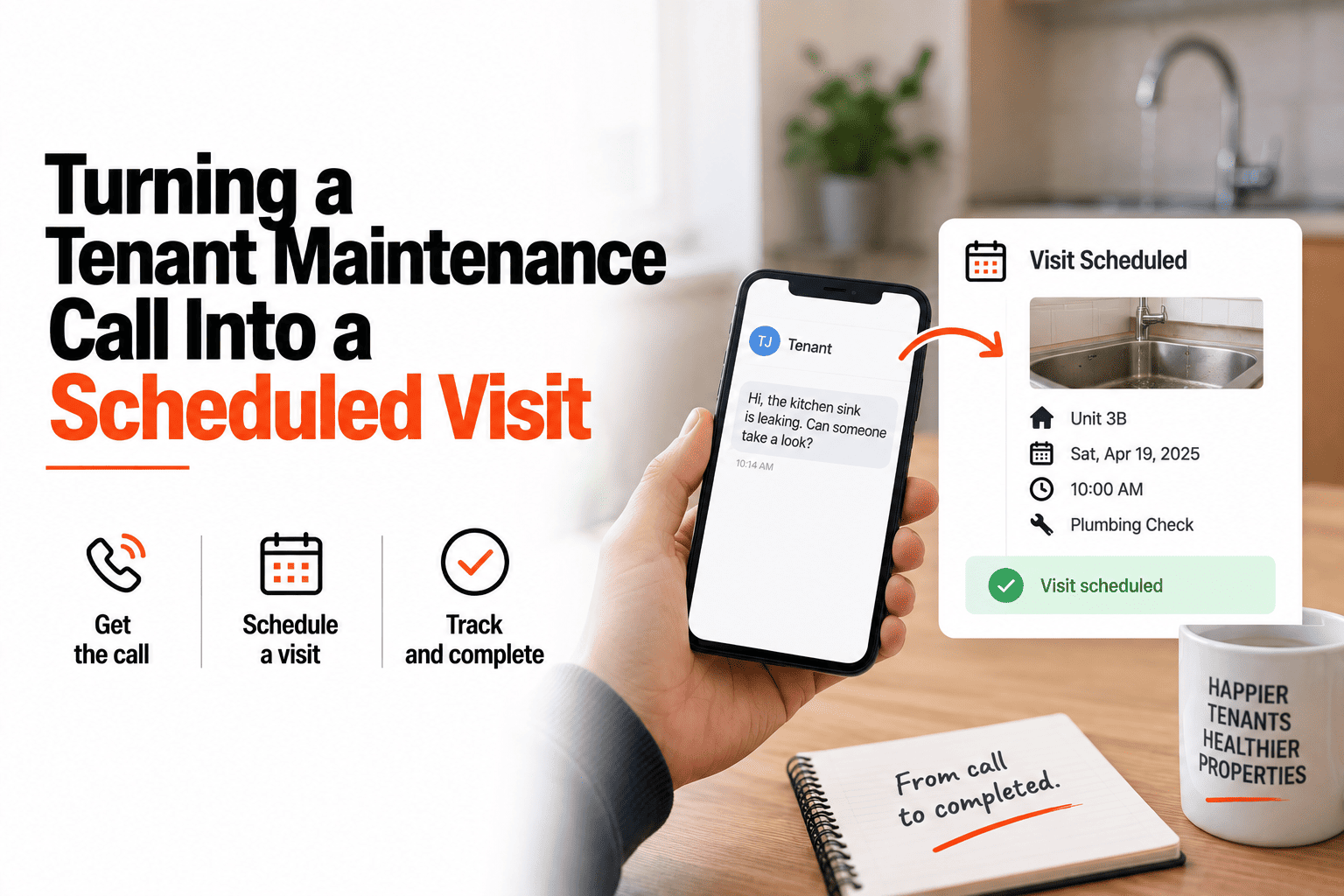

Most states require landlords to give tenants advance notice before entering a rental unit — typically 24 to 48 hours, though the exact window and acceptable exceptions vary by state. Getting this wrong isn't just a courtesy failure; in many jurisdictions it's a legal one, and a tenant who feels their privacy was violated has grounds to raise it as a dispute. The fix isn't complicated: schedule the visit with proper lead time, log when notice was given and how, and keep a timestamped record showing you followed the rules. This guide covers how to build that habit into your scheduling process so entry notice is never an afterthought. If you want a tool that logs notice alongside the scheduled visit, book a demo.
Landlord Entry Rules
Give Proper Notice. Prove You Gave It.
Schedule the visit, log the notice, and keep a timestamped record showing you followed your state's entry rules.
Why Notice Requirements Exist
A rental unit is a tenant's home, even though you own the property. Notice requirements balance your right to access the property for maintenance, inspection, or showings against the tenant's reasonable expectation of privacy in the place they live. Most states set a minimum notice window — commonly 24 or 48 hours — and specify acceptable methods of delivering that notice, whether written, verbal, or posted.
The Notice Timeline
What to Log Every Time
Notice date and time
When notice was actually delivered to the tenant, not just when the visit was scheduled internally.
Method of delivery
Written notice, text, email, or posted notice — whichever method your state recognizes and you actually used.
Purpose of entry
Inspection, repair, showing to prospective tenant or buyer — many states require the purpose to be stated in the notice.
Scheduled entry window
The specific date and time range given to the tenant, matched against when entry actually occurred.
Log Notice the Moment You Schedule
HomeInspecto ties notice records to the appointment itself, so you have a timestamped trail without extra paperwork.
Frequently Asked Questions
How much notice am I required to give before entering a rental unit?
Requirements vary by state, with 24 or 48 hours being common minimums, but exact rules and accepted exceptions differ. Check your specific state's landlord-tenant statute or consult an attorney for your jurisdiction's exact requirement.
Are there exceptions where I don't need to give notice?
Most states allow entry without advance notice in genuine emergencies — such as a fire or major leak — but routine maintenance, inspections, and showings typically still require standard notice. This varies by state, so confirm your local rules.
What counts as valid notice — does a text message work?
This depends on your state and sometimes your lease terms. Some states accept any written communication including text or email; others require specific delivery methods. Check your state's requirements and make sure your method matches.
Why does keeping a log matter if I always give proper notice anyway?
A dispute doesn't require you to have done something wrong — it requires the tenant to claim you did. A timestamped log is what turns "I definitely gave notice" into evidence, protecting you if the timing or method is ever challenged. Book a demo or start a free trial.
Schedule the Visit. Log the Notice. Keep the Record.
Build entry notice compliance directly into how you schedule every property visit.