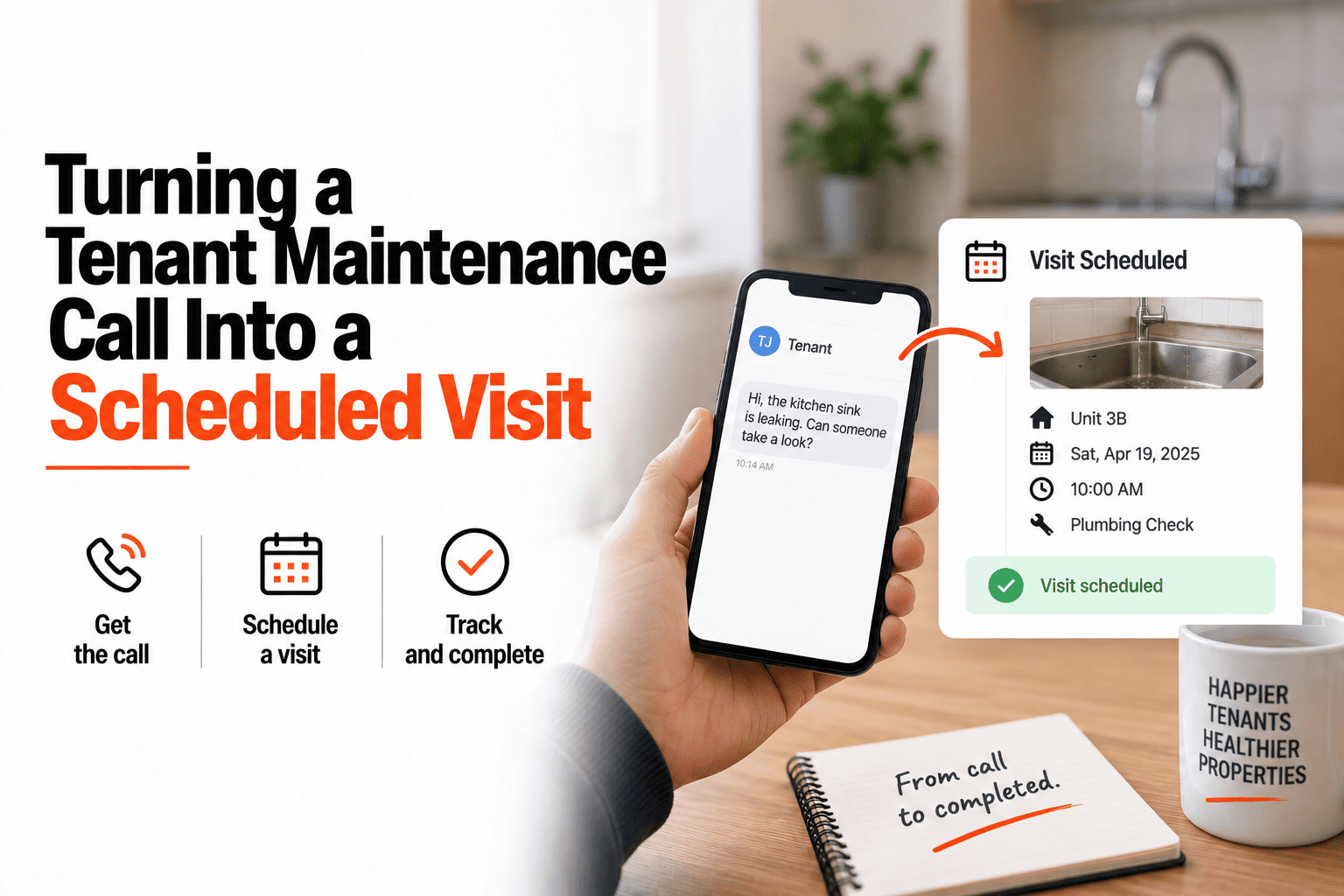
A tenant calls about a leak under the sink. You write it on a sticky note, or maybe just remember it, and tell them you'll get to it this week. Three weeks later neither of you can say for certain when the call happened, what exactly was reported, or whether it ever actually got addressed. A phone complaint isn't a record — it's a conversation that already started fading the moment you hung up. The fix is converting every maintenance call into something durable the instant it comes in: a booked appointment, tied to the property, tied to a work order, with a date attached. This guide covers how to turn a maintenance call into a real record instead of a memory. If you want a tool that does this conversion automatically, book a demo.
Maintenance Intake
A Phone Call Isn't a Record. A Booked Visit Is.
Convert every maintenance call into a scheduled appointment linked to the property and the work order — the moment it comes in.
From Phone Call to Record
The gap between "tenant called" and "documented appointment" is where maintenance requests get lost. Closing that gap immediately is what keeps a call from becoming a forgotten sticky note.
1. The Call
Tenant reports the leak, verbally, with no record beyond your memory of the conversation.
2. Logged as a Request
The issue is entered as a maintenance request — what was reported, when, and by whom.
3. Booked as a Visit
A specific date and time is scheduled to address it, linked directly to the original request.
4. Closed With a Record
The visit happens, the work order is marked resolved, and photos document the fix — nothing left to memory.
Why Linking to a Work Order Matters
A scheduled visit on its own tells you when someone's going to the property. Linking that visit to the original work order tells you why — what was reported, whether it's been addressed, and what the outcome was. Without that link, you end up with a calendar full of appointments and no record of what any of them actually resolved.
What to Capture When the Call Comes In
The quality of the eventual record depends entirely on what gets captured at the moment of the call — vague notes now mean gaps later.
Exact location
Not just "the bathroom" — which fixture, which wall, which specific spot the issue is at.
When it started
The tenant's best estimate of when they first noticed it, and whether it's gotten worse since.
Urgency level
Whether this needs same-day attention or can reasonably wait for a scheduled visit later in the week.
Access instructions
Whether the tenant needs to be present, has a preferred time window, or has already granted standing access.
Setting a Response Time Standard
Tenants tolerate a repair taking a few days far better than they tolerate silence. Having a consistent standard for how quickly a call gets converted into a scheduled visit — even if the visit itself is a few days out — keeps expectations realistic.
Emergency
Active flooding, no heat in winter, safety hazards — same-day response, visit scheduled immediately.
Urgent
A leak that isn't actively flooding, a broken appliance — visit scheduled within 24 to 48 hours.
Routine
Cosmetic issues, minor wear — visit scheduled within the week, often batched with other visits to the property.
Keeping the Tenant in the Loop
A tenant who reported an issue and heard nothing back assumes it's been forgotten — even if a visit is already scheduled. Closing that communication gap is as important as closing the actual repair.
Confirm the request was received
A quick acknowledgment the same day the call comes in, even before a visit is scheduled, tells the tenant the issue is on record.
Share the scheduled date
Once a visit is booked, let the tenant know when to expect it — this also satisfies notice requirements where applicable.
Confirm resolution
After the visit, a short note that the issue was addressed closes the loop and prevents a follow-up call asking whether anything happened.
Every Call Becomes a Tracked Visit
HomeInspecto links maintenance requests directly to scheduled visits, so nothing gets lost between the call and the fix.
Frequently Asked Questions
Do I need to convert every single maintenance call into a scheduled visit?
For anything beyond a trivial issue, yes — even a call that seems minor benefits from a record, since "minor" complaints are exactly the ones most likely to be forgotten or disputed later.
What if the tenant reports the issue by text instead of a phone call?
The same principle applies regardless of how the request comes in — text, email, or phone. The goal is converting whatever channel it arrives through into a logged request tied to a scheduled visit.
Can the tenant see the status of their maintenance request?
Depending on how you set it up, tenants can often see whether their request has been scheduled and when — reducing the number of follow-up calls asking "did you get my message."
Does this work for urgent issues that need same-day attention?
Yes. The same intake-to-visit process applies whether the visit is scheduled for next week or later that same day — the point is documentation, not adding delay. Book a demo or start a free trial.
Turn Every Call Into a Record, Not a Memory
Link maintenance requests to scheduled visits and stop losing track of what tenants actually reported.