Records do not go wrong all at once. They rot. A tenant moves out and the contact stays. A property changes status and nobody changes the list. The boiler is replaced and the record still describes the old one. Each gap is small, but together they turn a trusted record into one nobody relies on, and then nobody bothers to keep it current. This guide covers why records rot when nobody owns them, and the simple habits and prompts that keep property details, status and contacts accurate without a cleanup project. If you want records that stay trustworthy, book a demo.
Data Accuracy
Records Rot When Nobody Owns Them. Keep Them Current.
Simple habits and prompts that keep property details, status and contacts accurate over time.
What a Healthy Record Looks Like
Record check · Elm St House · Sample
Tenant contact
Confirmed this month
Current
Property status
Changed at last move-out
Current
Heating system details
Not reviewed in over a year
Review soon
Emergency contact
No confirmation on record
Needs checking
Sample record check, for illustration only.
Why Records Go Stale
No owner
When everyone can edit a record and nobody is responsible, nobody does.
Changes happen elsewhere
A move-out, a repair or a new contact is handled by phone, and the record is not told.
Too much to maintain
A record with dozens of fields no one needs becomes a chore, so none of them get attention.
No reminder
Without a prompt, a record is only reviewed when something has already gone wrong.
Fix the Habit, Not the Spreadsheet
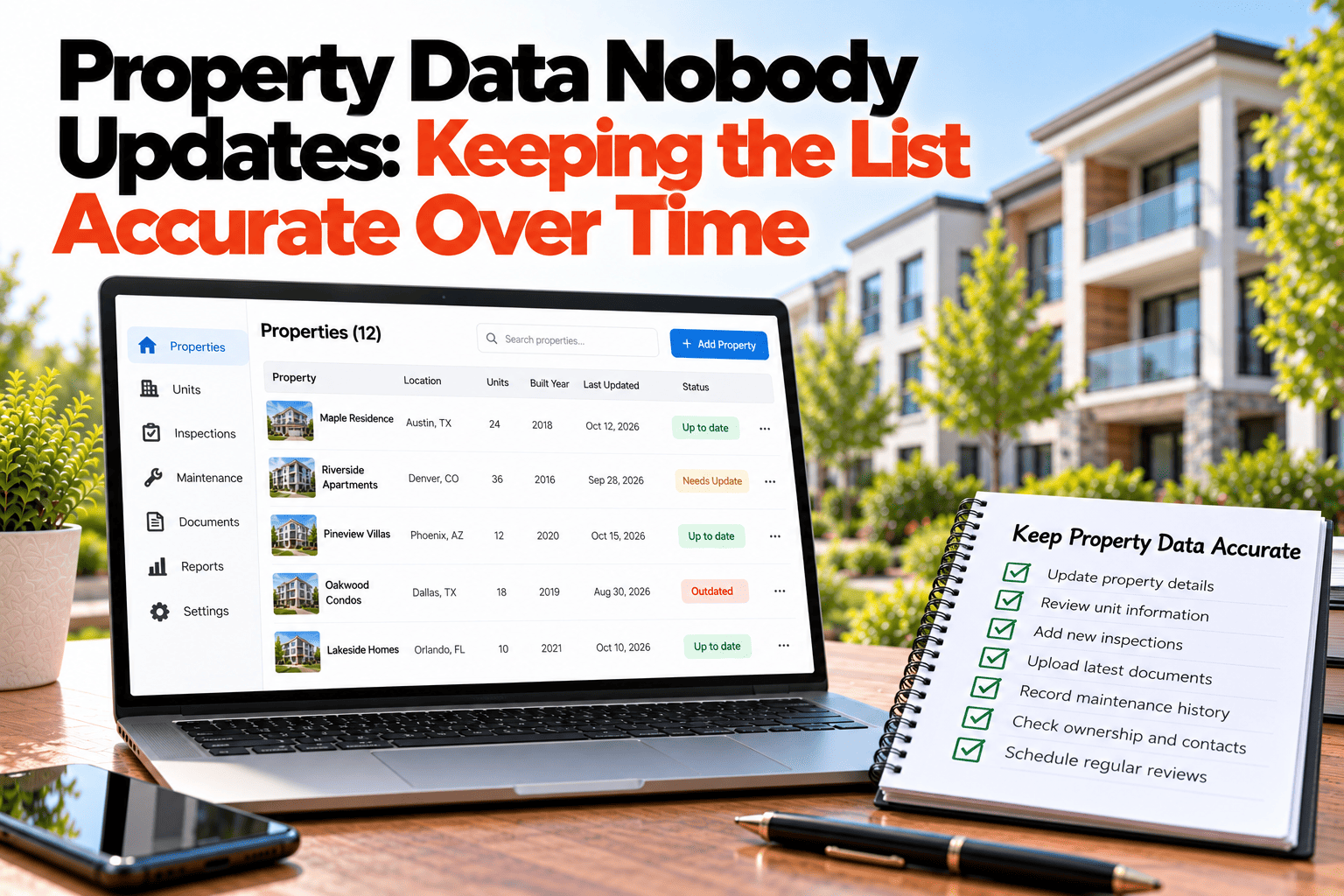
A one-off cleanup helps for a month, then the same decay returns. What lasts is a small habit tied to events that already happen. A move-out changes the status. A completed repair refreshes the system details. A new tenancy confirms the contact. When the record changes as a side effect of work you are doing anyway, accuracy stops being a separate job.
Habits That Keep It Accurate
Tie changes to events
Move-outs, completed repairs and new tenancies are the moments to correct the record.
Name an owner
Each property or portfolio has one person responsible for its record being right.
Review on a rhythm
A short check each quarter catches what the events missed.
Mark what is unknown
A field marked as an estimate or unconfirmed is more honest, and more useful, than a guess that looks certain.
Keep Your Records Trustworthy
HomeInspecto ties record changes to the inspections and repairs you already do.
Frequently Asked Questions
How often should I review property records?
A light review each quarter, plus changes made at the time of each event, is a practical rhythm for many portfolios.
Do I need a data cleanup project first?
Not necessarily. Start with the fields you use most, and correct others as you touch each property.
Who should own the records?
One named person per property or portfolio. Shared responsibility tends to mean no responsibility.
What if I am not sure a detail is right?
Record it and mark it as unconfirmed. That tells the next person it needs checking, instead of treating it as fact.
Records You Can Rely On
Tie accuracy to the work you already do, and it takes care of itself.