A self-inspection and a professional inspection are not competing options — they are different tools for different situations. Using a self-inspection where you need a licensed professional puts your money at risk. Using a licensed professional where a self-inspection would suffice wastes your money and your time. The question is not which is better — it is which fits the situation in front of you. This guide draws the line clearly: what each type does, who it is for, when to use which, and how to combine them so nothing falls through the cracks. If you want to see what a guided self-inspection produces, book a demo.
Inspection Decision Guide
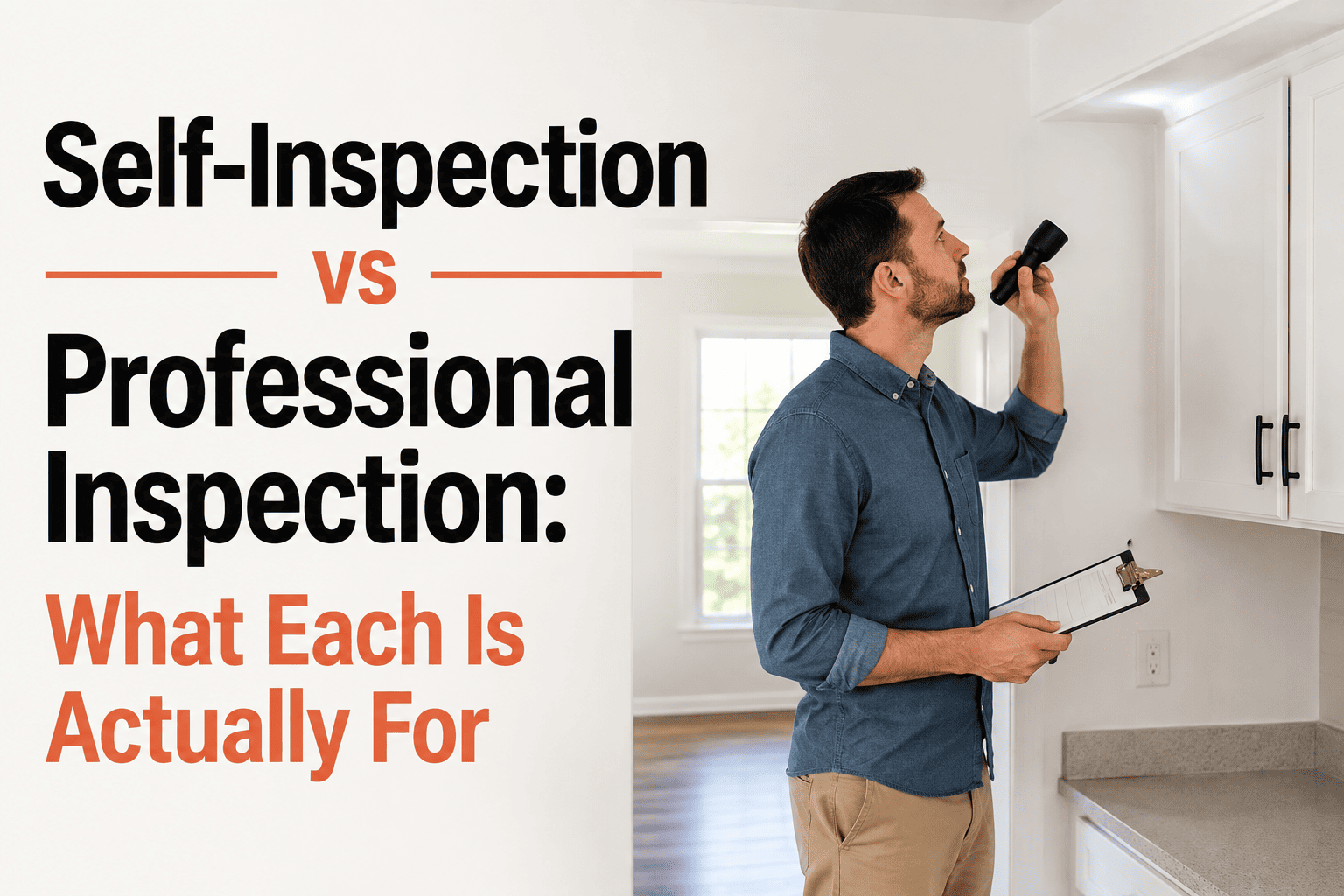
Self-Inspection vs Professional: What Each Is Actually For
Both have a place. A clear breakdown of which situations need a licensed inspector and which are better handled yourself — faster and cheaper.
Self-Inspection: What It Does Best
A self-inspection is a guided, photo-backed condition record you produce yourself. It excels at documentation — creating a visual record of current conditions with timestamps and photos. It does not diagnose hidden problems or evaluate structural integrity.
Routine maintenance checks
Seasonal walkthroughs of your own property to catch gutters, filters, caulk, and small repairs before they escalate. No license needed — just eyes and a checklist.
Move-in and move-out documentation
Photo-backed condition records that protect security deposits. The evidence is the photos and timestamps — not the credential of the person who took them.
Periodic landlord walkthroughs
Quarterly or semi-annual checks for maintenance issues, lease compliance, and safety items. You know your property; the checklist ensures you check it consistently.
Pre-listing first pass
Walk your own home before selling to catch obvious defects the buyer's inspector will flag. Fix them proactively for less stress and better negotiation position.
Professional Inspection: What It Does Best
A professional inspection is a trained evaluation by a licensed inspector with specialized knowledge, tools, and liability insurance. It excels at risk assessment — identifying hidden problems and quantifying their significance in a transaction context.
Pre-purchase evaluation
Protecting a six-figure investment requires pattern recognition built over hundreds of inspections, the ability to identify hidden defects, and a formal report that carries weight in negotiations.
Suspected safety hazards
Possible mold, asbestos, lead paint, structural failure, or electrical hazards require trained assessment. Misidentifying these puts people at risk — the professional fee is cheap insurance.
Legal and insurance compliance
When a lender, insurer, or court requires a licensed inspection report, only a credentialed professional satisfies the requirement. A self-inspection does not carry the same legal standing.
The right tool for the routine check. HomeInspecto handles every situation that does not require a licensed inspector — guided checklists, timestamped photos, instant PDF reports — so you only pay for a pro when you actually need one.
The Side-by-Side Comparison
| Factor | Self-Inspection | Professional |
|---|---|---|
| Cost | Under 5/month unlimited | 00 -- 00 per visit |
| Turnaround | Same day — report in minutes | 1 -- 3 weeks to schedule |
| Who does it | You or your team | Licensed inspector |
| Best for | Documentation and condition records | Risk assessment and diagnosis |
| Output | Timestamped photo PDF | Formal inspection report |
| Legal weight | Strong for deposit disputes | Required for some transactions |
| Hidden defect detection | Limited to visible conditions | Trained pattern recognition + tools |
Use Both. Just Use Each Where It Fits.
HomeInspecto handles the routine, the recurring, and the urgent — so you only call the professional when the stakes demand it.
Frequently Asked Questions
Can a self-inspection replace a professional one?
For routine condition documentation — yes. For purchase transactions, safety evaluations, and situations requiring a licensed report — no. They serve different purposes. A self-inspection documents visible conditions with photos and timestamps. A professional inspection assesses risk using training, specialized tools, and liability coverage.
When should I combine both?
Run a self-inspection first to understand the property and identify your concerns. Then hire a professional for the items that need expert evaluation. Your self-inspection makes the professional inspection more efficient because you already know which areas need extra attention.
Is a self-inspection report accepted in court?
For security deposit disputes and landlord-tenant matters — yes, if timestamped, photo-backed, and ideally signed by both parties. For real estate transaction disputes — a licensed inspection report carries more weight. The distinction is the context, not the tool.
Does HomeInspecto produce reports comparable to a professional inspection?
For documentation quality — yes: room-by-room organization, timestamped photos, condition findings, and a branded PDF. For diagnostic depth — a professional inspector brings training and tools a self-inspection app cannot replicate. Use HomeInspecto for the routine; call a pro for the critical. Book a demo or start a free trial.
Right Tool. Right Situation. Every Time.
HomeInspecto handles the inspections that do not need a licensed professional — guided checklists, timestamped photos, instant reports. Save the pro fee for when it matters. Book a demo or try it free.