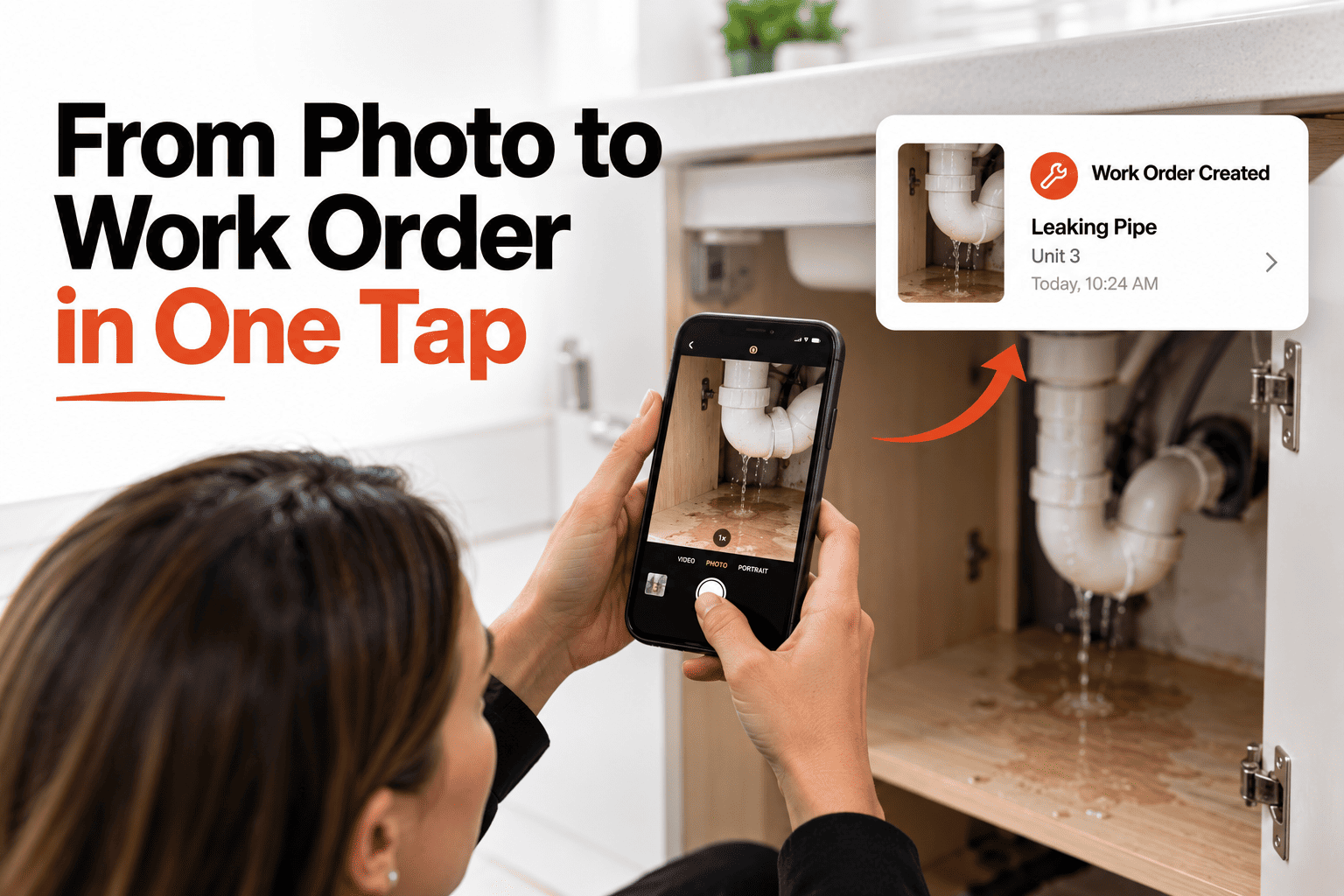

A tenant texts about a leak. A contractor calls with a question. An owner emails about a broken fixture. Three channels, three places the request could get lost — a phone that changes hands, a text thread that scrolls away, an inbox nobody checks twice. None of that is a record. The fix is turning every incoming request, no matter how it arrived, into the same thing: a service order tied to a property, with a status and an owner. This guide covers how to centralize requests from every channel into one system instead of chasing them across three. If you want a system built to catch every request automatically, book a demo.
Maintenance Intake
Every Request, One Place, No Matter How It Arrived.
Texts, calls and emails all become the same thing: a trackable service order with a status and an owner.
Three Channels In, One Record Out
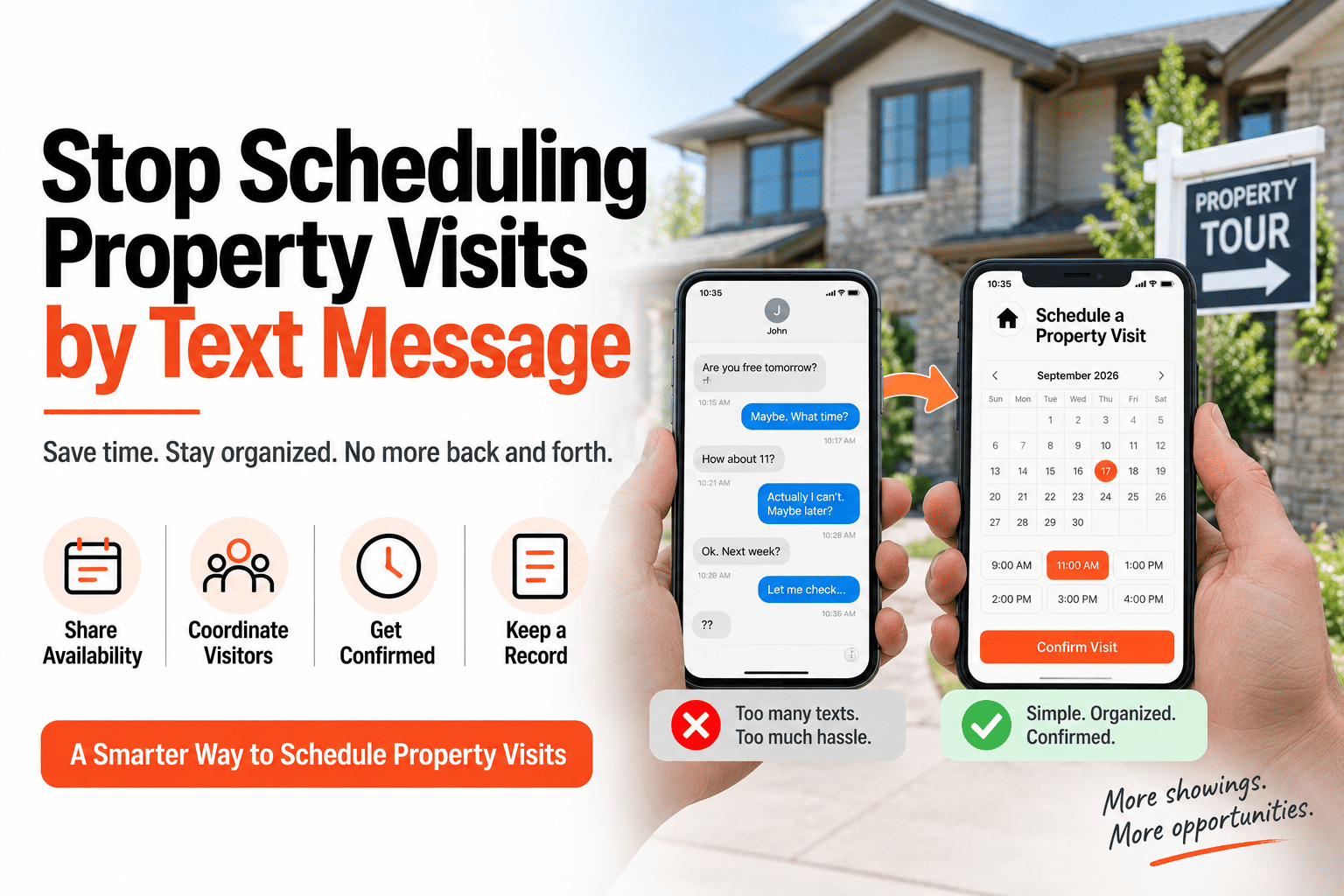
Text Message
"hey the sink in 4B is leaking again can someone come look"
Phone Call
"Calling about the AC unit — it stopped cooling yesterday"
"Subject: garage door won't close, please advise"
↓ every request becomes ↓
Service Order #0412
Property
Maple Street Duplex — Unit 4B
Reported
Kitchen sink leaking under cabinet
Status
Open
Assigned To
Ray's Plumbing
What Belongs on Every Service Order
Property and unit
Exactly where the issue is, down to the unit — not just "the building on Maple."
The issue, in the reporter's own words
Whoever picks up the job should read the same description the tenant or owner actually gave.
A status that updates
Open, in progress, or completed — visible to everyone, not just the person who took the call.
An owner
One person or contractor accountable for the job, so it's never unclear whose turn it is to act.
Why Consistency Matters More Than the Format
It doesn't matter whether a request came in by text, phone or email — what matters is that it lands in the same format every time. A consistent service order means anyone on the team can pick up any request and immediately know the property, the issue, the status and who's responsible, without having to track down the original text thread or call back to ask what was said.
Every Request Becomes a Trackable Order
HomeInspecto turns texts, calls and emails into the same structured service order automatically.
Frequently Asked Questions
Do tenants and owners need to use an app to submit a request?
No — requests can still come in by text, call or email. The system is about what happens after the request arrives: it gets logged as a service order instead of staying in a message thread.
What if the same issue gets reported twice through different channels?
Duplicate requests for the same property and issue are easy to spot once everything lives in one system, instead of hiding across a text thread and a separate email.
Who can see the status of a request once it's logged?
Anyone with access to the property — an owner, a manager, or the assigned contractor — can see the current status without needing to ask around.
Can old requests from before we started using this be added retroactively?
Yes, though it's usually simpler to log new requests going forward and treat any existing open issues as a one-time cleanup pass.
Stop Losing Requests to Text Threads
Every request becomes a trackable service order, tied to the property, with a status and an owner.