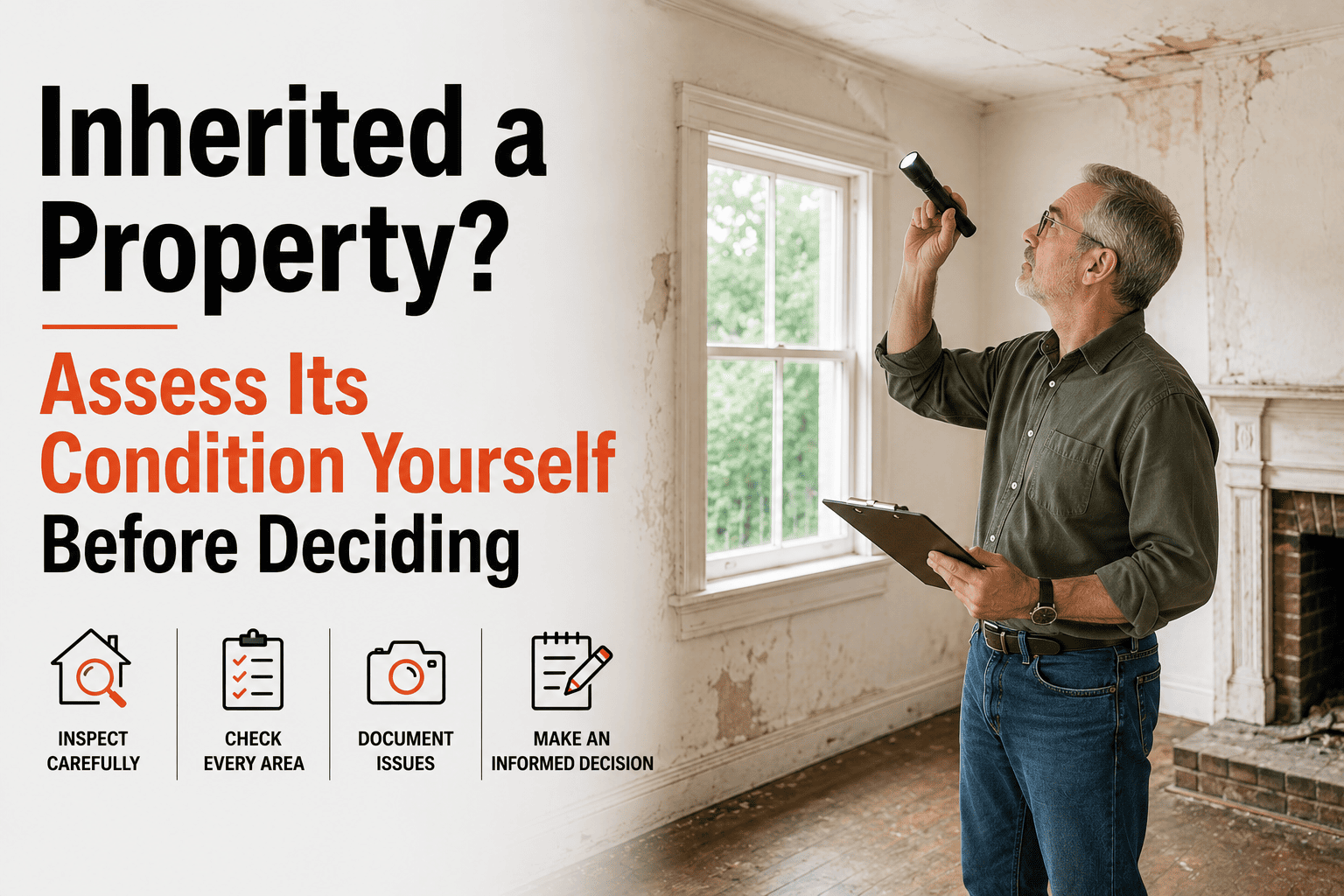

Selling without an agent means you're also selling without someone standing between you and disclosure risk. A real estate agent typically pushes sellers toward documenting condition before listing — not just to market the home well, but to protect the seller from a buyer claiming something was hidden. When you're doing it yourself, that protection doesn't exist unless you build it. A self-inspection before you list gives you two things at once: a documented condition record that supports your disclosure statement, and a clear list of what to fix before buyers start walking through with their own inspector in tow. This guide covers how to run that inspection and use it to sell with confidence. If you want a guided tool for your pre-listing walkthrough, book a demo.
FSBO Preparation
No Agent Doesn't Mean No Protection.
Run your own pre-listing inspection, document the condition, and disclose with a record — not a guess.
The Pre-Listing Checklist
Work through the property systematically before you list. Each item checked is one less thing a buyer's inspector finds first.
Roof and gutters — age, visible wear, and any active leaks documented with photos.
Foundation and structure — cracks, settling, or moisture in the crawl space or basement.
Plumbing — water pressure, visible leaks, water heater age, and any past water damage.
Electrical — panel condition, outlet function, and any visible wiring issues.
HVAC — age and functioning condition of heating and cooling systems.
Windows and doors — proper sealing, function, and any visible damage.
Interior finishes — flooring, walls, and fixtures throughout the home.
Safety systems — smoke detectors, carbon monoxide detectors, and code-relevant items.
Disclosure Risk vs. Documented Fix
Every item you find falls into one of two categories — and knowing which one before you list changes how you handle it.
Undocumented and Unfixed
An issue a buyer's inspector finds that you didn't disclose becomes a credibility problem — even minor issues raise questions about what else wasn't mentioned, and can delay or derail a deal.
Documented, Fixed or Disclosed
An issue you found, fixed or disclosed upfront with photos and dates becomes a non-issue — buyers respect transparency, and your disclosure statement is backed by an actual record.
Walk the property before you list it. HomeInspecto turns your pre-listing walkthrough into a dated, photo-backed condition report you can use for disclosure and repairs alike.
Frequently Asked Questions
Does a self-inspection replace a professional pre-listing inspection?
A self-inspection is a strong starting point for FSBO sellers, but some sellers also hire a professional pre-listing inspection for a more thorough structural assessment — particularly for older homes or ones with unknown history. Either way, documenting condition before listing is the key habit.
What am I legally required to disclose when selling without an agent?
Disclosure requirements vary by state and are a legal matter — this is a question worth confirming with a real estate attorney or your state's disclosure form requirements. What a self-inspection gives you is the documented condition data to fill out that disclosure accurately.
Should I fix everything I find, or just disclose it?
That depends on cost, timeline, and what buyers in your market typically expect. Major safety or structural issues are usually worth fixing; cosmetic or minor items can often be disclosed and priced into the listing instead.
Can I use the report as part of my listing materials?
Yes. A clean, documented condition report can build buyer confidence and support your asking price, especially in a FSBO sale where buyers may be more cautious without an agent involved. Book a demo or start a free trial.
List With a Record, Not Just a Listing Photo
Run your own pre-listing inspection and sell with a documented condition report behind you.