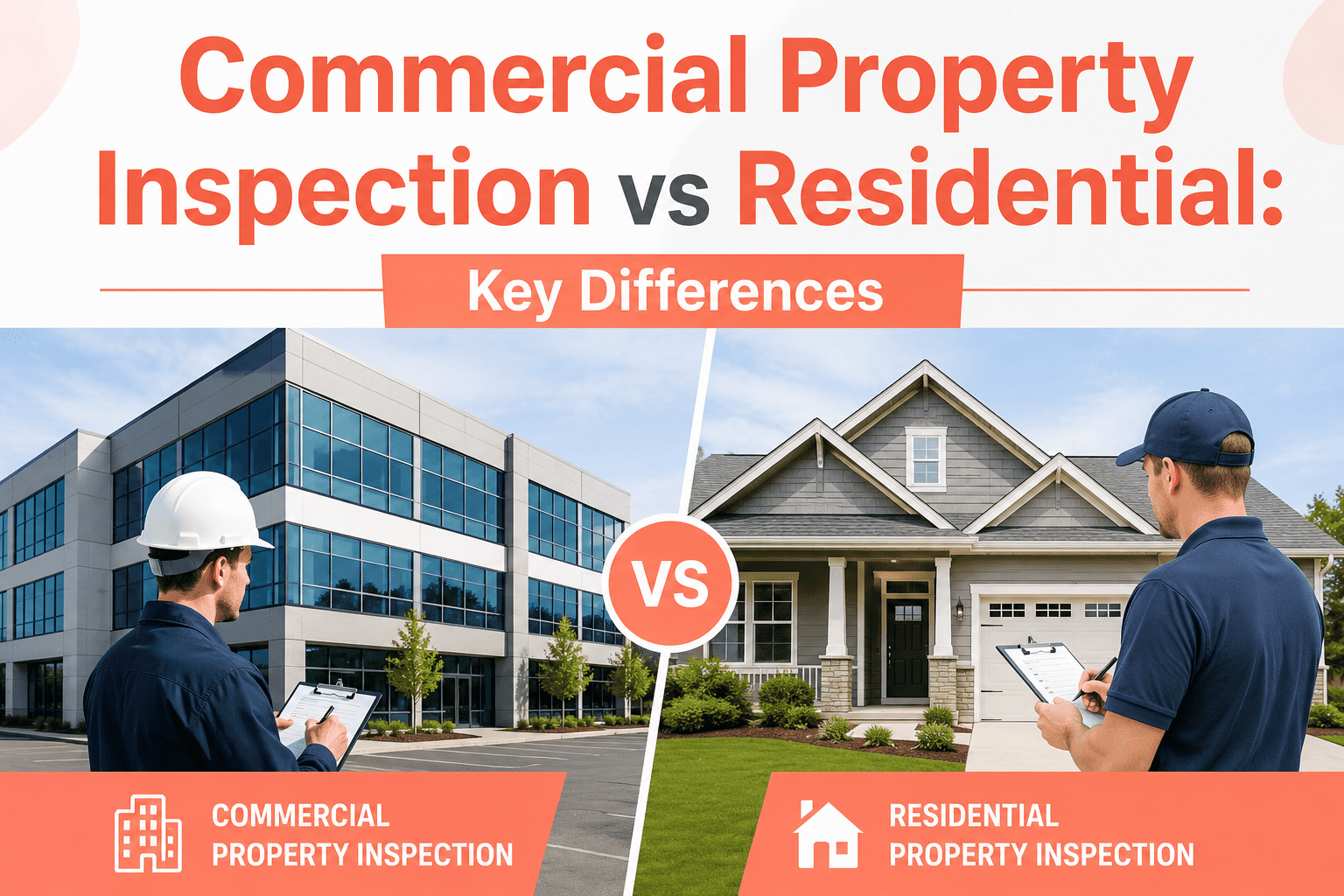
A residential inspection and a commercial inspection both evaluate the physical condition of a building — but that is roughly where the overlap ends. The scope is wider, the systems are more complex, the reports are longer and more technical, and the clients on the other side of the table are investors, lenders, and attorneys instead of first-time homebuyers. If you are a residential inspector thinking about expanding into commercial work, the transition is real but manageable once you understand exactly what changes and what carries over. This guide breaks down every major difference — scope, standards, reporting, pricing, client expectations, and the credentials that matter — so you can decide whether commercial inspection fits your business and how to prepare for it. If you want to see how one platform handles both residential and commercial workflows, book a demo.
Specialty Use — Field Guide
Commercial vs Residential Inspection: What Actually Changes
Bigger buildings, broader scope, different clients. Learn how commercial inspections differ from residential work — and what it takes to make the jump.
The Core Differences at a Glance
Before diving into detail, here is the high-level picture. Almost every dimension of the inspection — who hires you, what you evaluate, how you report, and what it costs — shifts when the property is commercial.
| Dimension | Residential | Commercial |
|---|---|---|
| Typical client | Homebuyer or seller | Investor, lender, asset manager, or attorney |
| Governing standard | State SOP, InterNACHI, or ASHI | ASTM E2018 (PCA), or custom scope of work |
| Scope | Standardized — same major systems every time | Customized per property type, use, and client goals |
| Property types | Single-family homes, condos, townhomes | Office, retail, warehouse, industrial, multi-tenant, mixed-use |
| On-site time | 2 to 4 hours for most homes | Half day to multiple days depending on size |
| Report style | Defect-focused with photos and recommendations | Executive summary, system narratives, capital expenditure projections |
| Typical fee | $300 to $600 | $1,500 to $10,000+ depending on scope and size |
| Regulatory layers | Local building code, state SOP | ADA, OSHA, EPA, fire code, zoning, plus local codes |
Scope: The Biggest Difference Between the Two
A residential inspection follows a well-defined, repeatable checklist — roof, structure, electrical, plumbing, HVAC, interior, exterior. The scope barely changes from house to house because the systems are similar. Commercial inspection scope is negotiated before you set foot on the property, and it varies dramatically based on building type, client objectives, and whether the work needs to conform to ASTM E2018.
Residential Scope
Standardized across most states. You inspect the same major systems on every job — roof, foundation, structure, electrical, plumbing, HVAC, insulation, ventilation, interior surfaces, exterior cladding, and site grading. The standards of practice tell you what to inspect and what is excluded. Scope decisions are minimal.
Commercial Scope
Negotiated per engagement. A small retail storefront has different needs than a 200,000 sq ft warehouse. You and the client agree on scope before the job — which systems, which areas, whether document review and staff interviews are included, and whether the work follows ASTM E2018 baseline requirements. Scope creep is a real risk if the agreement is not specific.
Standards: State SOP vs ASTM E2018
Residential inspectors work under state-mandated standards of practice or voluntary standards published by organizations like InterNACHI and ASHI. These define what you must inspect, what you may exclude, and how you must report. Commercial inspections operate in a different framework — one that is more flexible but also more demanding when formal compliance is expected.
Residential standards
State-level SOP or InterNACHI/ASHI standards define a fixed scope. The inspector follows a known checklist, reports defects and safety concerns, and delivers a report designed for a homebuyer. Deviations from the standard are rare and usually mean you are exceeding scope, not narrowing it.
ASTM E2018 — the commercial baseline
ASTM E2018 is the nationally recognized guide for Property Condition Assessments on commercial real estate. It defines a baseline process — walk-through survey, document review, management interviews, and a Property Condition Report with opinions of probable cost. Lenders frequently require ASTM E2018 conformance as a condition of financing. The standard expects the field observer to have competence in evaluating building systems, typically a licensed engineer or architect for formal PCA work.
Custom scope agreements
Not every commercial inspection follows ASTM E2018. Many are scoped as limited commercial building inspections — a visual assessment of major systems without the full PCA process. The scope is defined in a written agreement between inspector and client, and the report should clearly state whether it conforms to ASTM E2018 or not. Ambiguity here creates liability.
One platform for residential and commercial workflows. HomeInspecto supports both standard home inspection templates and customizable commercial scopes — so expanding into commercial work does not mean switching software.
Reporting: Defects List vs Property Condition Report
The report is where the difference between residential and commercial work is most visible to the client. Residential reports are built for homebuyers — clear, photo-heavy, and focused on defects and recommendations. Commercial reports are built for financial decision-makers — detailed, system-by-system, and oriented around cost projections and capital planning.
Residential Report
Photo-heavy, visually oriented
Defect-by-defect findings with recommendations
Summary of major concerns at the top
Written for a homebuyer audience
Delivered same day or next day — typically 20 to 50 pages
Commercial / PCA Report
Executive summary for stakeholders
System-by-system narratives with life-expectancy assessments
Capital expenditure table with cost projections
Written for investors, lenders, and legal counsel
Delivered in 2 to 3 weeks — often 50 to 150+ pages
Systems You Will Encounter in Commercial Work
Residential inspectors already evaluate electrical, plumbing, HVAC, roofing, and structure. Commercial buildings use the same categories but at a different scale — and they add systems that most homes simply do not have. Here are the areas where commercial work diverges most from what you already know.
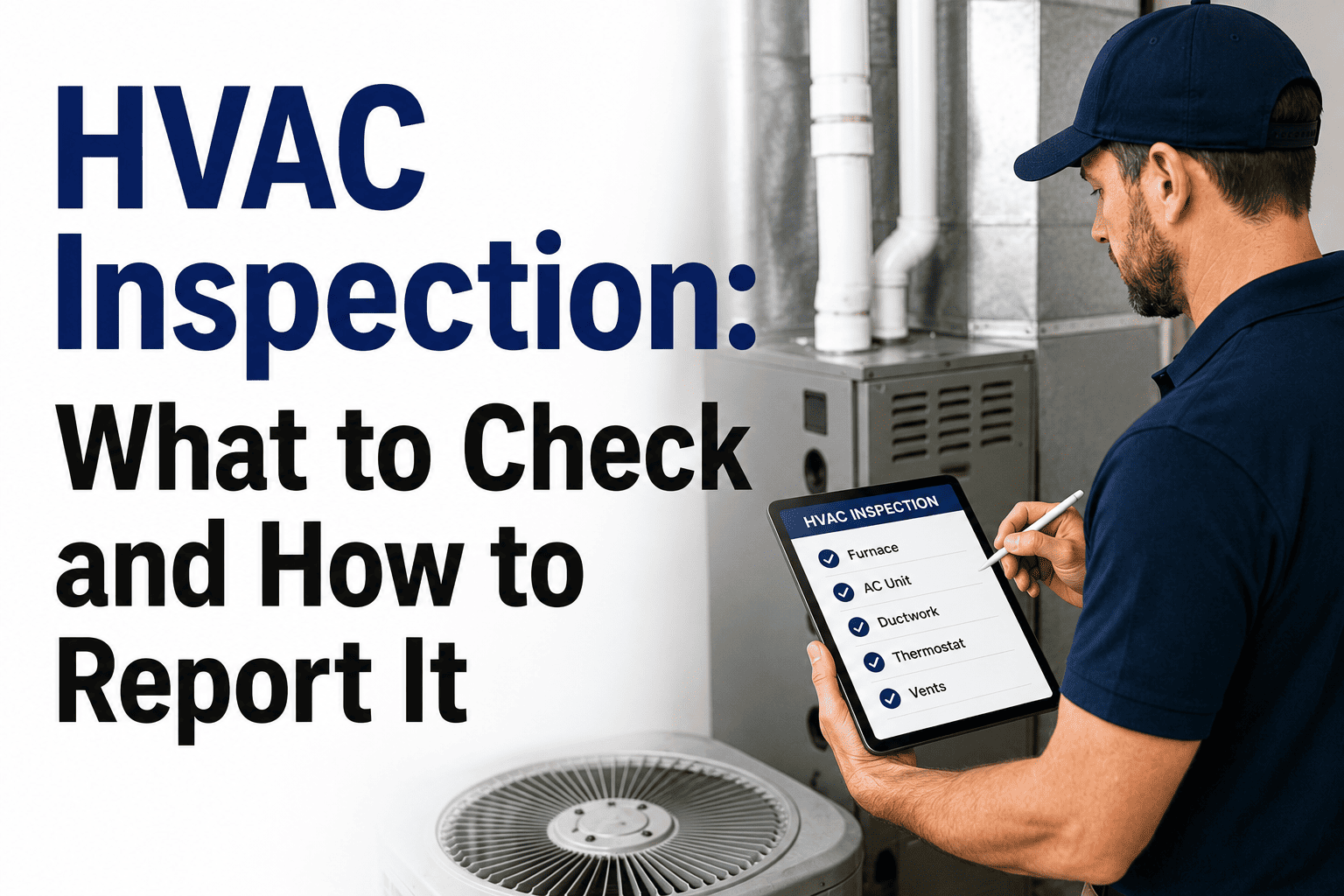
Commercial HVAC
Rooftop units, chillers, cooling towers, building automation systems, and multi-zone controls replace the single furnace and condenser you see in homes. Understanding tonnage, refrigerant types, and economizer cycles matters.
Flat and low-slope roofing
TPO, EPDM, modified bitumen, and built-up roofing systems replace residential shingles. Ponding, membrane condition, flashing at penetrations, and drainage design are the primary concerns.
Three-phase electrical
Commercial buildings run on three-phase power with higher voltage services, switchgear, transformers, and distribution panels far larger than residential load centers. Labeling, clearance, and arc-flash considerations enter the picture.
Fire and life safety
Fire alarm panels, sprinkler systems, standpipes, emergency lighting, exit signage, and fire-rated assemblies are standard in commercial buildings. Residential inspectors rarely encounter these at scale.
ADA and accessibility
Americans with Disabilities Act compliance — ramps, doorway widths, restroom clearances, parking accessibility, signage — is a commercial concern that does not apply to single-family residential inspections.
Elevators and vertical transport
Multi-story commercial buildings include elevators, escalators, or freight lifts. You may note their presence and apparent condition, but detailed mechanical evaluation typically requires a specialist sub-consultant.
Client Expectations: Homebuyer vs Investor
The person reading your report changes everything about how you write it and how you communicate. Residential clients want to know whether the house is safe and what needs fixing. Commercial clients want to know what the building will cost them over the next decade and whether the deal pencils out.
Residential client
Emotionally invested — this is their future home. They want clear language, actionable recommendations, and a straightforward answer to "should I buy this house?" Speed matters; they expect the report within 24 hours. Follow-up questions are common and usually come by phone or text.
Commercial client
Financially invested — this is an asset, not a home. They want capital expenditure projections, deferred maintenance cost estimates, and risk quantification they can hand to a lender or legal team. Turnaround is measured in weeks, not hours. Communication goes through attorneys, brokers, or asset managers — rarely direct to the buyer.
Pricing and Time: What to Expect
Commercial inspections take longer, require more preparation, and involve significantly more reporting time — and the fees reflect that. Understanding the economics helps you price your first commercial job correctly instead of undercharging for the work involved.
Residential
$300 -- $600
typical single-family home
2 to 4 hours on-site. Report delivered same day or next morning. One inspector, minimal prep, standardized scope. Profit depends on volume — most residential inspectors target four to six inspections per week.
Commercial
$1,500 -- $10,000+
varies by property size and scope
Half day to multiple days on-site. Report delivered in two to three weeks. May require document review, staff interviews, and specialist sub-consultants. Higher per-job revenue but lower volume — commercial inspectors often run one to three jobs per week.
Ready to Handle Both Residential and Commercial Work?
HomeInspecto gives you flexible templates, customizable scopes, photo-rich reporting, and instant PDF delivery for residential jobs — plus the structure to scale into commercial inspections without switching platforms.
Making the Jump: What Residential Inspectors Should Know
Expanding into commercial work is not starting over — your building-systems knowledge transfers directly. But there are specific areas to invest in before you take your first commercial job.
01 — Get the right training
Organizations like InterNACHI, CCPIA, and ASHI offer commercial inspection courses and certifications. ASTM E2018 familiarity is essential if you plan to perform formal PCAs. Training closes the gap between residential knowledge and the commercial systems, standards, and reporting expectations you will encounter.
02 — Increase your insurance
Commercial properties involve higher-value transactions and more litigious clients. Review your errors-and-omissions coverage and general liability limits. Many commercial clients — especially lenders — will verify your coverage before engaging you.
03 — Build a scope-of-work template
Unlike residential work, commercial scope is not pre-defined by state SOP. Create a detailed scope-of-work template that spells out what is included, what is excluded, and what triggers specialist referral. A clear agreement protects both you and the client.
04 — Start with smaller commercial properties
A 3,000 sq ft retail space or a small office building is more manageable than a 200,000 sq ft warehouse. Build experience and refine your workflow on properties where the scale is closer to what you already know before moving to large, complex assets.
05 — Develop specialist relationships
You will not be an expert in every commercial system. Build a network of sub-consultants — elevator technicians, fire protection engineers, environmental assessors, roofing specialists — you can call on when the scope requires expertise beyond your own.
Frequently Asked Questions
Can a residential home inspector perform commercial inspections?
In most states, yes — there is no separate commercial inspection license. However, commercial work requires additional knowledge of commercial building systems, ASTM E2018 standards, and different reporting expectations. Clients and lenders may also require specific credentials, certifications, or proof of relevant experience before engaging an inspector for commercial work.
What is a Property Condition Assessment and when is it required?
A Property Condition Assessment, or PCA, is an engineering-based evaluation of a commercial property's physical condition that follows the ASTM E2018 standard. It includes a walk-through survey, document review, management interviews, and a Property Condition Report with capital expenditure projections. PCAs are commonly required by lenders during commercial real estate acquisitions and refinancings, and by investors as part of due diligence.
How much more does a commercial inspection cost than a residential one?
Significantly more. A typical residential inspection runs $300 to $600 for a single-family home. Commercial inspections range from $1,500 for a small retail or office space to $10,000 or more for large industrial or multi-tenant properties, depending on scope, size, and whether the work follows ASTM E2018. The higher fee reflects more on-site time, document review, specialist involvement, and a much longer, more detailed report.
What systems do commercial buildings have that homes do not?
Commercial buildings commonly include flat or low-slope roofing systems, three-phase electrical services, commercial-grade HVAC with rooftop units or chillers, fire suppression and alarm systems, elevators, ADA accessibility features, parking structures, and building automation controls. The scale and complexity of plumbing, electrical, and HVAC systems are also substantially greater than in residential properties.
How long does it take to deliver a commercial inspection report?
Most commercial inspection reports are delivered within two to three weeks of the site visit. Formal PCAs may take longer if document review and specialist sub-consultant input are required. Residential reports, by contrast, are typically delivered same day or the next morning. Expedited timelines are sometimes available for time-sensitive transactions, but rushing a commercial report risks missing critical details.
Does HomeInspecto support commercial inspection workflows?
Yes. HomeInspecto provides customizable templates and flexible scope configurations that work for both residential and commercial inspections. You can build commercial-specific templates, adjust section structure per engagement, and generate detailed PDF reports — all from the same platform you use for residential work. Book a demo to see the commercial workflow in action, or start a free trial.
Inspect Any Property. Report From One Platform.
HomeInspecto handles residential templates and commercial scopes, photo documentation, reusable comment libraries, and instant PDF delivery — so you can grow into commercial work without outgrowing your software. Book a demo or start your free trial. No credit card required.