
Most homeowners find out about a problem when it becomes an emergency — a frozen pipe bursts, a gutter overflows into the foundation, an AC unit dies on the hottest week of the year. Almost every one of these emergencies had a warning sign that a five-minute seasonal walkthrough would have caught months earlier. You do not need a professional inspector to catch a cracked hose bib before winter or a clogged dryer vent before fire season. You need a repeatable routine — four short checklists, one per season, done consistently. This guide breaks down exactly what to check each season, why the timing matters, and how to turn a quarterly walkthrough into a habit instead of a chore. If you want to run these checks with guided prompts and photo logging, book a demo.
The Quarterly Habit
One Home. Four Seasons. Zero Surprises.
A 15-minute walkthrough every season catches the small issues before they become the expensive ones.
4
walkthroughs a year
~15
minutes per check
0
tools required
Why Seasonal Timing Matters
A roof check in July won't tell you anything about ice dam risk. A furnace check in April won't catch the issue that leaves you cold in December. Home systems fail in predictable, season-specific ways — heating and cooling systems stress right before their peak season, exterior seals fail from temperature swings, and drainage problems show up with the first heavy rain or snowmelt. Checking the right thing at the right time is what makes a five-minute walkthrough actually useful instead of a box-checking exercise.
Thaw, Runoff, and What Winter Left Behind
Spring is when you assess the damage winter caused and get ahead of the wet season.
Roof and gutters
Look for missing or lifted shingles, and clear gutters of debris so spring rain drains properly instead of pooling at the foundation.
Exterior drainage
Check that ground slopes away from the foundation and downspouts direct water at least 5 feet from the house.
Foundation and crawl space
Walk the perimeter for new cracks and check crawl spaces for standing water or moisture from snowmelt.
AC service check
Test the air conditioning before the first hot week — a failed unit is a bigger problem in July than in April.
Heat, Humidity, and Systems Under Load
Summer stresses cooling systems and exposes weak points in exterior seals and irrigation.
HVAC filters
Replace or clean AC filters monthly during peak use — a clogged filter forces the system to work harder and shortens its life.
Windows and doors
Check weatherstripping and caulking for gaps that let cool air escape and drive up cooling costs.
Deck and exterior wood
Inspect for splitting, loose boards, or fading finish while conditions are dry enough to treat or reseal.
Sprinkler and hose bibs
Check for leaks at outdoor faucets and irrigation lines — summer usage reveals leaks that stay hidden the rest of the year.
Prep the Heating Season Before It Starts
Fall is the last checkpoint before cold weather turns small gaps into real heat loss.
Furnace or heating system
Have the heating system checked and change the filter before the first cold snap, not during it.
Gutters, again
Clear leaves before they clog gutters and downspouts — a fall clog becomes an ice dam in winter.
Chimney and fireplace
Check for creosote buildup and blockages if the fireplace will see use once temperatures drop.
Exterior hose bibs
Disconnect and drain garden hoses before the first freeze to prevent a burst pipe at the spigot.
Freeze Protection and Indoor Air
Winter checks focus on preventing freeze damage and monitoring the systems working hardest.
Pipe insulation
Check exposed pipes in unheated areas — basements, garages, crawl spaces — for adequate insulation before a hard freeze.
Attic and insulation
Look for even snow melt on the roof; uneven melting can signal heat loss and poor attic insulation.
Smoke and CO detectors
Test detectors and replace batteries — heating systems run constantly in winter, raising carbon monoxide risk.
Ice dam watch
Check gutters and roof edges after snow events for ice buildup that can force water under shingles.
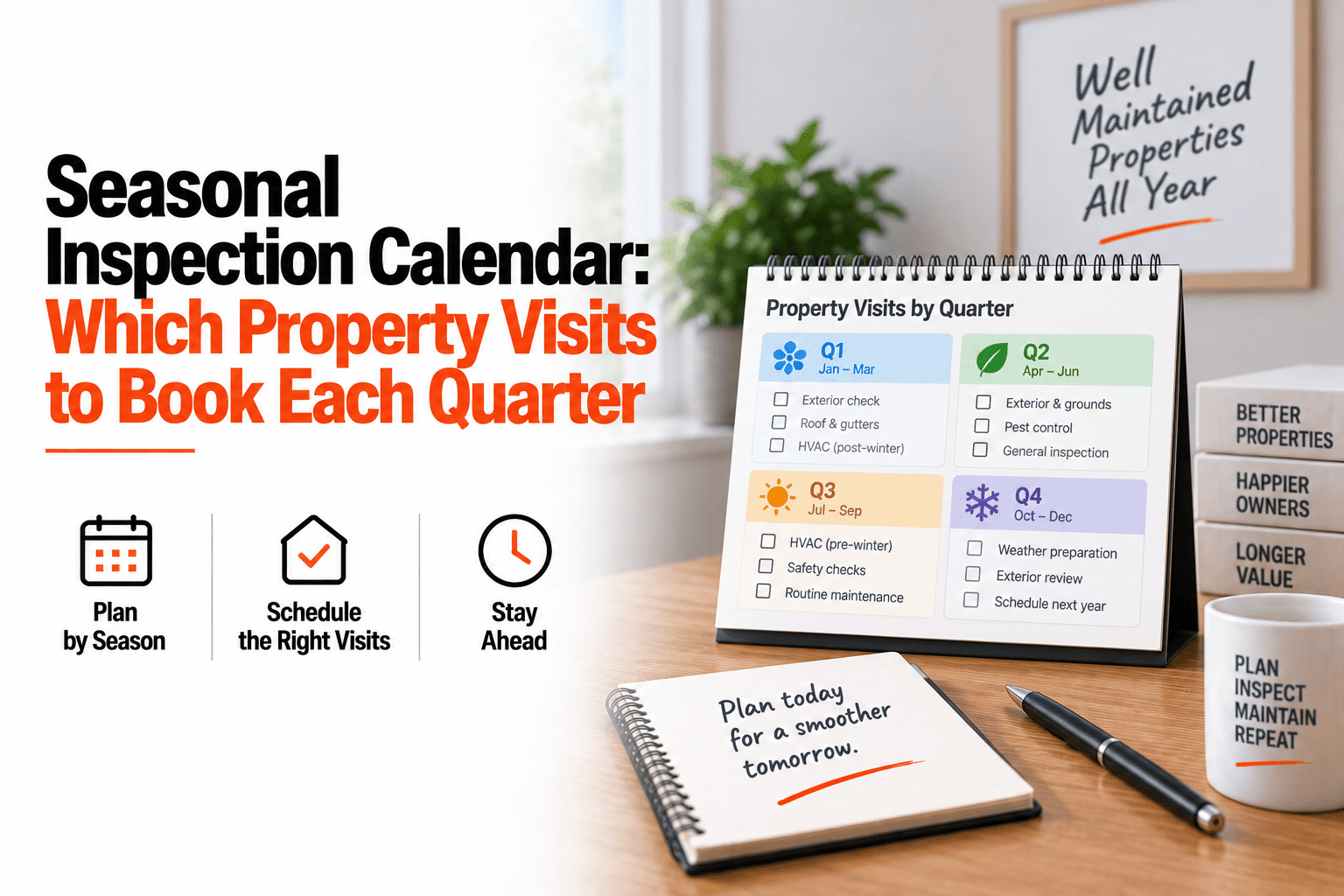
The Quarterly Rhythm
March–April
Assess winter damage, clear drainage, test AC before summer heat.
June–July
Monitor systems under peak load, check seals and outdoor plumbing.
September–October
Prep heating, clear gutters again, disconnect hoses before frost.
December–January
Guard against freeze damage, test detectors, watch for ice dams.
Turn Four Checklists Into One Habit
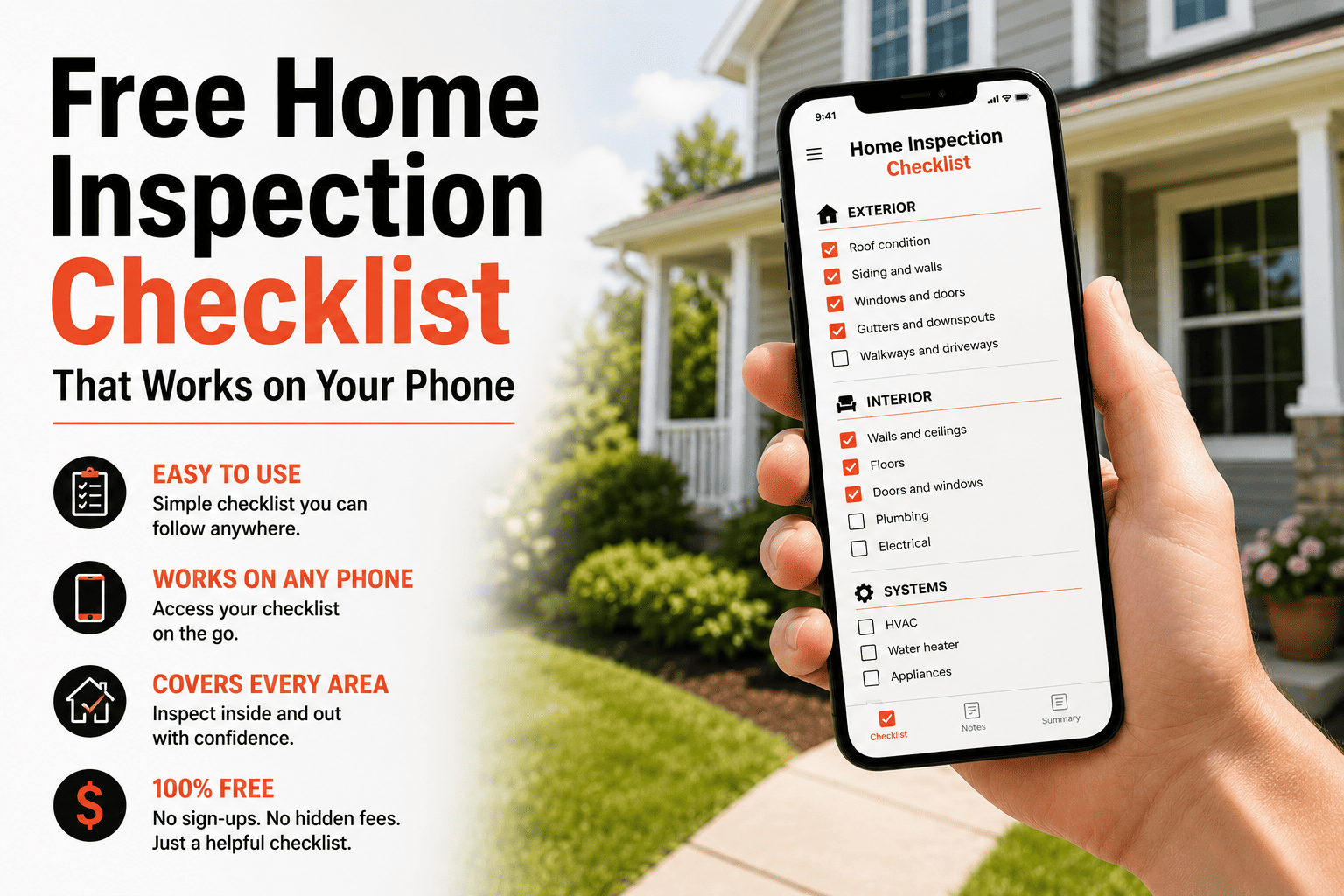
HomeInspecto gives you a guided seasonal walkthrough on your phone — tap through the checklist, snap photos, and get a dated report for every quarter, automatically organized by season.
Frequently Asked Questions
Do I really need to inspect the same areas every season?
Some areas, like gutters, genuinely need checking twice a year because leaves clog them in fall and debris builds up in spring. Others are season-specific — you're not checking AC performance in December. The four checklists overlap slightly by design, because a handful of systems fail differently depending on the season.
What if I miss a season?
Do it as soon as you remember. A late spring check is still far better than no spring check. The goal is a consistent habit, not a perfect calendar — even three out of four seasons checked each year catches most of the preventable issues.
How is this different from a professional inspection?
A professional inspection is a deep, one-time structural assessment, usually tied to buying or selling a home. Seasonal self-checks are lightweight, recurring, and focused on catching maintenance issues early — they're a habit, not a credential-requiring event.
Can I keep records of each seasonal check?
Yes. Logging photos and notes each quarter builds a maintenance history that's useful for tracking recurring issues, planning repairs, and even documenting condition if you ever sell or file an insurance claim. Book a demo or start a free trial.
Your Next Season Starts With One Walkthrough
Pick a weekend, walk the checklist, and get ahead of the next season's risks before they become repairs.