Single-strand aluminum branch wiring ran through hundreds of thousands of homes built between about 1965 and 1973, and the wire itself isn't the problem — the connections are. Aluminum expands, oxidizes, and loosens at every outlet, switch, and splice, and a loose connection runs hot. This guide covers how to identify aluminum wiring, why it overheats at the terminations, the repairs the CPSC actually endorses, and how to word it in a report without overstating. Document old-wiring findings in HomeInspecto.
Old-wiring inspection guide
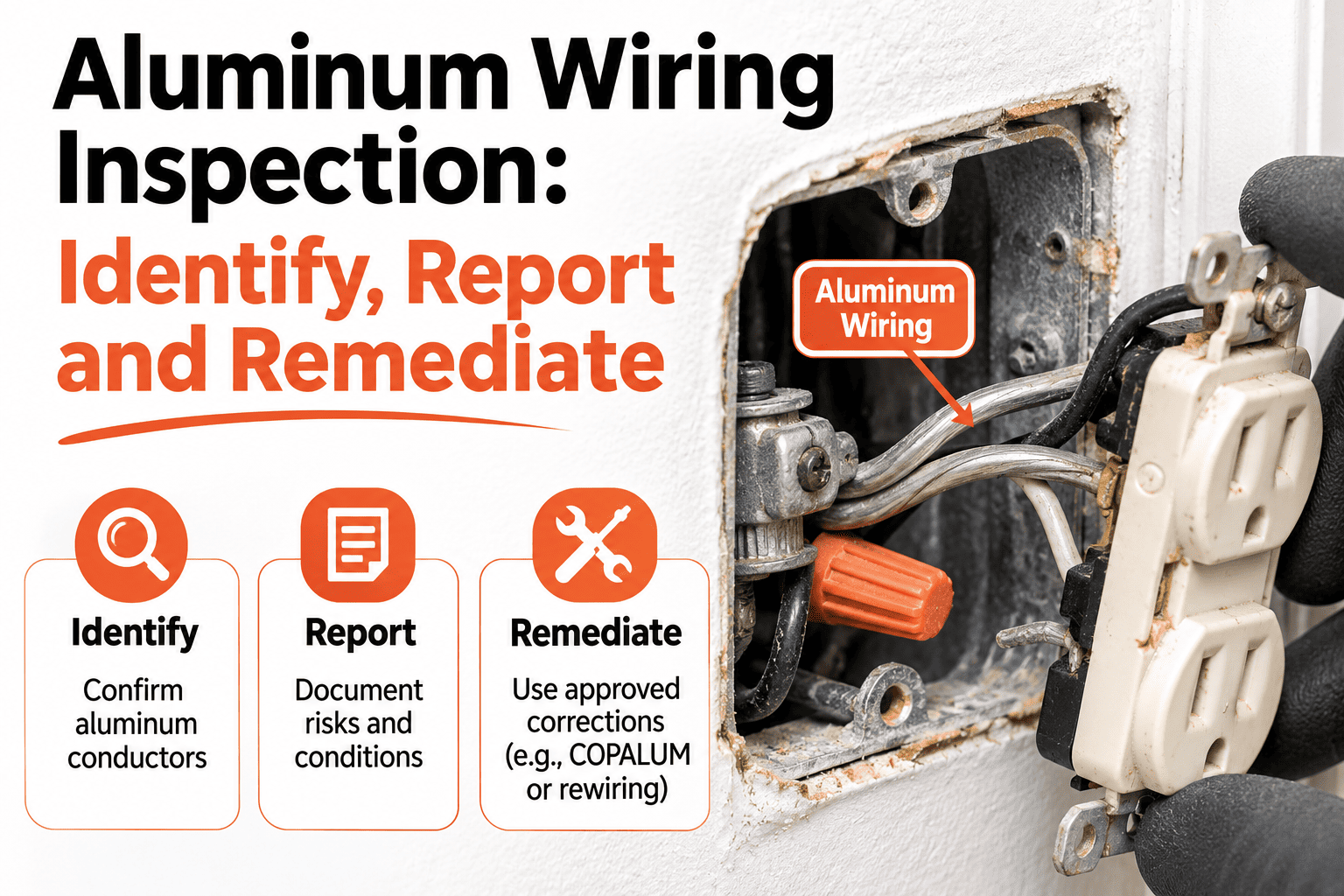
Aluminum wiring: identify, report, and remediate
The danger isn't spread along the wire — it concentrates at the connections. Here is how to read it, and the fixes that actually hold.
- The wire run — stays cool
- The connections — run hot
Why the connections overheat
Aluminum behaves differently from copper at a terminal, and three properties combine to loosen every connection over time.
-
It expands
Aluminum expands and contracts more than copper as it heats and cools, working the connection loose.
-
It oxidizes
A resistive oxide layer forms on the surface, and resistance means heat right at the terminal.
-
It creeps
Under the pressure of a screw, aluminum slowly deforms and flows, so a tight connection goes slack.
A loose connection arcs and heats, and the CPSC has found pre-1972 homes far more likely to have a connection reach a fire-hazard condition. See how findings are logged in a demo.
Where it overheats
The hazard lives at every point where aluminum meets a device or another wire. These are the places to inspect closely.
- Receptacles and switches, especially under load
- Breaker and panel terminations
- Junction-box splices and wire nuts
- Connections at major appliances
- Light fixtures and any back-stabbed devices
Warm cover plates, a burning smell, flickering, or discolored outlets are the field signs worth a close look. Flag each connection in HomeInspecto.
How to identify it
A few markers confirm single-strand aluminum branch wiring quickly.
- 1965–1973The era it was most commonly installed, sometimes a little later.
- "AL" markingLook for "AL" or "ALUMINUM" printed on the cable jacket.
- Dull grayThe exposed conductor is a dull silver-gray, not copper-colored.
One caution: this is about single-strand branch-circuit wiring on 15- and 20-amp circuits. Large-gauge, multi-strand aluminum feeding the service entrance or a major appliance is a different, accepted use — don't flag it as the branch-wiring hazard. See the identification guide in a demo.
Get the aluminum call right
Photograph the jacket marking and the connections, flag the circuits, and refer it out — a report a buyer can take to an electrician and a carrier.
The repairs that actually work
The CPSC is specific about what counts as a permanent repair — and about what falls short. Both are worth knowing before a buyer spends money.
-
Permanent repairs
- Full copper rewire. Replacing the aluminum removes the hazard entirely — the most thorough and most costly route.
- COPALUM crimp. The CPSC-recognized permanent repair: a copper pigtail crimped to the aluminum at each connection. Needs a certified technician and a special tool.
- AlumiConn connector. A UL-listed set-screw lug the CPSC accepts as an alternative, each wire secured independently. More widely available.
-
Not a complete fix
- CO/ALR devices. Receptacles and switches rated for aluminum perform better than standard ones, but the CPSC considers them an incomplete repair at best.
- Twist-on pigtailing. Copper pigtails joined with ordinary wire nuts are not a CPSC-recommended repair and have failed by overheating.
Point buyers to a licensed electrician for the method and the quote, not a figure in the report. Attach the electrician referral in HomeInspecto.
Insurance and how to word it
Aluminum branch wiring affects coverage, and the report has to inform without declaring a fire imminent.
- Insurance. Many carriers ask about aluminum wiring and may decline, surcharge, or require a permanent repair before they'll write a policy.
- State what's present. Note that single-strand aluminum branch wiring is present and describe the condition of the connections you could see.
- Refer it out. Recommend evaluation by a licensed electrician familiar with aluminum wiring and its approved repairs.
- Don't overstate. Don't call the home unsafe from the wiring type alone, and don't quote a repair price.
Until a permanent repair is done, the guidance is to leave the wiring undisturbed. See the report wording in a demo.
How HomeInspecto handles aluminum wiring
-
Connection-level notes
Record the condition of outlets, switches, and splices against each circuit.
-
Jacket-marking photo
Capture the "AL" marking as the evidence behind the call.
-
Photo on every finding
Discolored outlets and warm devices documented, not just described.
-
Electrician-referral wording
Built-in language that refers the circuits out without overstating.
-
Carrier-ready export
A clean report a buyer can forward while shopping coverage.
-
Record per property
Findings stay on file for the re-inspection after a repair.
Honest to the buyer, defensible for you. Book a demo on your own workflow.
Frequently asked questions
Is aluminum wiring dangerous?
The wire itself is sound; the risk is at the connections, where aluminum loosens and overheats over time. The CPSC found pre-1972 homes far more likely to have a connection reach a fire-hazard condition. See how it's documented in a quick demo.
How do I identify aluminum wiring?
Look for "AL" or "ALUMINUM" on the cable jacket and a dull gray conductor, typically in homes wired between 1965 and 1973. Large-gauge aluminum at the service entrance is a separate, accepted use.
What's the best way to fix aluminum wiring?
A full copper rewire, or a COPALUM crimp or AlumiConn connector at each connection — the repairs the CPSC recognizes. CO/ALR devices and twist-on pigtails are not complete fixes. Refer buyers to a licensed electrician — start a free trial.
Does aluminum wiring affect insurance?
Often. Many carriers ask about it and may decline, surcharge, or require a permanent repair before issuing a policy, which is why a clear report helps a buyer plan.
How should an inspector report aluminum wiring?
State that single-strand aluminum branch wiring is present, describe the connections you could see, and recommend a licensed electrician familiar with it — without calling the home unsafe or quoting a price. See the wording in a demo.
Old wiring, clear report
Turn every aluminum-wiring finding into a defensible record
Connection-level notes, jacket-marking photos, and electrician-referral wording — documented the way buyers and carriers trust.