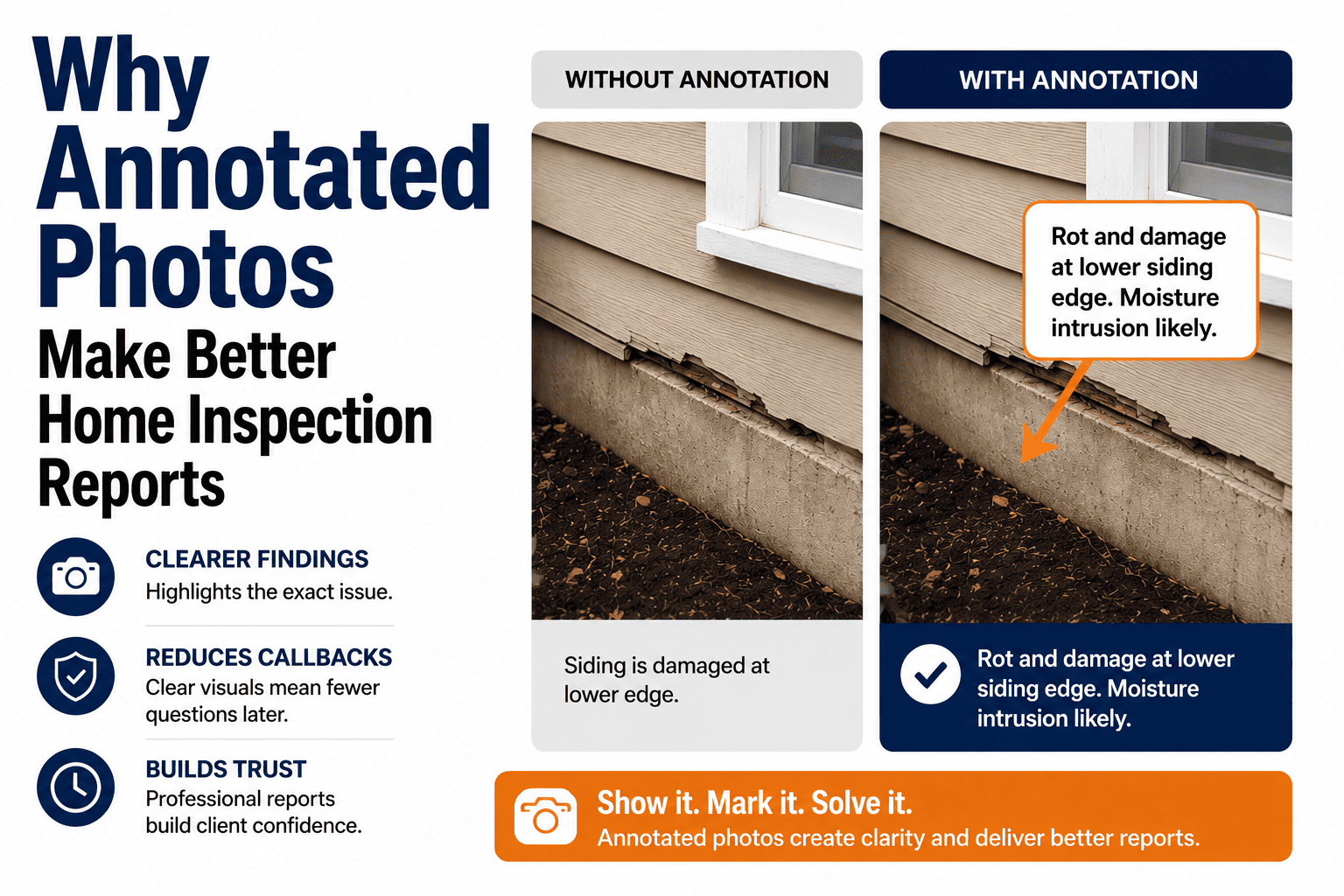
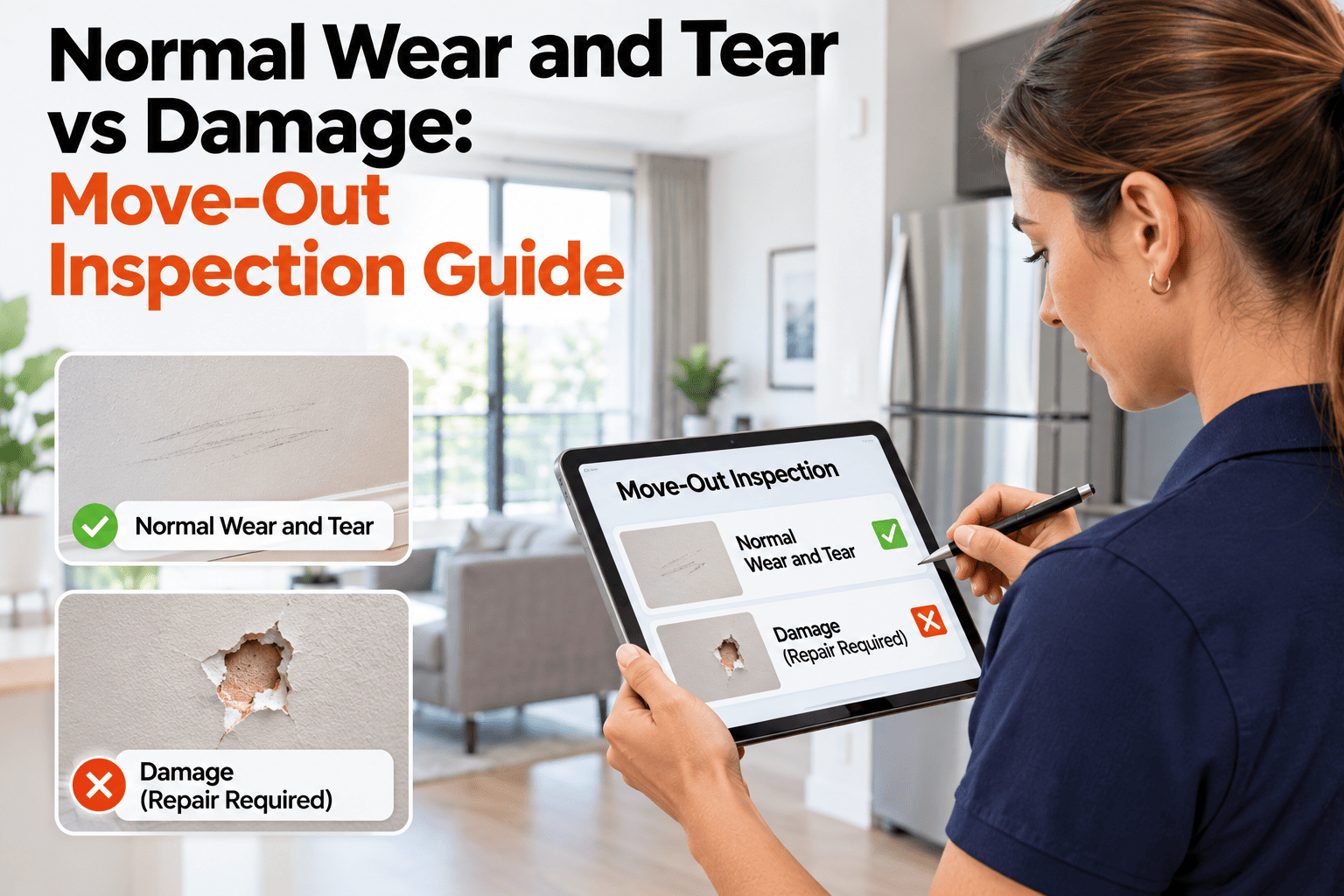
A tenant moves out, and the same argument starts again: the landlord sees a bill, the tenant sees their deposit disappearing. Almost every deposit fight comes down to one line — the one between normal wear and tear, which the landlord absorbs, and damage, which the tenant pays for. Draw that line clearly, back it with photos, and the dispute mostly settles itself. Keep every move-in and move-out condition on record with HomeInspecto.
Move-out inspection guide
Normal wear and tear vs damage: who actually pays
Wear and tear is the cost of someone living there. Damage is the cost of someone not caring. The whole deposit hinges on telling them apart — here is how, room by room, with the photo record that makes it stick.
- Normal wear and tearLandlord's cost of doing business
- DamageComes out of the deposit
The line comes down to two questions
Forget the gut feeling that a unit "looks rough." Whether something is wear or damage turns on two things, and both have to point the same way before a charge is fair.
-
1 — What caused it?
Ordinary living, or misuse?
Deterioration from everyday use — sun, footsteps, time — is wear and tear. Harm from an accident, neglect, or abuse is damage. A carpet thinned by five years of foot traffic is wear; the same carpet with a wine stain or a cigarette burn is damage.
-
2 — How far does it go?
A little, or a lot?
Extent matters as much as cause. A few scuffs on a baseboard read as wear; a hallway full of drywall holes reads as damage. HUD's own guidance leans on this: small, expected, and localized points to wear — excessive and costly points to damage.
Wear vs damage, room by room
The examples below follow the distinctions HUD publishes and that courts lean on in deposit disputes. Scroll the chart sideways on a phone — the middle column is the landlord's cost, the right column comes out of the deposit.
- Area Normal wear — landlord's cost Damage — tenant pays
- Walls & paint Faded, peeling, or cracked paint; light scuffs; small nail or pin holes from hanging pictures. Dozens of holes, gaping gouges in drywall, unapproved paint colors, crayon or marker across the walls.
- Carpet & floors Traffic-worn or lightly matted carpet, minor hardwood scuffs, fading from sunlight. Burns, pet stains and odor, large rips, water-warped boards, missing sections.
- Kitchen Dulled cabinet finish, light countertop scratches from cooking, a faucet finish worn thin. Chipped or broken enamel, a burned countertop, cabinet doors off their hinges, missing appliance parts.
- Bathroom Worn grout, faint spotting on a mirror, caulk that has loosened over time. Cracked or broken enamel in a tub or sink, a broken mirror, shattered tiles, mold from neglected leaks.
- Windows & doors A pane cracked by the building settling, worn weatherstripping, a door that sticks. A broken window, a door torn off its hinges, ripped or punched-out screens.
- Fixtures & blinds Loose handles, a dusty vent, blinds gone slightly brittle with age. Missing fixtures, snapped blinds, fittings pulled out of the wall.
Same object, two very different stories — and the only thing that proves which one is true is a before-and-after record. Build that record for every unit with HomeInspecto.
Even real damage isn't full price
Here is where most over-charges happen. When a tenant genuinely damages something, the landlord still can't bill the full replacement cost — they can only charge for the life that was cut short. Everything has a useful life, and once an item is near the end of it, its remaining value is small.
Worked example — a stained carpet
- Replacement cost$1,800
- Useful life5 years
- Age at move-out4 years
- Fair deduction (1 year of life left)$360
Fair charge = replacement cost × (remaining life ÷ total life). The tenant owes $360, not $1,800 — the landlord already got four of the carpet's five years.
Common useful-life guideposts
- 5–10 yrsCarpet (courts often use 8–10)
- 2–3 yrsInterior paint
- 3–4 yrsWindow blinds
These are common guideposts, not fixed rules — the exact schedule varies by state and by court. What never varies is the need to show the item's age and condition, which is exactly what a dated photo history gives you. Walk through the photo timeline in a demo.
Stop guessing at the move-out walkthrough
Side-by-side move-in and move-out photos, condition ratings, and a signed record — everything a fair deposit call needs, in one place.
Photos are what settle deposit disputes
When a deposit fight reaches small claims, judges look at the same three things: photos, receipts, and a signed condition checklist. The side with a clear before-and-after record almost always wins. With roughly three in five renters not expecting their full deposit back, the landlords who document well are the ones who avoid the argument entirely.
- 01Pair every photo. One move-in shot and one move-out shot of the same spot, from the same angle. The contrast is the whole case.
- 02Go wide, then close. A wide shot proves the room; a close shot proves the defect. One without the other invites doubt.
- 03Date-stamp everything. A photo with no date is easy to challenge. A timestamped one anchors the condition to a moment.
- 04Get a signature. A move-in checklist both parties sign removes the "it was already like that" argument before it starts.
- 05Keep the receipts. If you charge for a repair, the invoice is what proves the amount was real and reasonable.
The rate-and-photo method — a condition score plus matched images on every item — turns a judgment call into evidence. Set it up for your whole portfolio in HomeInspecto.
The move-out inspection, step by step
A move-out walkthrough that holds up isn't a quick glance on handover day. It is a short, repeatable sequence that mirrors the move-in record you already have.
- 1Pull the move-in record first. Open the original condition report so you are comparing against a known starting point, not your memory.
- 2Walk room by room in the same order. Match each move-in photo with a move-out photo of the exact same spot.
- 3Rate each item, don't just note it. A simple score — good, worn, damaged — forces a consistent call across units and inspectors.
- 4Separate wear from damage as you go. Flag the chargeable items on the spot and tie each to its paired photos.
- 5Price damage against useful life. Apply depreciation to every charge and attach the repair quote or receipt.
- 6Issue the itemized statement on time. Deliver the deduction breakdown and any refund within your state's deadline — late is as costly as wrong.
Run the same sequence on every turn and the deposit call stops being a negotiation. See the move-out workflow in a demo.
The deposit clock starts at move-out
Good evidence won't save a late statement. There is no federal deadline — each state sets its own — but most fall in the 14-to-30-day range, and almost all require a written, itemized breakdown of any deduction.
- 21 daysCaliforniaReturn the deposit or an itemized statement; attach receipts when deductions top $125.
- 14 daysNew YorkProvide an itemized statement and return the balance after move-out.
- 30 daysTexasReturn the deposit with an itemized list of any amounts withheld.
Miss the deadline or skip the itemization and many states strip the landlord's right to withhold anything at all — the full deposit goes back regardless of real damage. A record that is ready on move-out day is what keeps you inside the window. Generate the itemized record automatically with HomeInspecto.
How HomeInspecto keeps these calls out of court
The whole wear-vs-damage problem is really a documentation problem. HomeInspecto is built to close that gap on every unit.
Paired move-in/move-out photos
Every item carries its before and after shot, lined up automatically so the comparison is instant.
Condition ratings on every item
A consistent score per fixture makes wear-vs-damage calls repeatable across inspectors and properties.
Date-stamped, tamper-evident records
Each photo and note is timestamped, so the condition is anchored to a moment no one can dispute later.
Signed checklists at move-in
Both parties sign the starting condition, closing off the "it was already like that" argument.
Itemized deduction statements
Turn flagged damage into a clean, receipt-backed breakdown you can send inside the deadline.
Full history per property
Item age and past condition sit on file, so depreciation and useful-life calls are grounded in fact.
Fair to the tenant, defensible for the landlord — the same record does both jobs. Book a demo and see it on your own units.
Frequently asked questions
Can a landlord charge me for normal wear and tear?
No. In most states, deposit deductions are only allowed for damage beyond ordinary use. Faded paint, worn carpet, and small nail holes are the landlord's cost of doing business, not yours. If you want to see how a clear condition record protects both sides, book a quick demo.
Are nail holes from hanging pictures considered damage?
Small nail or pin holes are generally treated as normal wear and tear under HUD guidance. Large screw holes, anchor holes, or dozens of holes that tear up the drywall or paint can cross into damage. The number and size are what tip the call.
How much can a landlord deduct for damaged carpet?
Only the carpet's remaining value, not the full replacement cost. If a carpet has a five-year useful life and is four years old when it's ruined, the fair charge is about one-fifth of replacement. Documenting the carpet's age and condition is what makes a prorated charge stick — start a free trial to keep that history.
What's the best evidence in a deposit dispute?
Matched move-in and move-out photos, a condition checklist signed by both parties, and receipts for any repair charged. Judges weigh exactly these. A wide shot plus a close shot of each defect, both date-stamped, is the strongest record you can bring.
How long does a landlord have to return my deposit?
It depends on your state — commonly 14 to 30 days, with an itemized statement required for any deduction. Missing the deadline can forfeit the right to withhold anything. See how HomeInspecto gets the itemized record ready on move-out day — schedule a demo.
Settle the deposit, not the argument
Turn every move-out into a clean, defensible record
Paired photos, condition ratings, and itemized statements that keep landlords compliant and tenants treated fairly — on every unit, every turn.